
If a loved one with dementia seems relatively calm during the day but becomes confused, anxious, restless, or agitated as evening approaches, they may be experiencing sundown syndrome, commonly called sundowning.
Sundowning is not a separate disease or diagnosis. It describes a pattern of dementia-related symptoms that begin or become worse in the late afternoon, evening, or nighttime. These changes can be difficult for both the person experiencing them and the family members caring for them.
The National Institute on Aging describes sundowning as restlessness, agitation, irritability, and confusion that can occur as daylight begins to fade. The Alzheimer’s Association also notes that symptoms can include anxiety, pacing, disorientation, difficulty sleeping, and sometimes hallucinations.
Understanding what may trigger these behaviors can help families create a calmer and safer evening routine.
Key Takeaways About Sundowning
- Sundowning is a pattern of symptoms, not a separate disease.
- Symptoms usually become more noticeable in the late afternoon or evening.
- Common signs include confusion, pacing, anxiety, agitation, wandering, and sleep difficulties.
- Fatigue, disrupted sleep cycles, low lighting, overstimulation, pain, illness, dehydration, and medication effects may contribute.
- Consistent routines, daytime activity, good lighting, and calmer evenings may help reduce symptoms.
- New, sudden, or severe confusion should be discussed with a healthcare professional because another medical problem may be responsible.
What Is Sundown Syndrome?
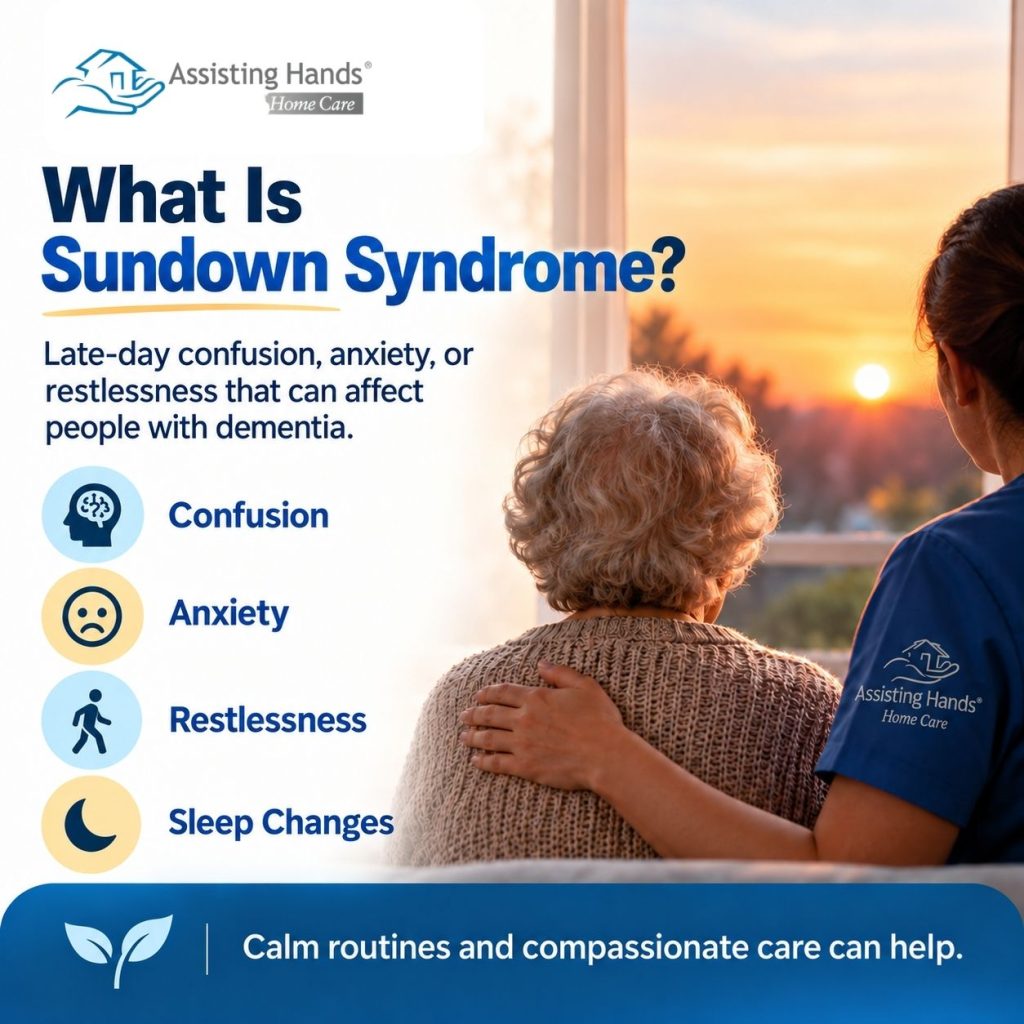
Sundown syndrome is an increase in confusion, agitation, restlessness, or other dementia-related behaviors that occurs later in the day.
It is most commonly associated with Alzheimer’s disease and other forms of dementia.
A person who appears comfortable earlier in the day may become more anxious, disoriented, or restless when afternoon turns into evening. They may repeatedly ask questions, follow their caregiver around the house, pace, try to leave home, or have difficulty settling down for bed.
Sundowning does not affect every person with dementia, and symptoms can look different from one person to another.
Researchers continue to study the condition. A 2025 medical review concluded that sundowning appears to involve several overlapping factors, including neurodegenerative changes, sleep disorders, disrupted circadian rhythms, and mood-related symptoms.
What Are the Signs of Sundowning?
The most common signs of sundowning are increased confusion, anxiety, restlessness, irritability, and agitation later in the day.
A person experiencing sundowning may:
- Pace or wander around the home
- Become unusually anxious or fearful
- Appear more confused about where they are
- Repeatedly ask the same questions
- Become irritable or argumentative
- Follow a caregiver closely
- Have difficulty settling down or sleeping
- Yell, cry, or become emotionally distressed
- Mistake shadows or objects for something else
- Try to leave the home
- Experience hallucinations or delusions in some cases
Many of these symptoms can overlap with other common dementia behaviors, which is why looking at the time of day and any changes in routine can help families identify possible sundowning.
The important pattern is when the symptoms occur. If confusion or agitation consistently becomes worse as afternoon turns into evening, sundowning may be contributing.
What Causes Sundowning in Seniors With Dementia?
There is no single known cause of sundowning. Brain changes related to dementia, changes in the sleep-wake cycle, fatigue, environmental conditions, and unmet physical needs may all play a role.
Dementia can interfere with the body’s natural circadian rhythm, which helps regulate sleeping and waking. As dementia progresses, distinguishing daytime from nighttime may become more difficult.
Several additional factors may trigger or worsen late-day confusion.
Fatigue
A long or overstimulating day can leave someone with dementia mentally and physically exhausted. That fatigue may make it harder to process information or cope with changes around them.
Changes in Light and Shadows
As natural light fades, shadows can become more noticeable. A person with dementia may misinterpret what they see, which can increase fear or confusion.
The Alzheimer’s Association recommends keeping the home well lit during the evening to help reduce confusion.
Disrupted Sleep
People with Alzheimer’s disease may experience changes in their normal sleep patterns, including frequent nighttime waking, daytime sleeping, and difficulty falling asleep. These changes can contribute to late-day agitation and restlessness.
Hunger, Thirst, Pain, or Discomfort
Someone with dementia may not always be able to explain that they are hungry, thirsty, constipated, uncomfortable, or in pain.
Instead, discomfort may appear as agitation or changes in behavior.
Too Much Stimulation
Television, visitors, loud conversations, household activity, or a busy schedule can become overwhelming later in the day.
Changes in Routine or Environment
An unfamiliar setting, new caregiver, schedule change, hospitalization, or other disruption can make confusion worse.
Medication or Health Problems
Certain medications, medication interactions, dehydration, infections, sleep disorders, or other health problems may contribute to sudden or worsening behavioral changes.
This is one reason persistent or unusual symptoms should be discussed with a healthcare professional.
Is Sundowning the Same as Delirium?
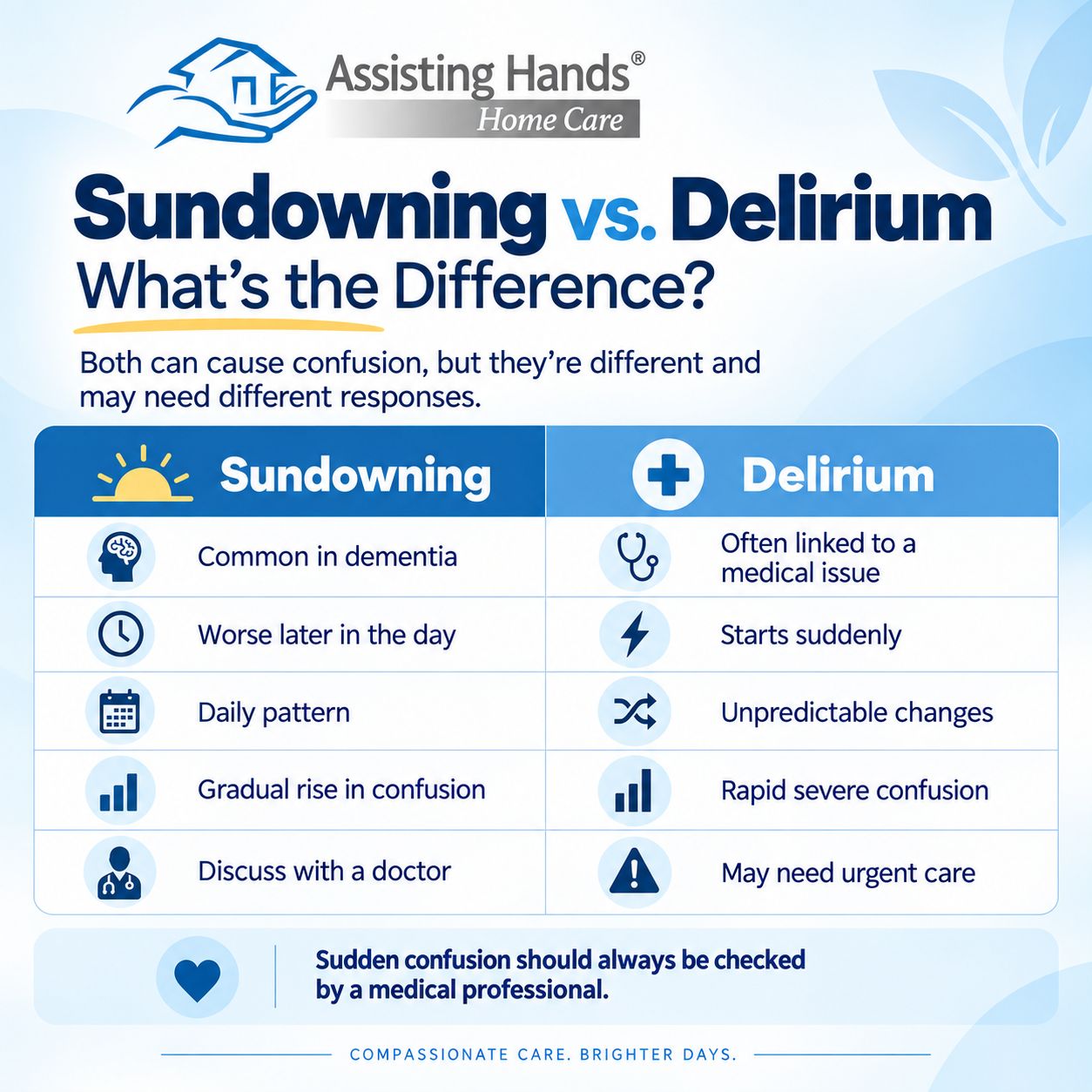
No. Sundowning and delirium can both cause confusion, but they are not the same thing.
Sundowning usually follows a repeated pattern in which dementia symptoms become more noticeable later in the day.
Delirium typically represents a sudden change in attention, awareness, or thinking and may be caused by an infection, medication reaction, dehydration, metabolic problem, hospitalization, or another medical condition.
A sudden dramatic change should not automatically be assumed to be sundowning.
If a senior becomes suddenly much more confused than usual, contact a healthcare professional promptly.
What Helps Reduce Sundown Syndrome?
There is no single technique that works for everyone. The goal is to identify possible triggers and create an environment that supports familiarity, comfort, and a healthy sleep-wake routine.
The following strategies may help.
1. Maintain a Consistent Daily Routine
Predictable routines can reduce uncertainty for people living with dementia.
Try to keep waking, meals, bathing, activities, and bedtime at approximately the same times each day.
When possible, schedule appointments, bathing, errands, and more demanding activities earlier in the day, when your loved one is usually more alert.
2. Encourage Daytime Sunlight
Exposure to daylight can help reinforce the body’s natural distinction between daytime and nighttime.
Consider:
- Opening curtains in the morning
- Sitting near a bright window
- Spending safe time outdoors
- Taking a short daytime walk
The National Institute on Aging recommends daily sunlight as one strategy that may help reduce late-day confusion.
3. Encourage Appropriate Physical Activity
Regular movement can support overall health and may help promote better nighttime sleep.
Depending on your loved one’s abilities, this might include:
- Walking around the neighborhood
- Light stretching
- Chair exercises
- Gardening
- Simple household activities
Avoid packing the day with too many activities. Excessive fatigue can sometimes make evening symptoms worse.
4. Limit Long or Late-Day Naps
If nighttime sleep is difficult, long afternoon naps may make the problem worse.
When a nap is necessary, consider keeping it shorter and earlier in the day.
The National Institute on Aging recommends limiting long naps and late-day dozing for people experiencing dementia-related sleep problems.
5. Keep the Home Well Lit
Dark rooms and unfamiliar shadows can increase confusion.
As daylight begins fading:
- Turn lights on before rooms become dark
- Keep hallways clearly illuminated
- Use nightlights where appropriate
- Make bathrooms easy to locate
- Close curtains if reflections in windows cause confusion
Good lighting can also make it easier for a senior to navigate the home safely.
6. Create a Calmer Evening Environment
Late afternoon and evening should gradually become quieter and less stimulating.
Try reducing:
- Loud television
- Multiple conversations
- Household commotion
- Unnecessary visitors
- Complicated activities
Replace them with familiar, relaxing activities such as listening to favorite music, looking through photographs, reading together, or having a quiet conversation.
7. Reduce Clutter and Safety Hazards
A cluttered environment can create visual confusion while increasing the risk of trips and falls.
Keep walking paths clear and make frequently used rooms easy to navigate.
Simple surroundings may be easier for someone with dementia to understand, particularly when lighting becomes dimmer.
8. Identify Personal Triggers
One of the most useful things caregivers can do is look for patterns.
For several days, make brief notes about:
- When symptoms start
- What the person was doing beforehand
- Meals and fluids
- Naps
- Medications
- Visitors
- Activity levels
- Pain or discomfort
- Changes in routine
You may discover that certain situations consistently precede an episode.
The Alzheimer’s Association specifically recommends keeping notes about what happens before sundowning symptoms to help identify possible triggers.
9. Redirect Rather Than Argue
Trying to convince a confused person that their perception is incorrect can sometimes increase distress.
Instead, stay calm and redirect their attention toward something safe and familiar.
You might:
- Offer a favorite snack or drink
- Play familiar music
- Fold towels together
- Look through photographs
- Take a supervised walk
- Sit together in a favorite room
Reassurance is usually more helpful than confrontation.
10. Talk With Their Healthcare Provider
If sundowning becomes frequent, severe, or difficult to manage, talk with your loved one’s physician.
A healthcare professional can evaluate whether another issue may be contributing, including:
- Pain
- Infection
- Dehydration
- Depression
- Medication side effects
- Sleep apnea
- Restless legs syndrome
- Other sleep disorders
Most expert guidance recommends trying non-medication approaches first when possible. Medications may be considered in certain circumstances, but risks and benefits should be discussed with the person’s physician.
Do not begin melatonin, sleep aids, or other medications or supplements without discussing them with the senior’s healthcare provider.
What Should You Do During a Sundowning Episode?
Keep the environment calm, identify immediate needs, provide reassurance, and focus on safety.
If your loved one becomes confused or agitated:
- Approach them calmly.
- Speak slowly and reassuringly.
- Check whether they are hungry, thirsty, tired, uncomfortable, or need the bathroom.
- Reduce noise and distractions.
- Avoid arguing about what is real or correcting every mistaken statement.
- Redirect them toward a familiar activity.
- Make sure doors, stairs, and walking areas are safe if wandering is a concern.
If the person becomes physically aggressive, protect yourself and others while giving them space. Seek emergency assistance when there is an immediate danger of injury.
When Should You Call a Doctor About Sundowning?
Contact a healthcare provider if symptoms:
- Appear suddenly
- Become significantly worse
- Continue throughout the day rather than primarily in the evening
- Are accompanied by fever or signs of illness
- Follow a medication change
- Cause repeated falls
- Prevent the person from sleeping
- Include significant aggression
- Lead to unsafe wandering
- Become difficult for the family to manage safely
Sudden confusion deserves particular attention because infection, dehydration, medication effects, and other medical conditions can cause rapid behavioral changes.
Can Sundowning Be Prevented?
Sundowning cannot always be prevented, but identifying triggers and maintaining healthy routines may reduce how often or how severely symptoms occur.
A practical daily routine might include:
- Morning: Natural light, breakfast, medications as prescribed, and more demanding activities.
- Afternoon: Light exercise, social interaction, and a balanced meal while avoiding excessive stimulation.
- Late afternoon: Begin turning lights on before sunset and transition toward quieter activities.
- Evening: Reduce noise, offer familiar activities, follow a consistent bedtime routine, and keep necessary pathways softly illuminated.
Consistency matters more than creating a perfect schedule.
Does Sundowning Get Worse as Dementia Progresses?
Sundowning is commonly associated with dementia and may become more noticeable as cognitive impairment progresses, but every person’s experience is different.
Sleep and behavior changes are often more common in later stages of Alzheimer’s disease, although they can occur earlier as well.
Changes should still be discussed with a healthcare provider rather than automatically attributed to dementia progression.
How Can Professional Home Care Help Someone With Sundowning?
Caring for someone who becomes restless, confused, or prone to wandering in the evening can be physically and emotionally demanding.
Professional dementia caregivers can provide additional support by helping maintain familiar routines, preparing meals, providing companionship, encouraging appropriate activity, assisting with personal care, and monitoring the home environment for safety concerns.
A caregiver may also give family members an opportunity to rest while their loved one continues receiving one-on-one support at home.
Dementia and Memory Care in Hinsdale, IL
Families do not have to manage dementia-related challenges alone.
Assisting Hands Home Care provides personalized Alzheimer’s and dementia home care for older adults who want to remain in the comfort and familiarity of their homes.

Our caregivers can assist with:
- Personal care and daily routines
- Companionship
- Meal preparation
- Mobility assistance
- Safe walks and activities
- Evening routines
- Wandering and fall-safety precautions
- Respite for family caregivers
For individuals experiencing sundowning, having a familiar routine and attentive caregiver can provide additional consistency during the hours when confusion may be more likely to occur.
Assisting Hands serves families in Hinsdale, Burr Ridge, Brookfield, Clarendon Hills, Downers Grove, Darien, La Grange, Oak Brook, Western Springs, Willowbrook, and surrounding communities throughout Cook and DuPage Counties.
Contact Assisting Hands Home Care at (630) 407-1932 to schedule a free care consultation and learn how personalized dementia care can support your loved one at home.
Frequently Asked Questions
What is end-of-life sundowning?
End-of-life sundowning is increased confusion, agitation, restlessness, or changes in behavior that occur later in the day in a person with advanced dementia or another serious illness. Sundowning is not necessarily a sign that death is near. Similar symptoms near the end of life can also result from delirium, pain, infection, dehydration, or medication effects.
What should you not say to someone with sundowning?
Do not argue with, criticize, or repeatedly correct someone experiencing sundowning. Avoid statements such as “You are wrong” or “Don’t you remember?” because they can increase frustration or distress. Instead, speak calmly, use simple language, acknowledge the person’s feelings, and provide reassurance.
What makes sundowning worse?
Fatigue, poor sleep, pain, hunger, dehydration, overstimulation, changes in routine, noise, inadequate lighting, and some medications can make sundowning worse. Unmet needs, including needing to use the bathroom, can also contribute to increased confusion or agitation later in the day.
Does sundowning get worse before death?
Sundowning can become more difficult to manage as dementia progresses, but worsening sundowning does not by itself mean that death is near. A sudden or significant increase in confusion, agitation, hallucinations, or changes in alertness may indicate delirium or another medical problem and should be discussed with a healthcare professional.
What medications worsen sundowning?
Some medications can worsen confusion or agitation in older adults, including certain antihistamines, sleep medicines, muscle relaxants, and medications with anticholinergic effects. Medication interactions can also contribute to behavioral changes. Never stop or change a medication without first speaking with the person’s healthcare provider.
How long does sundowning last?
Sundowning can last for several hours and may continue into the evening or nighttime. The duration varies from person to person and can change depending on sleep, health conditions, medications, daily activities, and environmental factors.

