

Quick answer: If no one can care for you after surgery, your safest options are professional in-home care for the first days or weeks, a short stay in a rehabilitation facility if your surgeon recommends it, or a combination of both. Most people also arrange transportation, prep their home in advance, and loop in their hospital’s discharge planner. You have more options than you might think. This guide walks through all of them.
Surgery is stressful enough on its own. Facing it without someone at home to help you afterward is a different kind of worry, and it’s one we hear about often from patients in Batavia and across the Fox Valley, whether they’re recovering from a procedure at Northwestern Medicine Delnor Hospital in Geneva, Rush Copley Medical Center in Aurora, or elsewhere in the area. Maybe your family lives out of state. Maybe your spouse works full time, you live alone, or the people closest to you simply can’t take weeks off to help you bathe, cook, and get to follow-up appointments.
Here’s the reassuring part: recovering alone doesn’t mean recovering without help. If you plan the support side of things before your procedure, the same way you plan the medical side, recovery at home is usually safe and far less overwhelming. This guide walks through what to do if you have no one to take care of you after surgery, the options available to you, and how professional home care fits in.
What to Do if You Have No One to Care for You After Surgery
If you have no one to help after surgery, you have more options than you might think. Here are the key steps to take before your procedure:
- Hire temporary in-home care to cover the days or weeks you need the most help.
- Arrange transportation for the ride home from the hospital and for follow-up visits.
- Prepare your home before surgery so it’s safe and stocked when you get back.
- Use a rehabilitation facility first if your doctor recommends a higher level of care.
- Ask your hospital’s discharge planner or social worker to help you build a recovery plan.
Most people combine two or three of these. The rest of this article explains each one in detail so you can decide what fits your surgery and your situation.
Can You Recover from Surgery if You Live Alone?
Yes. Plenty of people recover from surgery alone every year, and they do it safely. What makes the difference isn’t whether someone lives with you. It’s whether you have a plan for the tasks you can’t easily do while you heal.
How much help you need depends on a few things:
- The type of surgery and how invasive it was
- Your age and overall health
- Any mobility limits, before or after the procedure
- How many medications you’ll be managing
- Your risk of complications or a fall
A cataract procedure and a hip replacement aren’t in the same category. Some surgeries have you back on your feet in a day or two. Others leave you unable to drive, lift, bend, or stand at the stove for weeks. Your surgeon can tell you roughly where yours falls, and that answer should shape how much recovery support you line up.
What Help Do You Need After Surgery? (Checklist)
It helps to think about recovery as a list of specific tasks rather than one big problem. Go through this checklist and mark what applies to you.
Transportation
- Getting home from the hospital
- Rides to follow-up appointments
- Prescription pickup
Personal care
- Bathing and showering
- Dressing
- Using the toilet
- Getting in and out of bed
Meals
- Grocery shopping
- Preparing healthy meals
- Staying hydrated
Medications
- Reminders to take doses on time
- Organizing prescriptions
- Keeping track of the schedule
Mobility
- Walking safely around the house
- Using a walker, cane, or crutches
- Preventing falls
Household tasks
- Laundry
- Cleaning
- Changing bed linens
The tasks you can’t cover on your own are the ones to plan for first. That short list is exactly what a home care plan is built around.
Options if You Have No Family or Friends Available After Surgery
When there’s no one to help after surgery, these are the main ways people fill the gap.
1. In-Home Care Services
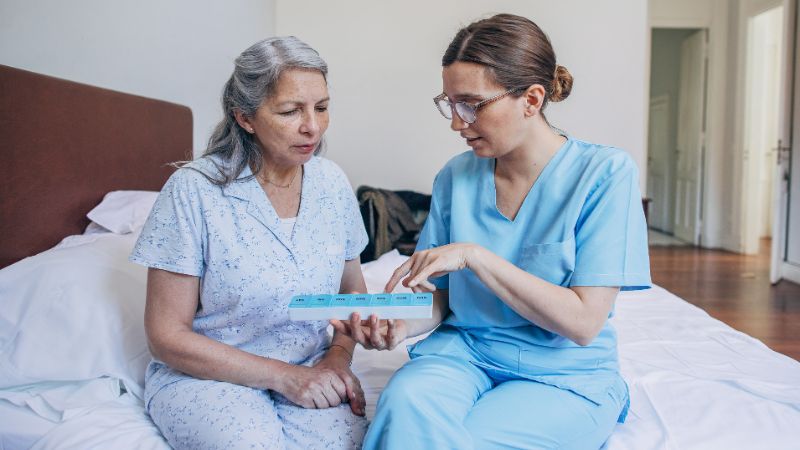
A professional caregiver comes to your home and helps with the recovery tasks you can’t manage on your own: personal care like bathing and dressing, meal preparation, medication reminders, transportation to appointments, light housekeeping, and simply having someone present so you’re not managing everything alone. This is what we do at Assisting Hands, and post-surgery recovery is one of the most common reasons people call us.
2. Short-Term Post-Surgery Care
Not everyone needs help for months. Some people just need coverage for the first few days or first couple of weeks, when getting up, moving around, and staying on top of medications is hardest. Short-term care can start the day you come home and taper off as you get stronger, so you’re only paying for the help you actually need.
3. Respite or Private Duty Care
Sometimes family can help, but not around the clock. Maybe your daughter can stay evenings but has to work during the day, or your neighbor can drive you to appointments but can’t do personal care. In that case, as a part of respite care, a caregiver fills the specific hours your family can’t cover, so the load doesn’t fall entirely on one person.
4. Rehabilitation Facilities
Some procedures call for skilled rehabilitation before you go home, especially major joint or cardiac surgery. Your surgeon or discharge planner will tell you if this applies to you. Many people spend a short stretch in rehab and then transition home, where in-home care picks up for the rest of the recovery.
How to Prepare Your Home Before Surgery
The work you do before your procedure makes the first week back much easier. Set your home up while you’re still mobile.
Safety
- Clear tripping hazards (loose rugs, cords, and clutter) from your walking paths
- Install grab bars in the bathroom if you’ll have trouble standing or stepping over the tub
- Move everyday items to counter or waist height so you’re not reaching or bending
- Improve lighting in hallways and on stairs
Recovery setup
- Set up a comfortable resting spot with everything you need within arm’s reach
- Stock the fridge and pantry with easy meals and plenty of fluids
- Fill and organize your prescriptions ahead of time
- Confirm your ride home and your follow-up transportation
Emergency planning
- Keep a written list of emergency contacts where you can see it
- Keep a charged phone within reach at all times
- Consider a medical alert device if you live alone
If arranging all of this feels like a lot to handle while you’re also preparing for surgery, this is another place a caregiver can step in. We often help clients get the house ready before the procedure, not just after.
How Long Will You Need Help After Surgery?
It depends on the surgery and on you. Some people need help for only a few days. Others need it for several weeks, and major operations can mean longer.
As a rough guide:
- Joint replacement (hip or knee): Several weeks, with the most help needed early on while mobility is limited
- Abdominal surgery: Often a few weeks, with lifting and bending restrictions
- Heart surgery: An extended recovery, frequently with rehab first
- Cancer-related procedures: Varies widely depending on the treatment and how you tolerate it
The safe approach is to plan for a little more help than you think you’ll need, then scale it back as you improve. It’s far easier to reduce care than to scramble for it after a rough first night home.
If your recovery is likely to stretch over several weeks, you’ll also want to decide how those hours are structured. See our guide on live-in care vs. hourly home care to compare the two and figure out which fits your situation.
Questions to Ask Before Hiring Post-Surgery Home Care
If you’re looking at professional post-operative home care, these questions will tell you whether an agency is a good fit:
- Are your caregivers experienced with post-surgical recovery?
- Can they help with mobility and safe transfers?
- Do you provide transportation to follow-up appointments?
- Is care available in the evenings and on weekends?
- Can the care plan be adjusted as I recover?
- How quickly can care start after I’m discharged?
Any reputable agency will answer these without hesitation. If you’d like to ask us these questions directly, our Batavia team is happy to walk through them on a free consultation.
Signs You Need More Help After Surgery
Sometimes people plan for a little help and then realize partway through that they need more. Watch for these signs, whether you’re recovering on your own or checking on someone who is:
- Trouble moving around safely, or a near-fall
- Missed or doubled-up medications
- Pain that’s getting worse instead of better
- Not eating well, or signs of dehydration
- Feeling overwhelmed or unable to keep up with daily tasks
None of these mean you failed at recovering alone. They mean the plan needs adjusting. Adding a few hours of care can be the difference between a smooth recovery and a trip back to the hospital.

How Home Care Helps You Recover Safely After Surgery
A caregiver from Assisting Hands can handle the day-to-day recovery tasks so you can focus on healing: personal care and bathing, medication reminders, meal preparation, transportation to follow-up visits, light housekeeping, help getting around the house safely, fall prevention, and companionship so you’re not going through recovery alone.
We build the plan around you. If you need a lot of help the first week and much less by week three, the schedule flexes with you. And because part of our job is helping people avoid a return trip to the hospital, our caregivers are trained to watch for the warning signs above and flag them early.
If you’re preparing for surgery in Batavia, Geneva, St. Charles, Aurora, or anywhere in the Fox Valley and don’t have someone at home to help, reach out to Assisting Hands Home Care. Call our Batavia team at (630) 948-8193 or contact us online to learn how post-hospitalization care can help you recover safely at home.
After Surgery Recovery Options: FAQs
Does Medicare pay for caregivers after surgery?
Medicare may cover skilled home health services, such as nursing or physical therapy, for a limited time when your doctor orders them and you meet the requirements. It generally does not cover ongoing non-medical custodial care, such as help with everyday tasks like bathing, meals, and companionship. Many people pay for that type of care privately or through long-term care insurance. Check your specific coverage with Medicare or your provider.
Is home care better than a rehabilitation facility after surgery?
Neither is automatically better; it depends on your medical needs. Rehabilitation facilities provide skilled, round-the-clock care and are often recommended after major surgery. Home care lets you recover in familiar surroundings with help tailored to your daily needs. Many people do both: starting in rehab, then continuing recovery at home with a caregiver.
How do you care for someone at home after surgery?
To care for someone at home after surgery, follow the surgeon’s discharge instructions closely: manage medications and pain on schedule, help with bathing, dressing, and mobility, watch the incision for signs of infection, prepare easy meals, encourage rest and light movement as approved, and keep emergency contacts and follow-up appointments on hand.