
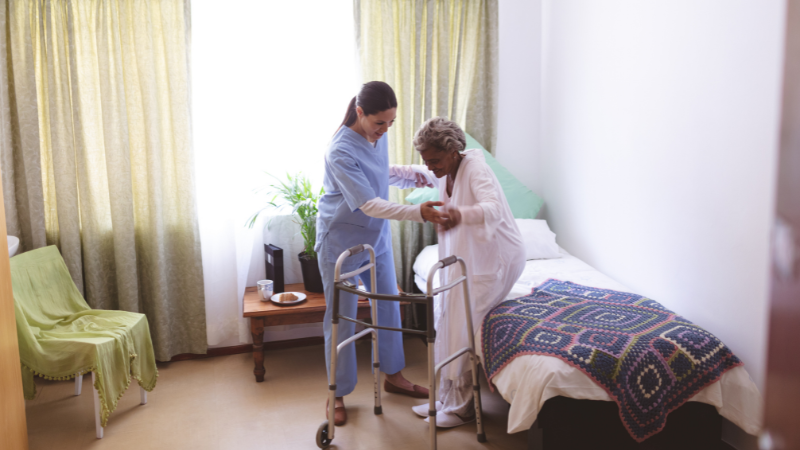
Helping an elderly person stand up from a seated position requires proper technique, patience, and awareness of safety risks. Many older adults experience reduced strength, balance challenges, or joint stiffness, which can make even simple movements like standing from a chair difficult. Whether you are a family caregiver, healthcare professional, or home care provider, understanding proper transfer methods is essential for preventing injuries and maintaining the senior’s comfort, dignity, and independence.
A safe seated transfer is the process of assisting an older adult from sitting to standing using controlled movement, proper body mechanics, and support tools when needed. Using the correct approach helps prevent falls, reduces caregiver injury risk, and preserves the senior’s dignity and independence. This guide explains step-by-step how to safely assist an elderly person from a chair, common mistakes to avoid, and when to use assistive equipment or additional help.
Quick Takeaways: Safe Standing Assistance for Seniors
Safe standing assistance requires preparation, controlled movement, and proper body mechanics. Always assess the environment and the person’s mobility level before assisting. Encourage active participation from the senior, avoid pulling on their arms, and use assistive devices like gait belts when appropriate. Never perform a transfer that feels unsafe or exceeds your physical ability.
Why Proper Lifting Technique Matters for Senior Safety
Using correct lifting and safe transfer techniques is essential because aging often affects muscle strength, joint flexibility, and balance. Many seniors also experience conditions such as arthritis, Parkinson’s disease, or recovery limitations after surgery that make standing more difficult.
Unsafe lifting can lead to:
- Falls and fractures in older adults
- Shoulder or joint injuries from pulling
- Back strains and chronic pain for caregivers
- Fear or loss of confidence in mobility
According to the CDC, manually handling and lifting patients can cause injuries and work-related musculoskeletal disorders (WMSDs). Proper technique improves stability, encourages independence, and makes daily care safer for everyone involved.
Unsafe Practices to Avoid When Helping a Senior Stand
Certain actions significantly increase injury risk during transfers:
- Pulling the person up by the arms, wrists, or shoulders
- Lifting from under the armpits
- Twisting your back while assisting
- Rushing or forcing the movement
- Attempting a transfer alone when full support is needed
These errors are a leading cause of caregiver back injuries and senior falls during home care transfers.
Before You Help: Assess the Situation for Safety
Before assisting an elderly person from a seated position, home aides need to take a moment to evaluate the situation carefully. Proper preparation can help prevent falls, reduce physical strain, and make the transfer safer and more comfortable for both the caregiver and the senior.
Check the Environment
- Remove rugs, cords, or clutter near the chair
- Ensure the floor is dry and non-slippery
- Position mobility aids like walkers within reach
- Use a sturdy chair with armrests when possible
Assess the Senior’s Mobility Level
Determine how much assistance is needed. Some individuals may only need light support, while others may require full assistance or equipment.
Watch for:
- Dizziness or weakness
- Pain when moving
- Recent surgery or fall history
- Difficulty bearing weight
Communicate Clearly Before Moving
Explain each step before moving. Simple cues like:
- “Lean forward slightly.”
- “Place your hands on the armrests.”
- “We will stand together on three.”
Clear communication reduces anxiety and improves coordination.
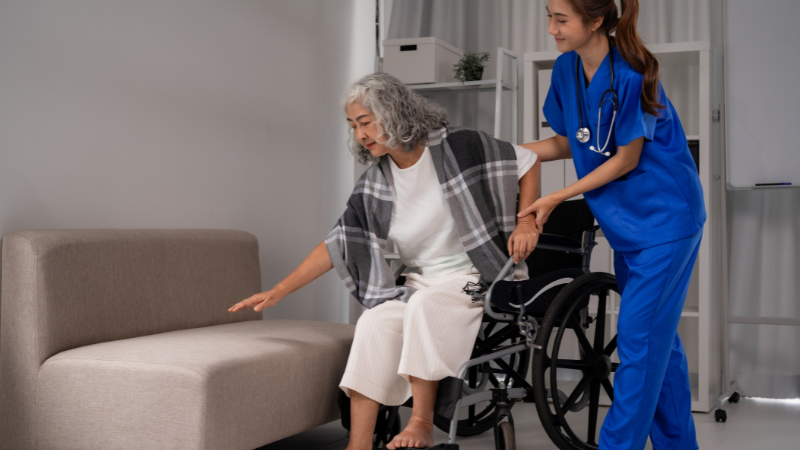
Step-by-Step Guide: How to Lift an Elderly Person from a Chair Safely
Helping an elderly person stand up safely requires patience, proper body mechanics, and steady support. Following a structured process can reduce the risk of falls and injuries while making the movement more comfortable for both the caregiver and the senior.
Step 1: Position the Chair Correctly
Ensure the chair is stable on a flat surface and does not slide. Chairs with armrests provide better support and safety. Place mobility aids within reach before starting.
Step 2: Help the Person Move Forward
Ask the senior to scoot toward the edge of the chair. Their feet should be flat on the floor and slightly behind their knees. Encourage them to lean forward so their nose is over their toes to shift weight properly.
Step 3: Use Proper Caregiver Body Mechanics
Stand close with feet shoulder-width apart. Bend your knees, not your back, and keep your core engaged. Avoid twisting your body during the transfer. If available, place a gait belt securely around the waist for support.
Step 4: Assist Them into a Standing Position
Count down clearly so both of you move together, such as “One, two, three, stand.” As the senior pushes up from the armrests or chair, use your legs to help guide and support the movement upward. Encourage them to do as much of the work as they safely can. Move slowly and steadily, avoiding sudden pulling or twisting motions during the lift.
Step 5: Stabilize Once Standing
After the senior reaches a standing position, give them a moment to regain balance before attempting to walk or pivot. Check for signs of dizziness, weakness, or instability. Make sure mobility aids such as walkers or canes are properly positioned and secure before moving forward. Staying close and maintaining light support during the first few moments can help prevent falls and build confidence.
Best Body Mechanics for Caregivers to Prevent Injuries
Proper body mechanics are essential when assisting an elderly person with standing or transferring from a seated position. Caregivers frequently experience back pain, muscle strains, and joint injuries when lifting incorrectly, especially during repetitive daily tasks. Using safe movement techniques can help protect your body while providing stable and effective support for the senior.
- Lift with your legs, not your back
- Keep the load close to your body
- Avoid twisting; pivot with your feet instead
- Maintain a wide, stable stance
- Move slowly and in control
If a transfer feels unsafe, stop and reassess rather than forcing the movement.
Equipment That Improves Transfer Safety
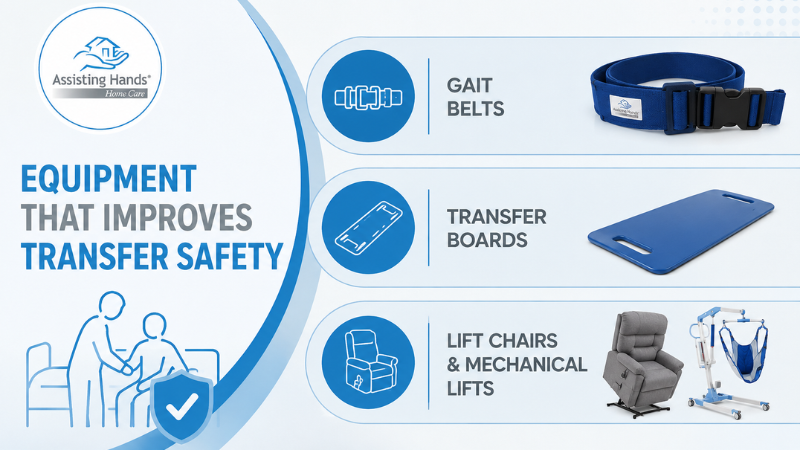
Using the right mobility and transfer equipment can significantly improve safety and reduce physical strain when helping an elderly person move from a seated position. These tools are designed to provide additional stability, support, and control during transfers, making the process safer for both seniors and caregivers.
Gait Belts
Gait belts are one of the most used transfer aids for assisting seniors with standing and walking. These sturdy belts are secured around the person’s waist, giving caregivers a safer and more controlled grip during transfers. A gait belt can help improve balance support while reducing the need to pull on the senior’s arms or shoulders. They are especially useful for individuals who need moderate assistance but are still able to bear some weight on their own.
Transfer Boards
Transfer boards, sometimes called slide boards, are helpful for seniors who have limited lower-body mobility or difficulty standing independently. These flat boards create a smooth bridge between two surfaces, such as a bed and a wheelchair or a chair and another seated surface. Instead of lifting the individual completely, caregivers can help guide them across the board in a more controlled manner. Transfer boards reduce strain on caregivers and can help minimize the risk of falls during seated transfers.
Lift Chairs and Mechanical Lifts
Lift chairs and mechanical lifts provide additional support for seniors with significant mobility limitations. Lift chairs use a powered reclining mechanism that gently tilts forward to help individuals move from sitting to standing with less physical effort. Mechanical lifts, including sit-to-stand lifts and full-body patient lifts, are designed for individuals who require extensive assistance or cannot safely stand on their own.
When You Should NOT Attempt to Lift Someone Alone
While many seated transfers can be performed safely with proper technique, there are situations where attempting to lift an elderly person alone can put both the caregiver and the senior at serious risk of injury. Recognizing when additional help or specialized equipment is needed is an important part of safe caregiving.
- Seniors cannot bear weight on their legs: If the individual is unable to push up, support themselves, or maintain balance while standing, attempting a manual lift alone may lead to falls or muscle strain. In these situations, a mechanical lift or assistance from another caregiver is often the safer option.
- The senior is significantly larger or heavier than you can safely support: Trying to manage excessive weight without help can easily result in back injuries, pulled muscles, or loss of control during the transfer. Caregivers should never feel pressured to perform a lift that exceeds their physical abilities.
- Medical conditions: Seniors recovering from surgery, recent falls, strokes, fractures, or serious illnesses may require specialized transfer methods or professional assistance. Additionally, if the individual experiences dizziness, confusion, severe weakness, or sudden pain, the transfer should be delayed until the situation can be properly evaluated.
- Environmental challenges: Tight spaces, slippery floors, uneven surfaces, or cluttered areas can make safe lifting difficult without additional support or equipment.
- If you are uncertain whether a transfer can be completed safely: In these cases, it is always better to ask for help rather than risk injury. Consulting a healthcare professional, physical therapist, or trained caregiver can guide the safest transfer techniques and equipment for the individual’s specific mobility needs.
Knowing your limits and prioritizing safety helps protect both the caregiver and the senior while ensuring transfers are handled with care, stability, and confidence.
Final Thoughts
Safe assistance from a seated position requires preparation, proper technique, and respect for the individual’s physical limits. The goal is to support movement while minimizing risk and preserving independence. Consistent use of safe transfer practices reduces falls, prevents caregiver injury, and improves overall confidence in daily mobility. When uncertainty exists, safety should always take priority over speed or convenience.

Need Help Caring for a Loved One at Home?
When mobility becomes challenging, daily transfers and movement can increase the risk of falls and caregiver strain. Professional in-home caregivers provide trained support with standing assistance, walking support, and daily personal care tasks. Assisting Hands Home Care provides compassionate in-home senior care designed to help older adults remain safe and independent at home. Services include mobility assistance, personal care, companionship, and customized daily support.
If you need reliable home care support in Hollywood, FL, and the surrounding Broward County areas, call (954) 859-2271 to learn more about professional caregiver assistance.
Frequently Asked Questions (FAQs)
What are the 4 stages of proper transfer?
The four stages of a proper transfer are preparation, positioning, movement, and stabilization. First, the environment is prepared by removing hazards and ensuring proper equipment is available. Next, the person is positioned correctly with feet supported and body aligned for standing. The movement phase involves a controlled, coordinated effort where the person pushes up while the caregiver provides safe assistance using proper body mechanics. Finally, stabilization ensures the person is steady and balanced before walking or changing direction. Each stage is important for reducing fall risk and preventing injury.
What is the best transfer method?
The best transfer method depends on the individual’s mobility level, but in most cases the safest approach is a stand-assist transfer using proper body mechanics and support tools when needed. This method encourages the senior to actively participate by pushing up from a stable surface, while the caregiver provides controlled assistance at the waist or with a gait belt. If the person cannot bear weight, a mechanical lift or two-person assist may be required. The safest method is always the one that matches the person’s strength, balance, and medical condition.
How to transfer an elderly person safely?
To transfer an elderly person safely, start by ensuring the area is clear of hazards and the chair is stable. Position the person with their feet flat on the floor and encourage them to lean slightly forward to prepare for standing. Use proper body mechanics by keeping your back straight, bending your knees, and staying close to the person. Guide them to stand using a coordinated count while they push from the chair or armrests. Provide steady support at the waist or with a gait belt, and avoid pulling on their arms. Once standing, pause to ensure they are stable before moving.
What is the easiest chair height for seniors to stand up from?
Higher, firm chairs with armrests are the easiest for seniors to stand from. Low, soft, or deep-seated chairs make it harder to generate leverage and increase fall risk. A stable chair that allows the feet to rest flat on the floor is ideal for safe transfers.
What should you do if an elderly person cannot stand up on their own?
If the person cannot bear weight or push themselves up from a chair, do not attempt a manual lift alone. Instead, use assistive equipment such as a transfer aid or lift device, or seek help from another caregiver. If this is a recurring issue, a healthcare professional should evaluate mobility and safety needs.

