

Quick Answer: When a person with dementia refuses to shower, do not force them. Instead, identify the specific fear or discomfort driving the refusal (water temperature, cold air, loss of control, confusion about what is happening), then adjust your approach to remove that trigger. Offer a sponge bath as an alternative, use a consistent routine, keep the bathroom warm and familiar, and give the person as much control as possible over each step. Resistance to bathing is one of the most common behavioral symptoms of Alzheimer’s disease and other dementias. With the right techniques, it is manageable.
If you are caring for a parent or spouse with dementia and bathing has become a daily battle, you are not alone. The Alzheimer’s Association estimates that bathing resistance is one of the top three caregiving challenges reported by family caregivers of people with dementia. What makes it so difficult is not the task itself. It is the intersection of fear, cognitive decline, loss of bodily awareness, and the very human need for dignity.
This guide walks through exactly what to do, step by step, when someone with dementia refuses to shower. Each section addresses a specific layer of the problem, from understanding why refusal happens to adapting the physical environment, adjusting your communication, and knowing when to bring in professional support.
Why People with Dementia Refuse to Shower
Before you can fix the problem, it helps to understand what is actually happening neurologically. Dementia affects the brain’s ability to process sensory input, sequence tasks, and regulate emotions. A shower, which most of us experience as a simple routine, involves dozens of individual cognitive steps and sensory inputs. For someone with moderate to advanced dementia, it can feel genuinely overwhelming or frightening.
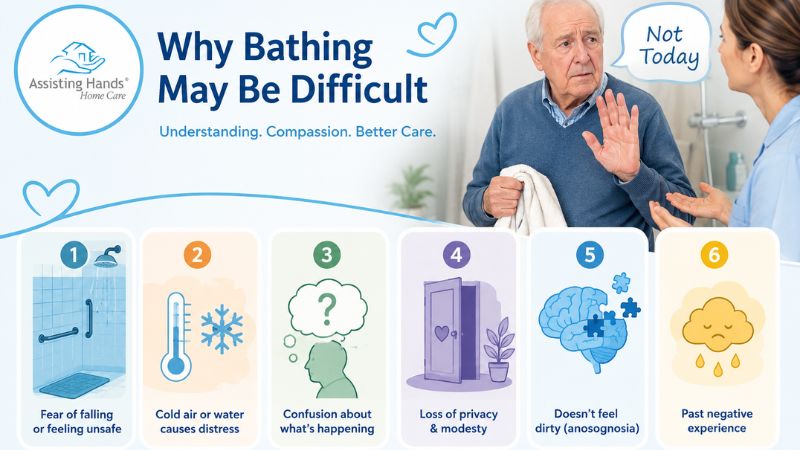
Common reasons behind bathing refusal include:
Fear of falling or feeling physically unsafe in the shower
- Cold air or water hitting exposed skin triggering a panic response
- Confusion about what is happening or why their clothes are being removed
- Loss of privacy and modesty, especially if the caregiver is an adult child or opposite-sex family member
- Anosognosia, the neurological condition in which the person with dementia genuinely does not perceive themselves as dirty or in need of bathing
- A prior negative bathing experience that created a conditioned fear response
According to research by Dr. Philip D. Sloane and colleagues published in The Gerontologist, bathing-related agitation in dementia patients is most commonly triggered by sensory discomfort (cold air and water), being rushed, and caregivers failing to explain each step before initiating physical contact.
Step-by-Step Guide: How to Handle Bathing Refusal in Dementia
Bathing refusal is one of the most common and exhausting challenges in dementia caregiving. Here is exactly what to do, step by step.
Step 1: Never Force It. Reschedule Instead.
The moment you physically push or pressure a person with dementia into bathing, you have created a negative memory trace that will make every future attempt harder. If they refuse when you approach, back off. Say something like: “That’s okay. We can do this a little later.” Then return 20 to 30 minutes later, ideally after a pleasant activity like a favorite meal or a short walk.
Most caregivers find there is a “window” in the day when their loved one is more cooperative. It often correlates with the time of day they historically preferred to bathe. If your parent always showered at 7 a.m. before work for 40 years, morning bathing will likely feel more natural than an evening routine.
Step 2: Warm the Bathroom Before Bringing Them In
Cold air is one of the biggest triggers for bathing refusal. Run a space heater in the bathroom for 10 to 15 minutes before the bath begins. Warm the towels if you have a towel warmer, or place them near a heating vent. Have the water running and at a comfortable temperature before you start undressing the person.
The goal is to eliminate sensory surprises. Every unexpected sensation, a blast of cold air, a sudden spray of water, a cold tile underfoot, can trigger an acute stress response in someone whose brain can no longer regulate those reactions efficiently.
Step 3: Explain Every Action Before You Do It
Always narrate what you are about to do in simple, calm language. “I’m going to wash your hair now. The water is warm. Ready?” This gives the person a moment to process and reduces the startle response that often escalates into combativeness.
Use a soft, reassuring tone, not a commanding one. Avoid questions that have a yes or no answer attached to the bathing task itself (“Do you want to take a shower?” will almost always get a no). Instead, use guided choices: “Would you like to use the lavender soap or the regular one?” This shifts their cognitive focus to the choice, not the bath.
Step 4: Use a Hand-Held Showerhead and Start Low
A fixed showerhead that sprays water on the head and face simultaneously is disorienting for someone with dementia. A hand-held showerhead gives you precise control over where the water goes and allows you to start at the feet and work upward, which most people tolerate far better.
This is a low-cost modification with a high impact on compliance. Many families report that switching to a hand-held showerhead alone reduced bathing refusal by more than half.
Step 5: Offer a Sponge Bath as a Legitimate Alternative
A full shower is not medically required every day. For many older adults with dementia, bathing twice a week is clinically sufficient to maintain hygiene. On other days, a warm sponge bath or no-rinse bathing wipes (products like Comfort Bath or similar no-rinse cleansing cloths) can effectively clean the body without the sensory overwhelm of a shower.
If your loved one associates the word “shower” with something distressing, stop using that word. Call it a “wash up,” a “sponge-down,” or whatever phrase is least loaded for them. The goal is hygiene and dignity, not a specific method.
Step 6: Preserve Modesty Throughout
For many people, the core of bathing refusal is the loss of modesty and bodily privacy. Use a large bath towel or a bathing blanket to cover parts of the body not being washed at that moment. Keep the door closed. If the person responds better to a same-gender caregiver, honor that preference where possible.
Dignity is not a soft consideration. Research from the dementia care literature consistently shows that maintaining perceived control and modesty significantly reduces behavioral resistance during personal care tasks.
Step 7: Make the Bathroom Feel Safe and Familiar
Install grab bars on the walls near the toilet and inside the shower or tub. Use a shower chair or bench so the person can sit throughout. Place non-slip mats both inside the shower and on the bathroom floor. These modifications address the legitimate physical fear of falling that underlies a significant portion of bathing resistance in older adults with dementia.
You can also try placing a familiar object in the bathroom, a small framed photo, a piece of music playing in the background, or their preferred soap fragrance, to help orient them to a positive memory associated with bathing.
Step 8: Keep It Short and Praise Generously
Do not attempt to do a thorough, lengthy hair wash and full body scrub all at once if the person is resistant. Do the minimum necessary to maintain hygiene on days when cooperation is limited. Save the hair washing for a day when they are in a better mood. End the bath on a positive note with warm towels, a preferred lotion, and verbal praise.
Positive reinforcement at the end of a successful bath helps build a conditioned positive association with the experience over time. Even small progress deserves acknowledgment.
For a broader look at bathing, grooming, and personal hygiene assistance for seniors, read our guide on Basics of Grooming in Senior Care.
Step 9: Adjust Your Approach as the Disease Progresses
What works today may not work in three months. Dementia is progressive, and a strategy that successfully resolved bathing resistance in the mild-to-moderate stage may become ineffective as the person moves into moderate-to-severe disease. Keep a simple log of what works and what triggers resistance. Share this with any other caregivers in the household.
As the disease advances, professional in-home caregivers who are trained in dementia-specific bathing techniques, a skill called “person-centered bathing,” can make a substantial difference. This training teaches caregivers to read behavioral cues, modify the environment, and individualize care rather than applying a one-size-fits-all routine.
Step 10: Know When to Ask for Professional Help
If bathing has become consistently dangerous, if your loved one is physically combative, injuring themselves or you, or if you are finding the emotional toll unsustainable, it is time to bring in professional support. A professional in-home caregiver trained in dementia care can often perform bathing with far less resistance than a family member, simply because the emotional dynamics are different.
You can also consult with your loved one’s neurologist or geriatric care specialist. In some cases, low-level anxiety medication prescribed specifically around personal care times has been clinically appropriate under physician supervision.
What Not to Do When a Person with Dementia Refuses to Bathe
Caregivers often resort to these approaches out of desperation. They do not work and typically make the problem worse:
- Arguing about whether they need a bath. They do not have the cognitive capacity to agree with your logic.
- Lying about where you are going (“We’re just going to the kitchen”) and then steering them into the bathroom. This destroys trust and increases paranoia.
- Forcing undressing or physically maneuvering them into the shower against their will. This is both psychologically harmful and a fall risk.
- Expressing frustration, sighing, or raising your voice. Emotional tone is one of the few things a person with dementia perceives clearly even when words are not understood.
- Bathing every single day if it is causing significant distress. Hygiene standards can flex.
Products and Tools That Make Dementia Bathing Easier
A few targeted products can meaningfully reduce bathing resistance:
- No-rinse bathing cloths or wipes (Comfort Bath, Cleanlife, or similar): These microwave-heated cloths clean effectively without water and are often well tolerated even in late-stage dementia.
- Hand-held showerhead: Allows directional water control; costs under $40 at most hardware stores.
- Shower chair or transfer bench: Eliminates fall fear, which is often at the root of resistance.
- No-rinse shampoo caps: Fits over the head and cleans hair without water, ideal for highly resistant individuals.
- Bathroom space heater with automatic shutoff: Pre-warming the bathroom significantly reduces cold-related resistance.
When Dementia Bathing Gets Too Hard to Manage Alone
Bathing resistance is not your loved one being difficult. It is a neurological symptom of a disease that has taken away their ability to feel safe during routine tasks. Every small accommodation you make, warming the room, giving them a choice, slowing down, narrating your actions, is an act of skilled caregiving. It takes real patience and real knowledge to do this well.
If you are managing this alone and it has become too much, please reach out to Assisting Hands Home Care in Naperville, IL. Our caregivers are trained in dementia and Alzheimer’s care and provide personal care services at home, including bathing assistance, grooming, and hygiene support for seniors living with Alzheimer’s disease, dementia, or any form of cognitive decline. You do not have to carry this by yourself. Call (630) 634-9316

Frequently Asked Questions
How often should someone with dementia bathe if they refuse to shower every day?
Twice a week is generally sufficient for maintaining skin hygiene in most older adults with dementia. Daily bathing is not medically required and can cause dry skin, increased agitation, and worsening refusal if it is already a source of distress. On non-bath days, use warm washcloths or no-rinse wipes to clean the face, underarms, and perineal area. Always consult the person’s physician if there are specific medical reasons requiring more frequent bathing.
Is it normal for someone with Alzheimer’s to suddenly refuse to shower when they were fine before?
Yes, this is very common and typically signals disease progression. As Alzheimer’s advances, the brain’s ability to sequence multi-step tasks like bathing breaks down. What your loved one could do independently six months ago may now feel genuinely frightening or incomprehensible to them. A sudden increase in resistance can also indicate a urinary tract infection (UTI), pain, or another underlying medical issue causing heightened agitation. If the refusal is sudden and accompanied by other behavioral changes, have them evaluated by their doctor to rule out a medical cause.
What do you do when a dementia patient becomes aggressive or combative during bathing?
Stop the bath immediately and step back. Do not respond with physical restraint unless there is an immediate safety risk. Give the person physical space, lower your voice, and redirect their attention with something calming, a familiar song, a hand to hold, or a favorite item. Document the incident and note what immediately preceded it (a specific action, a word, water temperature, undressing). Share this with their care team. Recurrent aggressive behavior during personal care warrants a discussion with their neurologist, as non-pharmacological and sometimes pharmacological interventions may be appropriate.
Are there alternative ways to keep a dementia patient clean without a shower or tub bath?
Yes. No-rinse bathing wipes (pre-moistened cloths that can be warmed in a microwave) clean effectively without water and are widely used in home care and memory care facilities. No-rinse shampoo caps cleanse the hair without a shower. Dry shampoo spray can extend the time between hair washes. Targeted sponge bathing of high-priority areas (face, hands, underarms, genitals, and feet) maintains adequate hygiene on days when a full bath is not possible. These are not compromises. They are legitimate, clinically accepted alternatives.
Can a professional caregiver help with bathing resistance when family caregivers cannot manage it?
Absolutely, and in many cases a professional caregiver trained in dementia care succeeds where family members struggle. There are a few reasons for this. First, the emotional dynamics between a parent and adult child can amplify resistance. Second, professional dementia caregivers receive specific training in person-centered bathing techniques, including how to read behavioral cues, pace the process, and adapt their approach in real time. Many families are surprised to find that a loved one who fought them daily during bathing accepts care from a professional caregiver with significantly less resistance. This is not a reflection of your relationship. It is a feature of how dementia affects emotional and relational memory.
What time of day is best to bathe someone with dementia who resists showering?
The best time is whenever the person is historically most cooperative and least cognitively fatigued. For many people with dementia, this is mid-morning, after breakfast and any morning medication, but before the cognitive decline that often worsens in the late afternoon (a phenomenon called sundowning). If your loved one was a morning showerer for most of their adult life, morning is likely still the path of least resistance. Track bathing attempts by time of day for one to two weeks and use the data to find their cooperative window.

