
Have you found yourself standing at the door to the bathroom trying to convince your elderly relative to take a shower? You are far from the only person who struggles with this issue. In fact, it may be one of the biggest problems faced by family caregivers on a daily basis.
Fortunately, there are real solutions to this dilemma. First and foremost, you need to find out what is causing the reluctance.
Why Do Seniors Refuse to Shower?
When attempting to resolve any kind of issue, it is helpful to know where the problem originates from. Refusal to bath among senior citizens is seldom caused by pure obstinacy. There is usually something more going on.
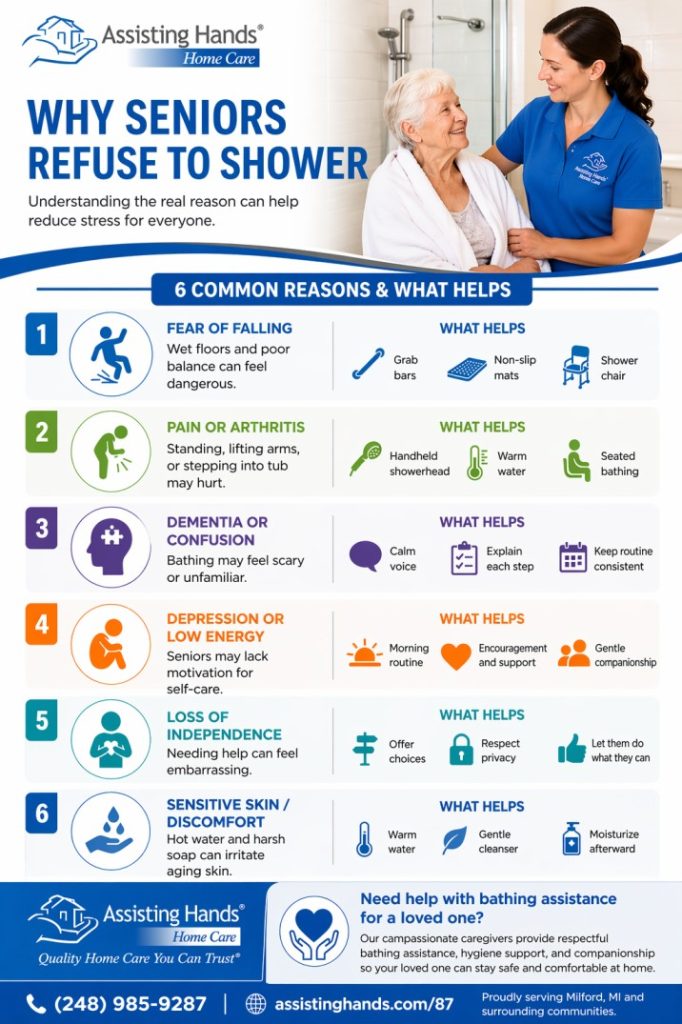
Fear of Falling The bathroom is one of the most dangerous rooms in the home for elder or seniors. Slippery floors, stepping over a tub ledge, and the instability of standing in a shower can feel honestly scary for an older adult with balance concerns. Many seniors refuse to bathe simply as they are afraid of getting hurt.
Pain/Discomfort One of the most common reasons that an older adult will avoid bathing is because it is painful for them to undress, raise their arms above their heads, and step in and out of a tub. Therefore, an older adult who finds bathing to be a painful activity will likely choose not to bathe at all.
Dementia or Memory Loss For seniors with Alzheimer’s or dementia, the concept of bathing can feel confusing, frightening, or even threatening. They may not understand what is happening to them, they may feel cold from the water coming down on them, or they may simply forget that they have not bathed recently.
Depression or Low Energy Depression is very common in older adults and often goes undiagnosed. A senior who is depressed may lack the motivation or energy to perform basic self-care tasks — including bathing.
Loss of Privacy and Independence Many seniors feel deeply feeling shame about needing help with something as personal as bathing. Accepting assistance can feel like a loss of dignity and independence — and refusing can be a way of supporting control over their own body.
Sensory Sensitivity Some seniors find the sensation of water, the noise of a shower, or the temperature change genuinely uncomfortable — particularly those with dementia or sensory processing changes.
How Often Should Seniors Shower?
There’s really no universal bathing routine for older people; it varies based on the individual’s level of physical activity, mobility, incontinence, current weather conditions, and state of skin health.
According to advice from Harvard Health Publishing, most individuals do not require a complete bath daily. Bathing too often can wash away some of the natural oils that help maintain the skin. This is particularly important for older adults whose skin typically becomes thinner and drier as they age.
For many older adults or seniors who experience dry, itchy, or sensitive skin, several complete showers per week (as opposed to performing showers every day) may sufficiently satisfy cleanliness as long as they practice daily hygiene tasks (i.e., washing their face, hands, armpits, and changing their clothing).
The American Academy of Dermatology also recommends using warm (not hot) water, limiting shower time, choosing gentle cleansers, and applying moisturizer afterward to help prevent dryness and irritation.
Seniors with dementia, incontinence, skin problems, or concerns related to potential infection could require different bathing schedules. To obtain more individualized recommendations, seniors with these problems should consult their physician.
10 Practical Tips to Help a Senior Bathe
1. Choose the Right Time
Do not force the issue. If your loved one says no, try again later. Bathing often works better when they feel calm and rested.
2. Offer Choices
Instead of giving commands, offer simple choices.
Examples:
- Shower now or after lunch?
- Bath today or tomorrow morning?
Choices help seniors feel in control.
3. Move Slowly
Do not rush the process. Give your loved one enough time and allow them to move at their own pace.
4. Improve Bathroom Safety
Make the bathroom safer by adding:
- Grab bars
- Non-slip mats
- Shower chair
- Better lighting
A safer bathroom can reduce fear.
5. Try a Sponge Bath
A full shower may not be needed every day. A warm sponge bath can help maintain hygiene between showers.
6. Use Gentle Language
Speak calmly and explain each step. Use reassuring words instead of direct commands.
7. Make It Comfortable
Play favorite music. Use familiar soap scents. Keep towels warm and clothes ready.
8. Ask for Professional Help
Some seniors feel more comfortable with a caregiver than a family member. A trained caregiver can often help successfully.
9. Speak With Their Doctor
If refusal happens often, ask their doctor for advice. Pain, depression, dementia, or medication side effects may be involved.
10. Notice Patterns
Some seniors cooperate better in the morning. Others respond better after meals. Learn what works best.
When Bathing Refusal Is a Sign of Something More Serious
At times, it is common and normal for people to resist bathing on occasion. However, If your loved one stops basic hygiene, shows self-neglect, confusion, personality changes, or withdrawal, speak with their doctor and consider home care support.
How an In-Home Care Professional Can Assist with Bathing Refusal
One of the most effective solutions for bathing refusal is bringing in a licensed in home caregiver. Here is why it works so well:
- They don’t carry any emotional baggage associated to a family member
- They are trained to provide personal care, including how to assist with bathing in a manner that maintains dignity while minimizing resistance
- They develop a consistent routine with the same individual caregiver knows and trusts over time
At Assisting Hands Home Care in Milford, MI, our caregivers are Licensed and professional in personal care assistance for seniors — including bathing, grooming, and hygiene support. We approach every client with patience, respect, and true compassion.
Need Help with Senior Bathing Care?
If bathing has become stressful or unsafe, Assisting Hands Home Care Milford can help.
Our compassionate caregivers provide respectful shower support, hygiene support, companionship, and dementia care so families can focus on being family.
Call today (248) 985-9287 to learn more about in-home senior care in Milford, MI.

