

Pets have long been cherished companions, offering emotional support, joy, and a sense of purpose. For seniors, adopting a pet can enhance their quality of life, reduce feelings of loneliness, and even encourage physical activity. However, not every pet is suited for every senior. It’s important to consider factors like mobility, health conditions, and the amount of time and energy a senior can dedicate to their pet. In this guide, we’ll explore how to choose the right pet for an elderly person and recommend some of the best pets for seniors.
Why Seniors Should Consider Owning a Pet
Before diving into the details of choosing the right pet, let’s highlight some of the reasons why seniors might want to consider having a furry companion:
- Emotional Support: Pets provide unconditional love and can help alleviate loneliness, a common challenge for many elderly individuals.
- Encouraging Movement: While some pets, such as dogs, require regular walks, this physical activity can help seniors stay active, improving overall health and fitness.
- Routine and Responsibility: Caring for a pet creates a daily routine, which can offer structure and purpose for seniors, especially those living alone.
- Mental Well-being: Studies show that interacting with pets can reduce stress, anxiety, hallucinations and depression while boosting mood.
Things to Consider When Choosing a Pet for a Senior
When selecting a pet for an elderly person, there are several key factors to think about:
- Activity Level: Consider the senior’s energy level and how much movement they are physically capable of. For example, a senior with limited mobility might not be able to handle an energetic dog that requires lots of exercise.
- Pet Care Needs: Some pets need more attention, grooming, or care than others. For example, a dog might need daily walks and grooming, whereas a cat or fish is much more independent and requires less time and effort.
- Size and Space Requirements: Larger pets, like big dogs, may require more space to move around, whereas smaller pets are often easier to manage in apartments or smaller homes.
- Health Considerations: It’s important to take any health issues into account. Some seniors may have allergies, asthma, or mobility issues that could influence the type of pet they can care for. Additionally, a senior with arthritis back problems or structural joint issues may not be able to lift or care for heavy pets.
- Temperament: Seniors might want to choose pets that are calm, easygoing, and not overly demanding. Pets with a gentle temperament that don’t need constant attention can make life easier for seniors.
The Best Pets for Seniors
Now that we’ve covered the considerations, let’s dive into the best types of pets for elderly people. Here are some great options, each with its own unique benefits:
1. Dogs: Loyal Companions
Dogs are known for their loyalty and affection, and many seniors enjoy having a dog by their side. However, it’s important to choose a breed that fits the senior’s lifestyle. Some dogs are very active and require frequent walks, while others are more laid-back and easy to care for.
Best Dog Breeds for Seniors:
- Cavalier King Charles Spaniel: This small dog breed is affectionate, gentle, and low-energy, making it perfect for seniors.
- Shih Tzu: Known for their calm nature, Shih Tzus don’t need as much exercise as larger dogs, making them ideal for seniors who may have limited mobility.
- Basset Hound: Basset Hounds are relaxed and relatively low-energy, and they’re easygoing, making them good companions for seniors.
- Chihuahua: This tiny breed is a great option for seniors who live in smaller spaces. Chihuahuas are low-maintenance and don’t need excessive exercise, making them ideal for less active seniors.
While dogs can be fantastic companions, it’s important to choose one with a manageable temperament and energy level that matches the senior’s lifestyle.
2. Cats: Low-Maintenance, Independent Companions
Cats can be an excellent choice for seniors, as they are independent and don’t require as much attention as dogs. Many cats are content to curl up and nap for most of the day, making them a perfect pet for a senior who may not have the time or energy for a more demanding animal.
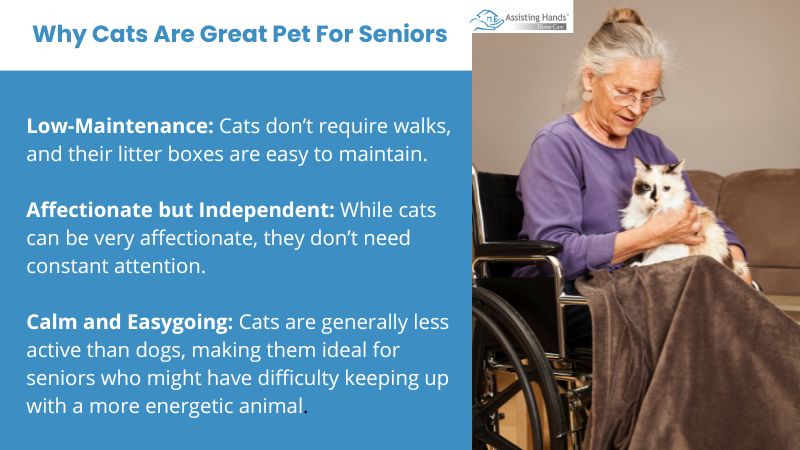
Why Cats Work Well for Seniors:
- Low-Maintenance: Cats don’t require walks, and their litter boxes are easy to maintain. Seniors don’t have to worry about taking their cat out or grooming them as often as they might a dog.
- Affectionate but Independent: While cats can be very affectionate, they don’t need constant attention. Many cats will happily snuggle with their owners or sit in their lap without demanding too much.
- Calm and Easygoing: Cats are generally less active than dogs, making them ideal for seniors who might have difficulty keeping up with a more energetic animal.
3. Fish: Low-Impact, Calming Companions
Fish can be an incredibly soothing and relaxing addition to a senior’s home. The gentle movement of fish in a tank has been shown to lower stress levels and provide a sense of tranquility. Fish require minimal care, which makes them ideal for seniors who prefer a more low-maintenance pet.
Why Fish Make Great Pets:
- Minimal Care: Fish only need to be fed once or twice a day, and the tank needs cleaning only once a week. There’s no need to walk or groom them.
- Relaxing to Watch: Fish tanks can create a calming environment in a home, providing entertainment and mental stimulation without the need for physical interaction.
- No Physical Strain: Fish are perfect for seniors who may have difficulty lifting or walking a dog, as there’s no need to physically interact with them in a traditional sense.
4. Birds: Social and Entertaining
Birds, particularly smaller species like parakeets, cockatiels, or canaries, can be excellent companions for seniors. These birds are relatively low-maintenance and can be very entertaining. Birds are social creatures and can form bonds with their owners, making them great for companionship.
Why Birds Work Well for Seniors:
- Low Maintenance: Birds don’t require walks, and their cages are easy to clean. Many birds also enjoy interacting with their owners, so they can provide both companionship and entertainment.
- Interactive and Playful: Birds can be trained to perform tricks or mimic sounds, providing fun and interactive companionship.
- Small Space Requirements: Birds need relatively little space and can thrive in smaller homes or apartments.
5. Small Mammals: Hamsters, Guinea Pigs, and Rabbits
For seniors looking for something small and easy to care for, small mammals like hamsters, guinea pigs, or rabbits can be a great choice. These pets are typically low-maintenance and can be very affectionate.
Benefits of Small Mammals:
- Low Maintenance: Small mammals don’t require extensive grooming or exercise, and they typically don’t need a lot of space. A small cage or pen is usually enough.
- Affectionate: Many small mammals, particularly guinea pigs and rabbits, are friendly and enjoy being held and cuddled, offering companionship and comfort.
- Entertaining: These pets often have playful personalities and can provide both entertainment and emotional support.
Finding the Right Pet For Your Elderly Loved One
If the senior is looking for companionship and can manage a more active pet, a dog or cat may be the perfect choice. If they need a more relaxed pet that doesn’t require a lot of attention, fish or small mammals are ideal. Either way, having a pet can greatly enhance a senior’s life, providing them with companionship, comfort, and joy.
By evaluating all the factors—health, living space, and the time available to care for the pet—seniors can find a companion that fits their life and provides lasting benefits.
Let Assisting Hands Be Your Senior’s Companion as Well
Assisting Hands Home Care understands the importance of companionship for seniors, and we are dedicated to providing the best support through our Companion Care services. We offer personalized care to help seniors with daily activities, provide social interaction, and ensure they remain comfortable and engaged. Our caregivers assist with tasks such as light housekeeping, running errands, and simply being a source of companionship to help seniors maintain their independence and quality of life. We proudly serve seniors in Westlake, Ohio, and surrounding areas. Contact us today to find out how our services can improve the lives of both your senior loved ones. Schedule a free consultation today at 440-517-4623.
FAQs
Can seniors with allergies still have pets?
Yes. Seniors with allergies can opt for hypoallergenic pets, such as certain dog breeds (Poodle, Maltese), cats (Siberian, Balinese), or even fish and reptiles, which don’t trigger allergies. Regular grooming and air filtration can also help minimize allergic reactions.
Are there pets that can help with mental health for seniors?
Yes. Dogs and cats are especially beneficial for reducing loneliness and depression. Birds and small mammals also provide emotional support, and fish tanks can have a calming effect that reduces stress and anxiety.
Can seniors with limited strength manage a dog?
Seniors with limited strength should choose small, low-energy breeds that require minimal walking or physical exertion. Alternatively, adopting an older or already-trained dog can reduce the physical demands of pet care.
Should seniors consider adopting senior pets instead of young ones?
Absolutely. Older pets often have lower energy needs, are already trained, and are a perfect match for seniors with limited mobility or time. This pairing can provide companionship with less physical strain.
What medical conditions qualify you for a service dog?
Service dogs are trained to assist people with a wide range of medical conditions. Common qualifying conditions include:
- Physical disabilities: Mobility impairments, paralysis, arthritis, or conditions requiring a wheelchair.
- Visual or hearing impairments: Blindness, low vision, or deafness.
- Neurological disorders: Seizure disorders (like epilepsy), diabetes-related hypoglycemia alerts, or balance issues.
- Psychiatric or neurological conditions: Post-traumatic stress disorder (PTSD), severe anxiety, panic disorders, and autism spectrum disorders.
To qualify, the individual must have a documented disability that substantially limits one or more major life activities. A service dog is specifically trained to mitigate that disability, such as retrieving items, alerting to sounds, guiding a person, or interrupting anxiety episodes. Unlike emotional support animals, service dogs have formal training for specific tasks related to a medical condition and are protected under the Americans with Disabilities Act (ADA).
What is the 3-3-3 rule for pets?
The 3-3-3 rule is a guideline some seniors and pet owners use to determine whether a pet is suitable for their lifestyle. It suggests:
- The pet should be able to adjust to a new home in 3 days.
- The pet’s care routine should be manageable in 3 hours per week.
- The pet’s lifespan should match or reasonably complement the senior’s expected ability to care for it over 3 years.
This rule helps ensure seniors choose pets they can safely and comfortably care for.
Will Medicare pay for an emotional support animal?
No, Medicare does not cover the cost of emotional support animals. Emotional support animals are considered a personal benefit rather than a medical treatment. However, some seniors may receive support for certain medical needs through private insurance or veterinary care discounts. Emotional support animals can still provide significant mental and emotional health benefits, even if costs are out-of-pocket.

