

The likelihood of developing diabetes increases as we age. In fact, the Centers for Disease Control and Prevention estimates that nearly one in three adults age 65 and older is living with the condition. Because diabetes can progress quietly, recognizing the earliest warning signs is essential. When seniors and their families know what to watch for, they can seek timely medical care, better manage symptoms, and reduce the risk of serious complications that can affect long-term health and independence.
Quick Answer: Early Signs of Diabetes in Seniors
Early signs of diabetes in seniors may include frequent urination, unexplained fatigue, slow-healing wounds, blurry vision, tingling in the hands or feet, confusion, balance problems, and repeated infections. Unlike younger adults, older adults often experience subtle cognitive or behavioral changes before classic diabetes symptoms appear.
Why Diabetes Looks Different in Older Adults
Diabetes symptoms often present differently in older adults, sometimes appearing atypical or so subtle that they are mistaken for normal aging. For example, instead of excessive thirst, seniors may experience fatigue, confusion, or changes in memory. A naturally reduced sense of thirst with age can also make diabetes seem less noticeable.
Chronic conditions such as dementia, arthritis, and heart disease often share overlapping symptoms with diabetes. Fluid retention from heart failure may resemble diabetic nerve issues, while arthritis-related inflammation and fatigue can mask metabolic changes.
Many seniors also take multiple prescription medications. Side effects such as fatigue, confusion, or dizziness can closely resemble diabetes symptoms. Certain medications, including diuretics and corticosteroids, can raise blood sugar levels, adding further complexity to diagnosis.
Can Diabetes Symptoms Be Mistaken for Aging?
Yes. Diabetes symptoms in seniors are frequently mistaken for normal aging because they develop gradually and overlap with common age-related changes. Persistent fatigue, memory lapses, balance issues, and vision changes should not be dismissed when they appear suddenly, worsen over time, or interfere with daily life.
Key Early Warning Signs of Diabetes in Seniors
Diabetes often develops gradually, and in older adults the symptoms can be subtle or mistaken for “normal aging.” Paying attention to small changes in daily health can make a major difference. Even mild or occasional issues deserve a conversation with a healthcare professional.
Early physical warning signs may include:
- Frequent urination, particularly waking multiple times during the night
- Increased thirst or a persistent dry mouth
- Unusual fatigue or weakness that doesn’t improve with rest
- Blurry, dim, or fluctuating vision
- Cuts, sores, or bruises that heal slowly
- Tingling, burning, or numbness in the hands or feet
- Sudden or unexplained weight loss
- Repeated urinary tract infections or skin infections
For seniors, symptoms don’t have to feel severe to be significant. Reporting changes early can lead to testing, diagnosis, and treatment that help prevent more serious complications down the road.
Is Frequent Urination at Night a Sign of Diabetes in Older Adults?
Yes. Repeated nighttime urination, known as nocturia, can be an early sign of diabetes in seniors. High blood sugar causes the kidneys to work harder to remove excess glucose, leading to increased urine production and disrupted sleep.
Cognitive & Behavioral Changes Often Missed
While diabetes is usually associated with physical symptoms, shifts in thinking, mood, and behavior are common in older adults and are frequently overlooked. Families may attribute these changes to typical aging, medication side effects, or early dementia, when blood sugar imbalance could be playing a significant role.
Watch for signs such as:
- New or increased confusion or episodes of “brain fog”
- Memory lapses or trouble concentrating on familiar tasks
- Mood changes, including irritability, anxiety, or depression
- Greater risk of falls caused by dizziness, lightheadedness, or weakness
These symptoms can be linked to fluctuating blood glucose levels, which affect how well the brain functions. Dehydration from high blood sugar may further worsen fatigue and confusion. Over time, nerve involvement can contribute to balance problems and instability, increasing the likelihood of falls and injury.
Because these warning signs can mimic other conditions, they are easy to dismiss. However, noticing patterns and seeking medical evaluation early can help uncover diabetes or prevent it from becoming more difficult to manage.
Can Diabetes Cause Confusion in Seniors?
Yes. Blood sugar fluctuations can directly affect brain function, leading to confusion, difficulty concentrating, and memory problems in seniors. These symptoms may improve with proper blood glucose management once diabetes is diagnosed and treated. Because confusion and memory changes can also signal neurodegenerative conditions, families should be aware of the early signs of Alzheimer’s disease and seek medical guidance when symptoms persist.
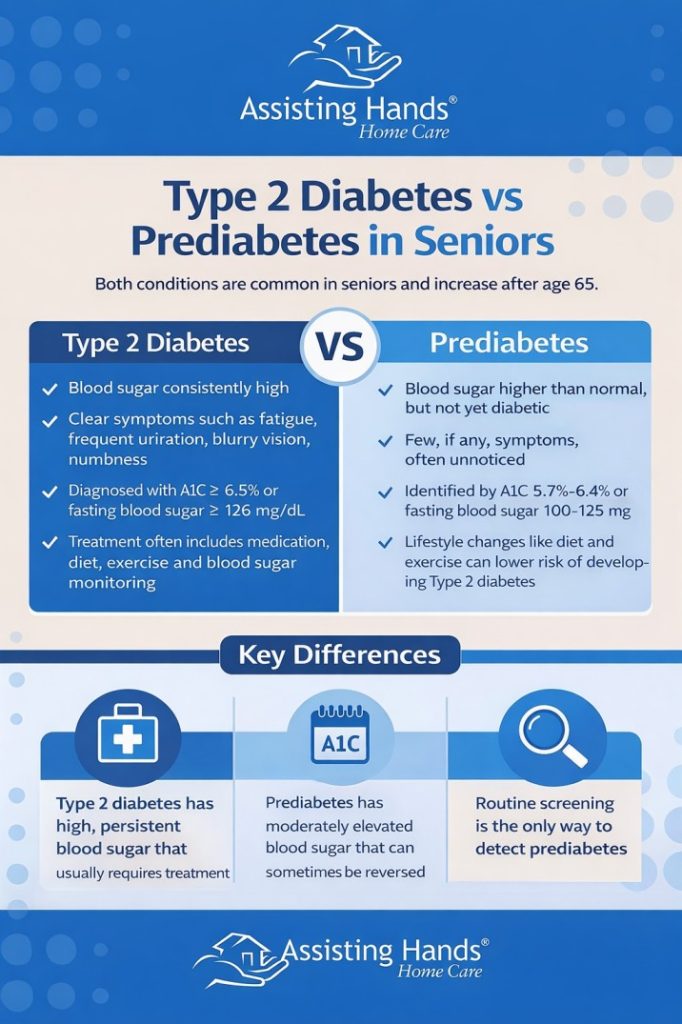
Type 2 Diabetes vs Prediabetes in Seniors
Many older adults are surprised to learn they may have blood sugar levels that are higher than normal, but not yet high enough to be considered Type 2 diabetes. This stage is known as prediabetes, and it becomes increasingly common after age 65.
The challenge is that prediabetes often causes few, if any, noticeable symptoms. A senior may feel relatively well while gradual changes are happening beneath the surface. Without testing, it can go undetected until blood sugar rises further and a diabetes diagnosis is made.
The good news is that early identification creates an opportunity to act. With guidance from a healthcare provider, lifestyle adjustments such as improved nutrition, physical activity, weight management, and medication when appropriate can delay or even prevent progression to Type 2 diabetes.
Because warning signs may be mild or invisible, routine screening is one of the most powerful tools seniors and families have. Regular checkups and simple blood tests can catch changes early, when they are often easier to manage and complications are more preventable.
Risk Factors That Increase Diabetes Risk After 60
Age alone raises the likelihood of developing diabetes, but certain health and lifestyle factors can make it even more probable. Understanding these risks helps seniors and families stay proactive about monitoring changes and scheduling appropriate screenings.
A person over 60 may face a higher risk if they have:
- A family history of diabetes, especially in a parent or sibling
- A sedentary lifestyle or limited regular physical activity
- High blood pressure or elevated cholesterol levels
- Obesity or excess weight around the abdomen
- A history of gestational diabetes (for women)
- Use of certain medications, including some steroids or diuretics, that may affect blood sugar
Having one or even several of these risk factors does not guarantee someone will develop diabetes. However, it does mean that closer observation, routine testing, and early conversations with a healthcare provider are especially important.
When Symptoms Are NOT “Just Aging”
It’s easy to dismiss changes in health as a natural part of getting older. While some shifts in energy, eyesight, or healing time can happen with age, persistent or worsening symptoms should never be brushed aside. In many cases, they may be the body’s way of signaling a blood sugar problem that needs medical attention.
For example:
- Feeling tired occasionally is common — but ongoing, unexplained fatigue that interferes with daily life is not considered normal.
- Vision can change with age, yet sudden blurriness or frequent fluctuations deserve prompt evaluation.
- Minor cuts may take a little longer to heal, but wounds that linger, reopen, or become infected are a serious red flag.
- Infections can occur at any age, however repeated urinary tract, yeast, or skin infections may point to elevated blood glucose.
The goal isn’t to create alarm. Instead, it’s about helping seniors and families recognize when something falls outside the range of typical aging. Identifying concerns early allows healthcare providers to run simple tests, offer guidance, and begin treatment if needed, often preventing more significant complications later.
When to See a Doctor (Clear Thresholds)
Knowing when to contact a healthcare professional can make all the difference in catching diabetes early and preventing complications. While mild or occasional symptoms may not always indicate a serious problem, certain patterns or persistent changes should prompt a timely evaluation.
Seek medical attention if you notice any of the following:
- Symptoms lasting more than two weeks without improvement
- Sudden or significant changes in vision, including blurriness or difficulty focusing
- Repeated nighttime urination that disrupts sleep regularly
- Unexplained weight loss despite no change in diet or activity
- New confusion, dizziness, or episodes of faintness
These guidelines are intended to help seniors and caregivers identify potential warning signs. They do not replace professional medical evaluation. If any of these symptoms occur, a qualified healthcare provider can perform testing, discuss next steps, and create a plan tailored to individual needs.
How Diabetes Is Diagnosed in Seniors
At the doctor’s office, several tests can help diagnose diabetes in seniors. The A1C blood test measures average blood glucose levels over the past three months, but in older adults with certain health conditions, it may not always provide accurate results. To ensure a reliable diagnosis, additional tests are often used.
For the fasting blood glucose test, seniors fast for at least eight hours before their blood is drawn. The oral glucose tolerance test involves two steps: a fasting blood draw followed by a second test two hours after drinking a sugary solution. If blood sugar levels remain elevated, a diabetes diagnosis may be confirmed.
What Early Diagnosis Makes Possible
Early detection of diabetes is crucial. Promptly managing high blood sugar levels stops or slows damage to nerves and major organs, such as the heart and eyes. In addition to reducing risks of complications, an early diagnosis gives seniors a treatment plan for exercise, diet, and medication that controls symptoms.
Seniors receive nutrition support, since food choices impact blood glucose levels. They are taught to monitor their blood glucose and advised to exercise daily to improve glucose levels. The care support received upon early detection allows older diabetic patients to enjoy an improved quality of life.
Taking action at the first signs of diabetes ensures prompt treatment. Without addressing diabetes symptoms right away, the disease goes untreated and causes damage to the kidneys, nerves, feet and heart and other serious health problems. Seniors with type 2 diabetes are at greater risk for dementia.
Early diagnosis also allows seniors and caregivers to learn how to manage diabetes in the elderly through daily routines that support blood sugar control and long-term health.
How Assisting Hands Helps Seniors with Diabetes
When diabetes symptoms appear in older adults, quality, hands-on support and monitoring can make a meaningful difference. At Assisting Hands Home Care, we offer a comprehensive range of non-medical in-home care services designed to support the physical, emotional, and social well-being of seniors.

Our professional caregivers provide timely medication reminders for prescribed diabetes treatments and transportation to medical appointments for A1C testing and other important evaluations. They also prepare nutritious meals that help seniors eat well, stay hydrated, and maintain a healthy weight.
Daily physical activity is encouraged, with caregivers helping to schedule and assist with exercises that can improve glucose control. In addition, we provide personal hygiene support, including bathing, grooming, and toileting, while remaining vigilant for early warning signs of complications. For example, a caregiver may be the first to notice a cut or sore on a senior’s foot, ensuring it receives prompt attention before it worsens.
Senior home care from Assisting Hands Home Care is the solution when early signs of diabetes in older adults develop. Our dedicated caregivers serve Westlake, Ohio. Schedule a free in-home consultation today to learn how compassionate elder care enhances the health and well-being of seniors.
FAQs Related to Diabetes in Seniors
Can diabetes affect vision before it is diagnosed?
Yes. Fluctuating blood sugar levels can cause temporary blurry or fluctuating vision even before diabetes is diagnosed. These changes may come and go, which can delay recognition of the underlying issue.
Do seniors with diabetes heal more slowly from injuries?
Yes. Elevated blood sugar can reduce circulation and impair the immune response, leading to slower healing of cuts, sores, and wounds. This is especially important to monitor in the feet.
Can medication changes trigger diabetes symptoms in seniors?
Yes. Certain medications, including steroids and some diuretics, can raise blood sugar levels and trigger diabetes symptoms. Medication reviews are an important part of senior healthcare.
What is the normal range for blood sugar?
Normal blood sugar ranges vary depending on when the test is taken:
- Fasting blood sugar (before eating): 70–99 mg/dL
- After meals (1–2 hours): Less than 140 mg/dL
- A1C (average over 3 months): Below 5.7%
Levels consistently above these ranges may indicate prediabetes or diabetes and should be evaluated by a healthcare provider.
Can a 70-year-old get diabetes?
Yes. Diabetes can develop at any age, and it is very common in adults over 65. In fact, nearly one in three seniors is estimated to have diabetes.
Age-related changes such as reduced physical activity, muscle loss, weight gain, medication use, and changes in insulin sensitivity all increase the risk. Many seniors develop Type 2 diabetes later in life, even if they had no issues with blood sugar earlier.
How much insulin should I take if my blood sugar is 250?
The amount of insulin a person needs cannot be safely determined without medical guidance. Insulin dosing depends on several individual factors, including:
- Type of diabetes
- Prescribed insulin type
- Body weight
- Meal timing
- Other medications
- Overall health status
A blood sugar reading of 250 mg/dL is considered high and should be addressed promptly. Anyone experiencing repeated high readings should contact their doctor or diabetes care provider right away. Taking the wrong dose of insulin can be dangerous and may lead to severe low blood sugar (hypoglycemia).
If blood sugar is very high and symptoms such as confusion, nausea, vomiting, or weakness occur, seek medical attention immediately.

