

Head traumas can occur from numerous causes, like a vehicle accident, a fall, or being hit by an object. Certain head traumas can increase the risk for dementia years later. Seniors should follow fall prevention strategies to avoid falling and suffering head trauma.
In the United States, it is estimated that 1.7 million people suffer from a head injury each year. Almost half of these cases result in hospitalization and 52,000 patients die. Long-term disabilities plague the 5.3 million Americans who suffer from head trauma experienced in prior years. This blog discusses the risk of dementia after head trauma, and how caregivers can prevent falls and other occurrences from happening.
What is Head Trauma?
A head trauma is also called a traumatic brain injury (TBI). It’s caused by an external force that damages the brain. The head trauma may be caused by a blow to the head, a jolt, or a forceful bump. However, not all blows to the head result in head trauma.
The level of head trauma severity varies and is categorized as either mild, moderate, or severe. Mild head trauma does not lead to a loss of consciousness, or, unconsciousness may be brief. The individual may experience symptoms, like confusion, dizziness, or headaches.
Moderate head trauma causes a loss of consciousness for 30 minutes up to 24 hours and results in impairment in thinking and memory. When unconsciousness lasts over 24 hours after a head trauma, it is considered severe and can potentially lead to a coma or severe neurological impairments.
What Causes Head Trauma?
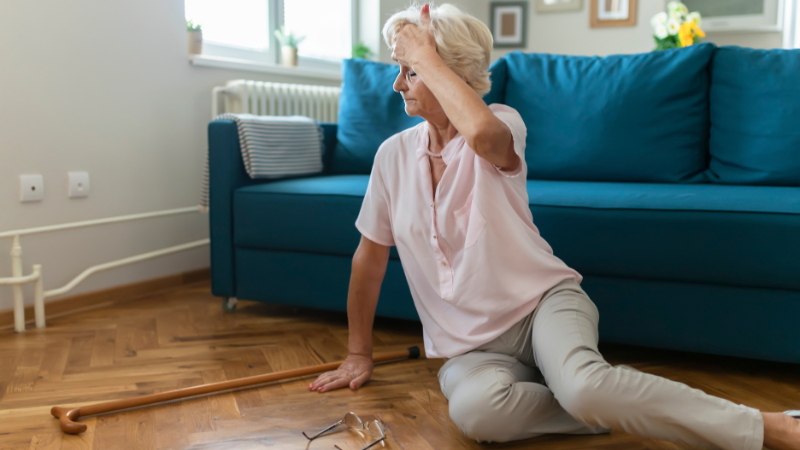
Head trauma can be caused by an assault, sports accident, or fall. Falls are the leading cause of traumatic brain injury in the older adult population. Aging people are at a high risk for head traumas, with 1 in 4 adults over 65 falling each year, according to the CDC.
Falls may be caused by slipping on a rug or stumbling over an object. Additionally, falls can be the result of serious health symptoms, such as cardiac issues or fainting. Seniors who suffer movement problems are at risk for falling, as are those who take medications with sedative effects.
What Are the Consequences of Head Trauma?
Seniors who experience head trauma may suffer from its short-term and long-term consequences. Short-term symptoms associated with mild head trauma include dizziness, nausea, confusion, and an inability to process information. They may become sensitive to light or experience vision distortion.
Symptoms from moderate head trauma usually resolve after 6 to 9 months. Aside from dizziness and headaches, the individual may develop problems with concentration, thinking, and memory. Irritability is a behavioral issue that can arise from moderate head trauma.
Can Head Trauma Increase the Risk of Dementia?
The most worrisome long-term effect of head trauma is the increased risk of dementia. Individuals who undergo a head trauma in early or midlife have a higher risk for developing dementia later in life. Moderate and severe head traumas increase dementia risk by 2- and 4-fold.
Sufficient data is not available for the dementia risk associated with mild head traumas. This is due in part to the fact that mild head traumas are not fully documented. However, multiple mild head traumas, such as those experienced by professional boxers, are linked with a higher dementia risk.

Studies of retired professional boxers, for instance, reveal late-life dementia to be commonplace. These individuals show acute early symptoms, such as staggering and instability, both associated with mental confusion. Years after retirement, they show symptoms, like tremors and mental deterioration.
Retired hockey and football players as well as other high-contact sports athletes commonly experience chronic traumatic encephalopathy, which is a type of dementia. Veterans are also likely to suffer multiple mild head traumas and experience similar issues with cognition.
Head trauma is in fact the most well-known environmental risk factor for dementia. Several studies show that people who experience a head injury that results in loss of consciousness have a 50 percent increased risk for dementia in comparison to others.
What Should Seniors Do After Experiencing Head Trauma?
A head trauma of any severity can lead to brain injury. Seniors who suffer head trauma, even if mild, should seek medical attention right away. Caregivers should call 911 if the senior falls from a height of over three feet or is unconscious for more than a minute.
How Can Seniors Prevent Head Trauma?
Older adults can reduce their risk of falls by using mobility supports, such as a cane or walker, which compensate for muscle weakness and balance issues. Remove household clutter and work with a physician to adjust medications with side effects that might lead to falls.
Attentive care from the caregivers at Assisting Hands Home Care helps to reduce the likelihood of falls in seniors. Our professional caregivers support seniors who struggle with mobility issues. We accompany the elderly as they walk outside or move through the home. Transfer assistance is also provided.

Fall prevention includes removing clutter from walkways in the household. Our home care services extend further with caregivers providing assistance with the activities of daily living, from healthy meal preparation to light household chores and medication reminders. We provide escort and transportation to doctors’ offices too.
We provide compassionate dementia care to seniors who are diagnosed with this condition. Caregivers stimulate their minds with fun games, pleasant conversations, and enjoyable recreational activities. Our social engagement involves reading books and watching their favorite television shows with them.
Caregivers respond to dementia symptoms, like agitation, with distraction techniques. We take steps to safeguard the well-being of dementia patients who are prone to wandering by monitoring them closely and ensuring their needs for snacks, water, and stimulation are fulfilled.
Your aging loved one receives quality care from the dedicated caregivers at Assisting Hands Home Care – The Villages, FL. We keep seniors safe, healthy, and comfortable. Schedule a free in-home consult today at our location in The Villages, Florida, and see how home care enhances the well-being of the senior in your life.

