

The holidays often bring families together after weeks or months apart. You may sit around the table with your parents, catch up on family news, and come away thinking everything seems fine. But a few hours together don’t always show how your parents are managing day to day.
The clearest signs your parent needs help at home usually show up in the house, not the conversation: spoiled or missing food, missed doses in the pill organizer, unopened bills, new bruises, and fresh dents on the car. A holiday visit is often the only time long-distance families see these things up close.
Your parent may also rally when family comes to town and work hard to reassure you. The goal isn’t to find everything that’s wrong. It’s to notice what has changed since your last visit, sort what needs attention now from what can wait, and set up support before you head home.
Why Holiday Visits Reveal Signs You Miss Over the Phone
A phone call gives you your parent’s version of the week. A visit lets you see the routines behind it. For families traveling to Southwest Florida, it may also be the first time in months that they have seen Mom or Dad in person.
That matters because many older adults manage alone, with no one watching day to day. Nearly 3 in 10 adults age 65 and older lived alone in 2022, according to the U.S. Census Bureau. At the same time, most older adults want to remain at home. Most want to keep it that way: in AARP’s 2024 Home and Community Preferences Survey, 75% of adults 50 and older said they want to stay in their current home as long as possible.
Living independently while wanting to stay home is exactly why your visit counts. It is your best chance to check whether your parent’s routines are still working.
Room by Room: Signs Your Elderly Parent Needs Help at Home
The clearest signs your parent needs in-home help are often hiding in plain sight. Instead of asking whether your parent seems okay, look at the places where they cook, bathe, take medications, handle the mail, and move through the house each day.
In the Kitchen: Food, Cooking, and Signs of Skipped Meals
Open the refrigerator before anyone starts cooking for the holiday. A fridge full of expired food, or one that is nearly empty, tells you more about the past month than any conversation will. Check the stovetop and the bottoms of pans for scorch marks, which can mean a burner was left on. If your parent used to cook real meals and now lives on toast and frozen dinners, find out why.
What to watch for:
- Spoiled, moldy, or long-expired food
- The same unopened groceries sitting in the pantry for weeks
- Burn marks on pans, counters, or the microwave
- Dishes piled up or a dishwasher that hasn’t been run
In the Bathroom: Missed Medications and Fall Risk
The bathroom is one of the best places to spot both medication problems and fall risks. Check the pill bottles and the weekly organizer. If Tuesday’s pills are still there on Friday, or you find duplicate bottles of the same medication from different pharmacies, make a note of it. Then look at the room itself: slippery tile, a low toilet, a high-sided tub, or a shower without grab bars all raise the risk of a fall.
What to watch for:
- Missed doses in the pill organizer, or no organizer at all
- Expired prescriptions or duplicate bottles
- Prescriptions from several doctors with no one keeping track
- No grab bars or non-slip mats near the tub and toilet
The Mail Pile: Unpaid Bills and Financial Scams
Offer to help sort the mail before the new year. It’s a natural, low-pressure way to see whether anything is slipping. Look for late notices, utility shutoff warnings, or duplicate payments. Watch for scams, too: sweepstakes letters, urgent calls claiming a grandchild is in trouble, or requests for payment by gift card.
What to watch for:
- Unopened bank statements or bills
- Past-due, collection, or shutoff notices
- Stacks of sweepstakes, prize, or charity solicitation mail
- Gift card receipts or wire transfer slips nobody can explain
Stairs and Walkways: Fall Hazards and Unexplained Bruises
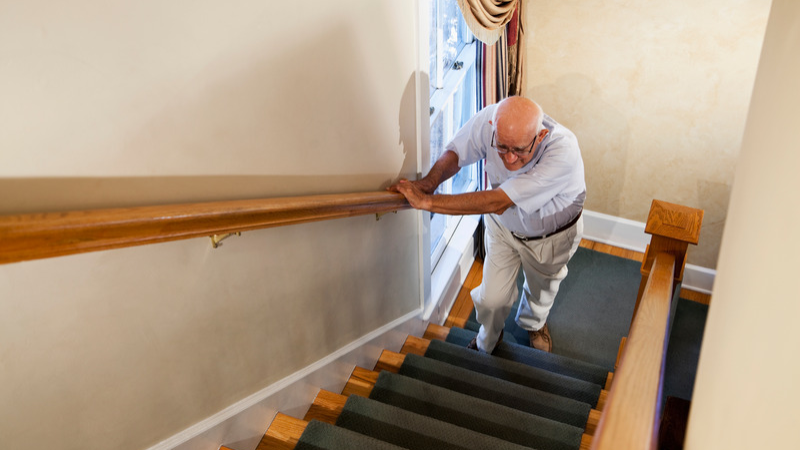
Watch how your parent moves through the house rather than asking how they’re getting around. About 1 in 4 adults age 65 and older falls each year, according to the CDC, and many never mention it. Do they reach for the wall or a chair back as they walk? Take stairs one step at a time? Avoid the second floor altogether? New bruises on the arms, shins, or hands, especially ones they brush off, may point to falls or near-falls.
What to watch for:
- Holding onto counters, walls, or furniture while walking
- Bruises, scrapes, or bandages with no clear story
- Loose rugs, cords, or clutter across walkways
- Loose railings or uneven steps at the entry or lanai
The Car: Signs It May Be Time to Stop Driving
Offer to ride along on an errand. In daylight, check the car for new dents, scraped bumpers, or a cracked mirror. During the drive, notice whether your parent stays in their lane, responds to traffic, and follows familiar routes without confusion. Getting lost on a route they have driven for years is an important warning sign.
In Florida, drivers 80 and older must pass a vision test each time they renew their license, according to the Florida Highway Safety and Motor Vehicles. If renewal is coming up, it’s a natural opening to talk about driving.
What to watch for:
- Fresh dents, scrapes, or mirror damage
- Tickets, warning letters, or insurance notices
- Drifting between lanes or rolling through stop signs
- Confusion on familiar routes, like the drive to church or the pharmacy
The Hurricane Plan: Storm Readiness and Unrepaired Damage
Hurricane season ends November 30, and many Lee County homes still show damage from Ian, Helene, and Milton. Ask whether your parent knows their evacuation zone, has a week of medications on hand, and has a plan to leave if a storm is coming. If your parent uses oxygen or has limited mobility, ask whether they are registered for Lee County’s special needs shelter program.
What to watch for:
- Expired batteries, water, or food in the storm kit
- Roof leaks, water stains, or mold left from past storms
- A generator stored or run inside the garage
- No written evacuation plan or list of emergency contacts
Your Parent: Weight, Hygiene, Memory, and Mood
Compare what you see now with your last visit, not with how your parent looked years ago. Clothes that hang loosely, a belt on a tighter notch, or a ring that slips around a finger can signal unintentional weight loss. Notice whether your parent is keeping up with bathing and changing clothes. Listen for stories or questions repeated in the same afternoon.
Mood matters, too. If your parent once loved the noise of holiday gatherings but now retreats to the bedroom, something may have changed. Fatigue, pain, hearing loss, memory problems, or depression can all play a role. One change alone doesn’t mean something is wrong, but a pattern is worth a closer look.
What to watch for:
- Weight change you can see in how clothes fit
- Body odor, unwashed hair, or the same outfit two days in a row
- Repeated questions or stories in the same conversation
- Less interest in friends, church, or hobbies they used to enjoy
Which Warning Signs Are Urgent and Which Can Wait
Some changes need care today, some need a doctor’s call this week, and some just need watching. Sorting what you saw by urgency helps you act calmly before you leave town.
| Priority | What You Noticed | What to Do |
|---|---|---|
| Get care today | Face drooping, arm weakness, or slurred speech; a fall with a head strike or new pain; sudden confusion | Call 911 for stroke signs. For sudden confusion, call the doctor the same day, since it can come from a urinary tract infection, dehydration, or a medication problem. |
| Call the doctor this week | Unexplained bruising, sudden weight loss, medication confusion, getting lost while driving | Call the primary care office before you leave town and describe exactly what you saw. |
| Address within the month | Home upkeep slipping, missed bills, skipped meals, social withdrawal, no hurricane plan | Make a plan with siblings and consider a few hours of help each week. |
| Watch and revisit | Mild forgetfulness, a slower pace, one missed appointment | Note it, check in more often, and compare on your next visit. |
Before You Fly Home: 5 Things to Set Up
The days before you leave are your best window to put support in place, because it is much harder to arrange from 1,000 miles away.
- Photograph the medication list and doctor contacts: Snap the pill bottles, the organizer, and the names and numbers of every doctor and pharmacy.
- Ask about a HIPAA authorization: With your parent’s signature on file, their doctors can talk with you directly when something comes up.
- Give a trusted neighbor a key: Choose someone nearby who can check in after a missed call or a storm warning.
- Schedule a weekly video call: Ask your parent to walk you through the kitchen now and then, so you can see what a phone call can’t show.
- Book a home care consultation while you’re still in town: Being in the room helps your parent feel heard, and it lets you meet the people who would provide care.
Home Care or Assisted Living: Which Fits What You Saw?
Most of the signs on a holiday visit can be handled at home with the right support, without a move. Use what you noticed to decide where to start.
| What You Noticed | Help at Home Works When | A Move May Make Sense When |
|---|---|---|
| Skipped meals, spoiled food | A caregiver can shop, cook, and share meals a few days a week. | Your parent can no longer eat safely without someone present at every meal. |
| Missed medications | Reminders and a set routine keep doses on track. | Medications need nursing administration or close monitoring. |
| Falls or unsteady walking | Help with bathing, stairs, and errands reduces the risk. | Your parent needs lifting or two-person help with most movement. |
| Memory changes | Your parent is safe with check-ins or overnight and 24-hour care. | Wandering or unsafe behavior continues even with care at home. |
| Loneliness, withdrawal | Regular visits, outings, and conversation fill the gap. | Your parent wants a built-in community and is open to moving. |
How to Talk to Your Parents About Getting Help at Home
The best conversations start with one specific thing you noticed and an offer to help, not a list of everything that worries you. Your parent is far more likely to say yes to a small change they helped choose.
Pick a Quiet Moment, Not the Holiday Table
Avoid raising the subject at dinner or in front of a room full of relatives. Find a private moment with no pressure to decide right away.
Open With One Specific Observation
“Dad, I noticed a few pills were still in your organizer this week. Would it help if we set it up together before I head home?”
When Your Parents Say, “I’m Fine”
Don’t argue or list your worries. Acknowledge their independence, then suggest one small change.
“I believe you, and I want you to stay independent. Would you consider having someone help with grocery shopping so you don’t have to drive after dark?”
“I’m fine” often reflects a fear of losing control. Make clear that accepting help is how they keep their independence, not how they give it up.
When Cost Is the Real Objection
Acknowledge that cost matters and offer to look at real numbers together.
“Let’s find out what a few hours of help each week would actually cost. Can we look at the options together?”
Check whether your parent has long-term care insurance or may qualify for veterans benefits.
When the Objection Is Having a Stranger in the House
Give your parent a say in who provides care, which days visits happen, and which tasks the caregiver handles.
“What if we tried it for a month, on days you choose? If it isn’t a good fit, we’ll reconsider.”
Read: How to Talk to Your Parents About In-Home Care: A Fort Myers Family Guide
Home Care Support for Families in Fort Myers, FL

If something you saw this holiday worries you, start with one honest conversation and one small change. Even a few hours of help each week can cover meals, personal care, light housekeeping, errands, and companionship, so your parent can stay in the home they love.
Assisting Hands Home Care in Fort Myers provides personalized in-home care built around your parent’s needs, routines, and preferences, from a few hours a week to overnight and 24-hour care. Call (239) 510-7761 to schedule a free in-home consultation, ideally before you fly home so you can be part of it.
Assisting Hands Home Care is a locally owned, licensed home care agency serving Fort Myers, Cape Coral, Bonita Springs, Estero, Punta Gorda, and communities across Lee and Charlotte Counties.
Signs Your Parent Needs Help: FAQs
What are the first signs an elderly parent needs help at home?
The earliest signs usually show up in the house before they show up in the person: spoiled or missing food, unopened mail and late notices, missed doses in the pill organizer, and new clutter in rooms that used to be kept up. Unexplained bruises and weight loss are also early signals.
Is forgetfulness a normal part of aging or a sign of dementia?
Occasionally misplacing keys or forgetting a name and remembering it later is common with age. Forgetting recent conversations, getting lost in familiar places, or struggling with routine tasks like paying bills is not, and should be checked by a doctor. Sudden confusion can also come from a urinary tract infection, dehydration, or a medication interaction, all of which are treatable.
How do I convince my parent to accept help?
Skip the convincing and start with a small, specific offer tied to something they want, like keeping their car keys or staying in their home. Suggest a short trial of a few hours a week, let them choose the days, and make sure they meet the caregiver first.
What if my parent lives alone and refuses to move?
Staying home is often realistic with the right support. Non-medical home care can cover meals, errands, rides, and safety check-ins while your parent stays in charge of their household. Start with the gap that worries you most, whether that’s medications, driving, or isolation, and add help only as needed.
What should I do before leaving my parent’s home after a holiday visit?
Photograph the medication list and doctor contacts, ask about a HIPAA authorization, give a neighbor a key, and set up a weekly video call. If you’re already concerned, book a home care consultation while you’re still in town so you can attend.
How much does in-home care cost in Fort Myers?
Cost depends on how many hours of care your parent needs and what kind of help is involved. At Assisting Hands Home Care in Fort Myers, care starts at $34 per hour, and the exact rate is set after the free in-home assessment. Medicare does not cover non-medical home care, but long-term care insurance and VA benefits may help. See our pricing page for details.

