

Most seniors need between 7 and 9 hours of sleep each night to maintain physical health, cognitive function, emotional well-being, and overall quality of life. While aging can naturally change sleep patterns and make sleep lighter or more fragmented, older adults still require adequate rest. Quality sleep supports brain function, heart health, immune system strength, memory retention, and daily energy levels.
According to sleep experts and organizations such as the National Institute on Aging and the Centers for Disease Control and Prevention, older adults generally need the same amount of sleep as younger adults. However, many seniors experience sleep disruptions due to health conditions, medications, or natural changes in sleep cycles.
In this article, we’ll explore why sleep is so important for seniors, how aging affects sleep, what happens when seniors don’t get enough rest, and practical ways to improve sleep quality. We’ll also cover when sleep issues may require medical attention and how in-home care can help support better rest.
Quick Takeaways: Senior Sleep Needs
- Most seniors need 7 to 9 hours of sleep each night
- Aging can naturally cause lighter and more fragmented sleep
- Poor sleep increases risks of falls, memory issues, and mood changes
- Common sleep disorders include insomnia and sleep apnea
- Oversleeping may signal underlying medical or emotional issues
- Healthy routines and caregiver support can improve sleep quality
Why is Adequate Sleep Important for Seniors?
Sleep is essential because it allows the body and mind to recover, repair, and function properly. In older adults, consistent sleep plays a direct role in maintaining independence and reducing health risks.
Key benefits of healthy sleep for seniors include:
- Improved memory and cognitive performance
- Better decision-making and focus
- Stronger immune system response
- Reduced risk of falls and accidents
- Improved emotional regulation and mood stability
- Lower risk of chronic disease complications
Poor sleep in seniors has also been linked to increased risk of:
- Cognitive decline
- Depression and anxiety
- Cardiovascular disease
- Weak immune response
- Higher fall risk due to fatigue and slowed reaction time
How Aging Changes Sleep Patterns in Older Adults
Sleep patterns naturally change with age. Older adults often go to bed earlier and wake up earlier than younger people, and the overall amount of sleep they get may gradually decrease over time. Their sleep also tends to become lighter and more fragmented, causing them to wake up more frequently during the night. In addition, certain medications commonly taken by seniors can interfere with sleep quality and duration.
Changes in the body’s circadian rhythm and melatonin production can also affect sleep quality and sleep timing in older adults. In addition, certain medications commonly taken by seniors can interfere with sleep quality and duration. If you notice that your senior loved one is struggling with sleep, it is important to encourage healthy sleep habits and routines. Persistent sleep issues should not be ignored, as they may be signs of an underlying sleep disorder or medical condition that requires professional diagnosis and treatment.
What Happens If Seniors Don’t Get Enough Sleep?
When seniors do not get enough sleep, they may begin to experience symptoms that negatively affect their overall health and quality of life. Over time, chronic sleep deprivation can contribute to serious physical, emotional, and cognitive problems. Recognizing these warning signs early and seeking medical attention can help prevent further complications.
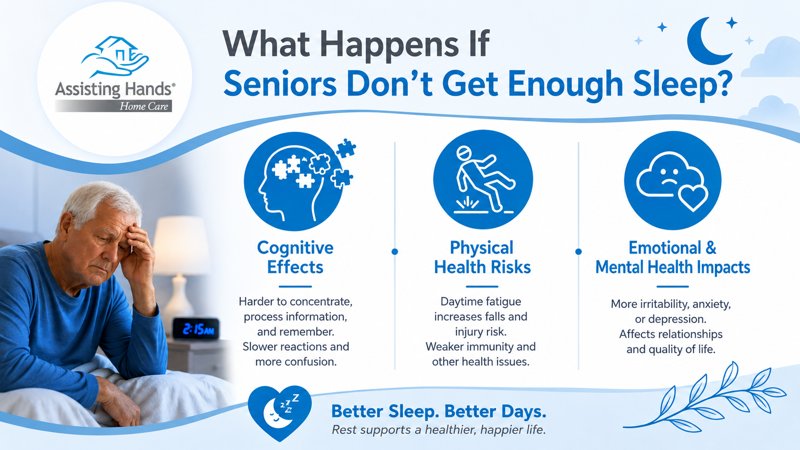
Cognitive Effects of Sleep Deprivation
Insufficient sleep can impair cognitive function, making it harder for seniors to concentrate, process information, and retain memories. Lack of sleep may also reduce attention span, slow reaction times, and increase confusion, which can interfere with daily activities and independence.
Physical Health Risks
Poor sleep can lead to daytime fatigue and excessive sleepiness, increasing the risk of falls, accidents, and injuries. Chronic sleep deprivation may also weaken the immune system and contribute to other health conditions that affect a senior’s overall well-being.
Emotional and Mental Health Impacts
Seniors who do not get enough sleep may experience irritability, mood swings, anxiety, or depression. Ongoing sleep problems can negatively affect emotional health, relationships, and overall quality of life.
Read: What Causes Agression in the Elderly? Understanding Triggers & Solutions
Common Sleep Problems in Older Adults
As we age, sleep patterns naturally change. Sleep often becomes shorter, lighter, and more fragmented. Older adults may go to bed earlier and wake up earlier than they did when they were younger. They also tend to spend less time in deep sleep and may wake up several times throughout the night. In some cases, these changes can be linked to common sleep disorders that affect seniors.
Insomnia
Insomnia is one of the most common sleep problems among older adults. It involves difficulty falling asleep, staying asleep, or waking up too early and being unable to fall back asleep. Research estimates that 40-70% of seniors experience chronic sleep issues, including insomnia. Insomnia may be short-term due to stress or lifestyle changes, or it may become chronic because of underlying medical conditions, medications, or mental health concerns.
Obstructive Sleep Apnea (OSA)
Obstructive Sleep Apnea occurs when breathing repeatedly stops and starts during sleep due to blocked airways. It is estimated that 20% to 60% of adults over age 65 are affected by this condition. Common symptoms include loud snoring, daytime fatigue, morning headaches, and an increased risk of cardiovascular problems such as high blood pressure and heart disease.
Restless Legs Syndrome (RLS) and Periodic Limb Movement Disorder (PLMD)
Restless Legs Syndrome causes uncomfortable sensations in the legs and an uncontrollable urge to move them, especially at night. Periodic Limb Movement Disorder involves involuntary leg movements during sleep. Both conditions can interrupt sleep, reduce sleep quality, and contribute to insomnia and daytime exhaustion.
REM Sleep Behavior Disorder (RBD)
REM Sleep Behavior Disorder occurs when the body does not experience the normal muscle paralysis that typically happens during REM sleep. As a result, individuals may physically act out their dreams through movements, talking, or sudden actions while asleep. This disorder is more common in older adults and may be associated with neurological conditions.
Circadian Rhythm Disorders
The body’s internal clock, also known as the circadian rhythm, can become less efficient with age. This may cause seniors to feel sleepy earlier in the evening and wake up earlier in the morning. Circadian rhythm disruptions can also make it more difficult to maintain a consistent sleep schedule and achieve restful sleep.
Can Seniors Sleep Too Much? Understanding Oversleeping
In some cases, seniors may sleep excessively, which can be a sign of an underlying health issue that has not yet been diagnosed. Oversleeping should not be ignored, especially when fatigue, confusion, or changes in mood and behavior accompany it.
Several conditions and factors can contribute to excessive sleepiness in older adults, including the following:
- Sleep Disorders: Conditions such as sleep apnea and insomnia can disrupt sleep quality, even if a senior spends many hours in bed. Interrupted or poor-quality sleep can lead to extreme daytime drowsiness and fatigue.
- Mental Health Conditions: Depression, anxiety, and other mental health concerns can affect sleep patterns and may cause seniors to feel unusually tired or sleepy throughout the day.
- Medication Side Effects: Certain medications, including antidepressants, pain relievers, antihistamines, and sedatives, can cause drowsiness and increase the need for sleep.
- Chronic Health Conditions: Medical conditions such as diabetes, heart disease, and neurological disorders may contribute to excessive fatigue and increased sleepiness in older adults.
Signs of Healthy Sleep in Seniors
Healthy sleep is not only about the number of hours slept each night. Signs that a senior is getting quality, restorative sleep may include:
- Waking up feeling rested
- Maintaining stable mood and energy levels
- Staying alert during the day
- Fewer daytime naps
- Consistent sleep and wake times
- Improved concentration and memory
- Reduced irritability or confusion

Best Ways Seniors Can Improve Sleep Quality
There are many effective ways seniors can improve their sleep quality and maintain better physical and mental health as they age. Developing healthy sleep habits can help older adults feel more rested, energized, and better able to enjoy daily life. Here are some of the best ways seniors can improve their sleep quality:
1. Establish a Consistent Sleep Schedule
Going to bed and waking up at the same time every day helps regulate the body’s internal clock and promotes healthier sleep patterns. Maintaining a consistent sleep routine can improve overall sleep quality and make it easier for seniors to fall asleep and stay asleep throughout the night.
2. Optimize the Sleep Environment
Creating a comfortable and relaxing sleep environment can make a significant difference in sleep quality. Seniors should keep their bedroom quiet, cool, and comfortably lit to encourage relaxation before bedtime. It is also important to remove tripping hazards and ensure the space is safe and easy to navigate during nighttime bathroom trips.
3. Limit Sleep Disruptors
Certain activities and habits can interfere with restful sleep. Seniors should limit screen time before bed, including using smartphones, tablets, or watching television, as the light from screens can make it harder to fall asleep. Reducing caffeine intake late in the day and avoiding stimulating activities before bedtime can also help improve sleep.
4. Increase Daytime Activity
Staying active during the day can help seniors sleep better at night. Regular physical activity, social engagement, hobbies, and spending time with friends and family can improve both physical and emotional well-being while promoting healthier sleep patterns over time. Even light exercise, such as walking, can make a positive difference.
5. Manage Medical Contributors
Many medical conditions and medications can affect sleep quality. Seniors should work closely with their healthcare providers to manage chronic health conditions and review medications that may be contributing to sleep problems. Proper medical care can help identify underlying issues and support better, more restorative sleep.
When Should Seniors See a Doctor About Sleep Problems?
If your senior loved one is experiencing sleep issues that are affecting their health, safety, or daily quality of life, it is important to seek medical advice. While some changes in sleep patterns are a normal part of aging, ongoing or worsening sleep problems may be signs of an underlying medical condition that requires diagnosis and treatment. Recognizing the warning signs early can help prevent more serious health complications and improve overall well-being.
You should consider speaking with a doctor if your loved one experiences any of the following symptoms:
- Ongoing difficulty falling or staying asleep
- Loud snoring or breathing interruptions
- Excessive daytime fatigue
- Frequent nighttime waking
- Memory loss or confusion
- Sudden changes in sleep patterns
- Increased falls or nighttime wandering
- Persistent oversleeping with fatigue
How In-Home Care Can Help Improve Senior Sleep
With the support of an in-home caregiver, seniors can develop healthier sleep habits while enjoying a safer, more structured environment that promotes better rest. Caregivers provide both practical assistance and emotional reassurance, helping create consistency and peace of mind, two important factors that can significantly improve sleep quality.
Here are some of the ways caregivers can help:
- Establishing a Sleep Routine: A caregiver can help maintain a consistent sleep and wake schedule, which supports the body’s natural rhythm and makes it easier to fall asleep and wake up feeling refreshed.
- Encouraging Relaxing Bedtime Habits: Caregivers can support calming pre-sleep routines such as clean bedding, warm baths, light reading, stretching, or breathing exercises. These activities help the body and mind wind down for more restful sleep.
- Creating a Comfortable and Safe Sleep Environment: Caregivers can assist with adjusting lighting, bedding, and room temperature to improve comfort. They can also reduce distractions and ensure the space is quiet and relaxing, while removing tripping hazards to promote safety during nighttime movement.

Get Peace of Mind with Professional Senior Care
Quality sleep plays a vital role in maintaining health, independence, and overall well-being, especially as we age. From supporting brain and heart health to improving mood, energy, and daily functioning, consistent and restorative sleep is essential for seniors. While sleep patterns naturally change over time, ongoing sleep difficulties should never be overlooked, as they may signal underlying medical, emotional, or environmental concerns that require attention.
The good news is that many sleep challenges can be improved with the right combination of healthy routines, medical guidance, and supportive care. Simple changes such as maintaining a consistent sleep schedule, creating a comfortable sleep environment, staying physically active, and addressing health conditions can make a meaningful difference in sleep quality and overall quality of life.
For seniors who continue to struggle with sleep, or for families who are concerned about nighttime safety and restlessness, additional support may be needed. Assisting Hands Home Care provides overnight care services to help ensure that seniors get to bed safely and rest through the night. Our compassionate caregivers can help establish calming bedtime routines, reduce nighttime disruptions, and create a safe, reassuring environment that promotes more restful sleep.
To learn more about how professional support can improve nighttime safety and sleep quality, contact Assisting Hands Home Care at (817) 646-2970 in the Fort Worth, TX area.
Frequently Asked Questions (FAQs)
Is it normal for seniors to wake up frequently during the night?
Yes, it is common for seniors to wake up more frequently during the night. As people age, sleep becomes lighter and more fragmented, which makes nighttime awakenings more likely. Increased bathroom trips, medication side effects, and conditions such as sleep apnea can also contribute. However, frequent awakenings that lead to daytime fatigue or confusion may indicate an underlying sleep issue that should be evaluated.
Why do seniors feel tired even after sleeping all night?
Seniors may still feel tired after a full night of sleep if the sleep is not truly restorative. This often happens when sleep is repeatedly interrupted or when deeper sleep stages are reduced. Common causes include sleep apnea, insomnia, chronic pain, medication side effects, or other health conditions. In these cases, the total number of hours slept may be adequate, but the quality of sleep is poor.
Can too much sleep be harmful for seniors?
Yes, consistently sleeping too much can sometimes be a sign of an underlying health issue. Oversleeping in seniors may be linked to depression, medication side effects, sleep disorders, or chronic medical conditions. It can also contribute to increased fatigue, reduced physical activity, and a disruption of normal sleep-wake cycles. If a senior is sleeping excessively and still feeling tired, it is important to consult a healthcare provider.
Do Parkinson’s patients sleep a lot?
Many individuals with Parkinson’s disease experience significant changes in sleep patterns. Some may sleep more during the day due to fatigue, medication effects, or disrupted nighttime sleep. Others may struggle with insomnia or frequent awakenings. Excessive daytime sleepiness is common in Parkinson’s and should be monitored, especially if it affects safety, mobility, or daily functioning.
What helps seniors sleep at night?
Improving sleep in seniors often involves a combination of healthy routines, environmental changes, and medical support when needed. Helpful strategies include maintaining a consistent sleep schedule, reducing screen time before bed, limiting caffeine in the afternoon, and staying physically active during the day. A comfortable, quiet, and safe sleep environment also plays an important role. In some cases, addressing medical conditions or medication side effects is necessary to improve sleep quality.


