

A daily dementia care routine is a consistent, person-centered schedule for personal care, meals, activities, and rest that helps someone living with dementia feel more secure by knowing what to expect next. The routine does not need to be rigid. The best dementia care routines follow the person’s lifelong habits, leave room for flexibility, and help caregivers notice changes in mood, appetite, sleep, or behavior.
Caring for someone with dementia can bring new challenges to everyday life. As dementia progresses, a person’s memory, communication, judgment, and ability to process their surroundings may change. Tasks that were once simple can become confusing or overwhelming. While dementia itself can be unpredictable, a consistent daily routine can provide a sense of structure, familiarity, and comfort.
For family caregivers, establishing a routine is not about creating a rigid schedule or planning every minute of the day. Instead, it is about creating a familiar rhythm that helps your loved one living with dementia know what to expect, while allowing room for flexibility.
A well-planned dementia care routine can also help caregivers and families recognize changes in mood, appetite, sleep, and behavior. Most importantly, the routine should be person-centered, built around the individual’s preferences, abilities, history, and needs.
Why a Consistent Routine Matters in Dementia Care
A familiar routine can make everyday life feel more predictable for a loved one living with dementia. When meals, personal care, activities, and bedtime happen around the same time, a person may feel more comfortable knowing what comes next. Consistency can also help caregivers and family members recognize changes in mood, sleep, appetite, or behavior.
Routine may also help identify triggers. For example, if someone is always becoming restless before dinner, they may be hungry or tired. If bathing regularly causes frustration, the caregiver or family member may need to adjust the timing or approach.
Most importantly, a familiar routine can support independence and dignity. When someone knows what to expect, they may be better able to participate in everyday activities rather than having every task done for them.
How to Build a Person-Centered Dementia Care
There is no one-size-fits-all schedule for dementia care. The best routine is built around the individual person, not their diagnosis. Think about the person’s history, interests, preferences, and former daily habits:
- What time do they usually wake up?
- Did they enjoy morning coffee?
- Were they a gardener, musician, teacher, reader, or sports fan?
Incorporating familiar activities can make the routine feel natural and meaningful. It is also important to remember that routine is a framework, not a set of rules. Some days will not go according to plan. If the person is tired, frustrated, or resistant to an activity, caregivers and family members should be willing to adjust rather than force the schedule.
Key Parts of a Daily Dementia Care Routine
A well-rounded routine should balance personal care, meals, meaningful activities, social connection, rest, and sleep.
Morning Routine for Dementia Care
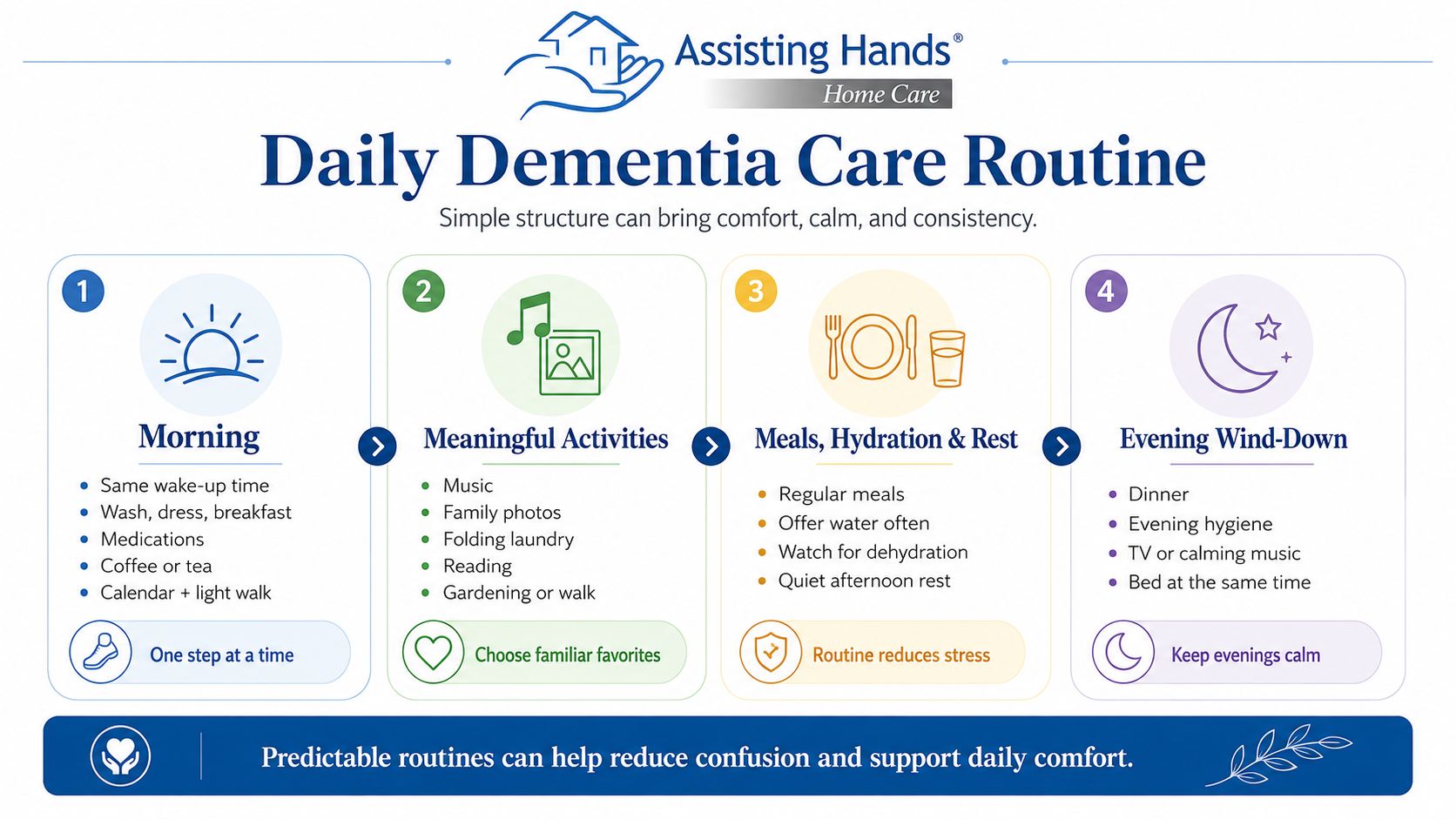
A calm morning can help set the tone for the rest of the day. A morning routine might include:
- Waking up around the same time
- Using the bathroom and completing personal hygiene
- Getting dressed
- Eating breakfast
- Taking medications as prescribed
- Enjoying coffee or tea
- Looking at a calendar together
- Getting natural light or taking a short walk
Give one instruction at a time and allow extra time for familiar tasks.
Meaningful Activities and Engagement
Activities do not have to be complicated. Listening to music, looking through family photos, gardening, folding laundry, reading, preparing a meal, or taking a walk can all provide engagement and a sense of purpose. These kinds of activities also support cognitive health. For more ideas, see our tips on helping an elderly parent stay mentally sharp. Whenever possible, choose activities based on what the person enjoyed throughout their life.
Meals, Hydration, and Rest
Keeping meals around the same time each day can provide another anchor in the day. Caregivers and family members should also offer fluids regularly, as a person with dementia may forget to drink. Watch for warning signs of dehydration in seniors, since dehydration can worsen confusion and agitation. After lunch, quiet time can offer an opportunity to rest and recharge. Reading, listening to music, sitting outside, or taking a nap can help prevent the day from becoming overwhelming.
Evening Wind-Down Routine For Dementia Seniors
For some people with dementia, confusion or restlessness increases later in the day. A calm and predictable evening routine may help make this transition easier. Dinner, evening hygiene, a favorite television program, music, and a consistent bedtime can create familiar signals that the day is winding down.
 Communication Tips for Dementia Care Routines
A routine is only helpful when it is introduced with patience and understanding. When communicating with someone with dementia:
- Approach from the front or slightly to the side and use a calm, clear voice.
- Give one instruction at a time rather than several directions at once.
- Offer two simple choices instead of open-ended questions. For example, instead of asking, “What do you want to wear?” try, “Would you like the blue shirt or the green shirt?”
- If the person becomes upset or says something that is not factually accurate, avoid arguing whenever possible. Focus on the emotion behind what they are saying and offer reassurance.
Remember that behaviors are often forms of communication. Resistance, pacing, or agitation may indicate hunger, thirst, pain, fatigue, overstimulation, or another unmet need.
What to Do When a Dementia Care Routine Doesn’t Work
Even a carefully planned routine will not prevent every difficult moment. When a change in behavior occurs, consider both internal and external triggers:
- Is the person hungry, tired, uncomfortable, or experiencing a medication side effect?
- Is the room too noisy, crowded, hot, cold, or unfamiliar?
Keeping a simple record of when certain behaviors occur can help caregivers and family members better understand the patterns and make adjustments. Above all, remain calm. If an activity is causing significant distress, it may be better to pause and try again later.
Sample Daily Dementia Care Schedule
This sample schedule is a starting point. It should be adapted to the person’s normal habits, preferences, and care needs.
| Time | Activity |
|---|---|
| 7:30 AM | Arising for the day, bathroom needs, and personal grooming |
| 8:30 AM | Morning meal and taking scheduled medications |
| 9:30 AM | Gentle exercise or an engaging personal interest |
| 11:00 AM | Connecting with others or simple home tasks |
| 12:30 PM | Midday meal |
| 1:30 PM | A period for rest and recharging |
| 2:30 PM | Preferred pastimes, music, or time spent outdoors |
| 5:00 PM | Evening dinner |
| 6:00 PM | Relaxing and soothing evening pursuits |
| 7:30 PM | Nighttime hygiene and getting ready for bed |
| 8:30 PM | Settling into a peaceful sleep routine |
The Goal Is Comfort, Not a Perfect Routine
Creating a daily routine for someone with dementia is not about controlling every part of the day. It is about creating familiarity, comfort, connection, and opportunities for independence. The person always remains at the center of the care plan. Their history, preferences, abilities, and dignity guide the routine.
Family caregivers do not have to do it alone. Professional in-home care can provide support with personal care, meals, companionship, activities, and help to maintain familiar daily routines. With patience, flexibility, and the right support, a consistent routine can help make each day feel more comfortable and manageable for both the person living with dementia and the people who care for them.
Simple Ways Caregivers Can Support a Dementia Routine
Caregivers can make routines more manageable by keeping them consistent and familiar. Gentle reminders can help the person stay oriented without feeling pressured. Keeping the environment calm and familiar can also help reduce confusion throughout the day.
A simple whiteboard can be another helpful tool. Writing the date, appointments, meals, visitors, and other plans where the person can easily see them can provide reassurance and help them know what to expect. Reviewing the whiteboard together can also provide gentle reminders about what is happening throughout the day.
Most importantly, caregivers should remember that the goal is not perfection. Patience, flexibility, and reassurance can help create a calmer and more supportive environment for both the person living with dementia and the people caring for them.
Frequently Asked Questions
Why is a daily routine important for someone with dementia?
A consistent routine helps a person with dementia feel more secure because meals, personal care, activities, and bedtime happen at predictable times. It also helps caregivers notice changes in mood, sleep, appetite, or behavior, and can reveal triggers such as hunger or fatigue.
How do I create a dementia care routine for a family member?
Build the routine around the person, not the diagnosis. Consider their history, interests, preferences, and former daily habits, such as when they woke up, whether they enjoyed morning coffee, or what hobbies they had. Treat the schedule as a flexible framework rather than a strict set of rules.
What should a daily dementia care schedule include?
A well-rounded routine balances personal care, meals, meaningful activities, social connection, rest, and sleep, typically organized into a morning routine, meaningful activities, meals and rest, and an evening wind-down.
How should I communicate with someone with dementia during their routine?
Approach from the front or slightly to the side, use a calm and clear voice, and give one instruction at a time. Offer two simple choices instead of open-ended questions, and respond to the emotion behind what the person is saying rather than correcting inaccurate statements.
What should I do when a dementia care routine stops working?
Look for internal triggers, such as hunger, fatigue, pain, or medication side effects, and external triggers, such as noise or an unfamiliar environment. Keeping a simple record of when behaviors occur can help identify patterns, and pausing a distressing activity to try again later is often more effective than pushing through it.
Can professional in-home care help with a dementia care routine?
Yes. Professional in-home caregivers can support personal care, meals, companionship, and activities, helping families maintain a familiar daily routine even when family caregivers need additional support.
Get In Home Dementia Care in Mt Prospect, IL
If you are caring for a loved one with dementia and could use extra support maintaining their daily routine, Assisting Hands Home Care’s in-home caregivers in Mount Prospect, IL, and the surrounding communities of Arlington Heights, Des Plaines, Prospect Heights, and Wheeling can help with personal care, meals, companionship, and activities.

Contact us at (847) 499-1307 to learn more about our dementia and memory care services.

