
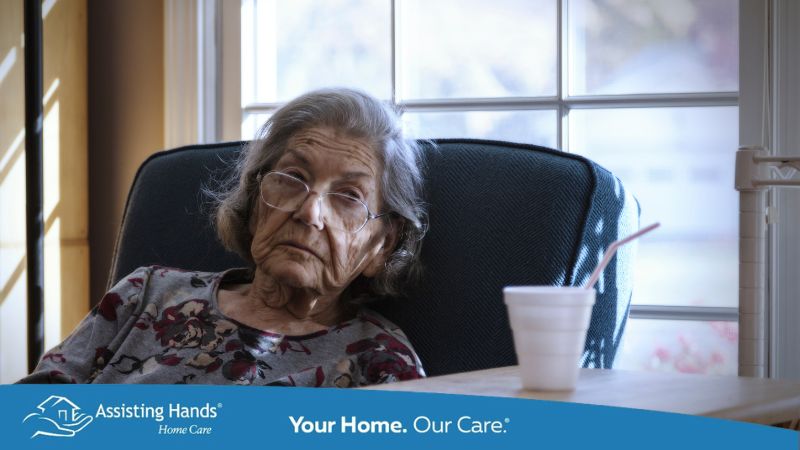
Dementia changes more than a person’s memory. As the condition progresses, it can affect personality, communication, judgment, emotions, and the ability to understand what is happening in the world around them. Someone who was once calm and easygoing may suddenly become agitated. A person who rarely asked the same question twice may begin repeating it every few minutes. They may wander, become suspicious of family members, struggle to sleep, withdraw from activities they once enjoyed, or say and do things that seem completely out of character.
These changes can be confusing and painful for families, especially when they seem to happen without warning. Common dementia-related behaviors include repetition, agitation and restlessness, anger or aggression, wandering, anxiety, sleep disturbances and sundowning, suspicion and delusions, hallucinations, and changes in social behavior. But there is no single pattern that every person with dementia follows. The behaviors your mother experiences may look very different from those your neighbor described, and they can change as the disease progresses.
If you are reading this because something happened that you don’t know how to handle, you are not alone. Behavior changes are among the most challenging aspects of dementia caregiving, and understanding why they occur can make them easier to recognize, respond to, and manage.
What Are the Most Common Behaviors Associated with Dementia?
The behaviors associated with dementia can vary widely from person to person, but certain changes are especially common. Understanding what these behaviors may look like and what might be causing them can help families respond with greater patience, confidence, and compassion.
Repeating Questions or Actions
Your loved one may ask what time an appointment is, then ask again four minutes later. They might fold the same dish towel a dozen times, check the mailbox repeatedly, or tell you the same story several times in an afternoon. To a caregiver, these behaviors can be frustrating or confusing. To the person with dementia, however, they often make perfect sense in the moment.
Repetition is often connected to changes in short-term memory. Your loved one may not remember asking the question, or remember the answer you just gave. What may remain is a vague sense that something important is happening, along with the worry that comes with not knowing exactly what it is. Anxiety and a need for reassurance can fuel repetitive questions, while boredom or a lack of meaningful activity can contribute to repetitive actions.
A few simple strategies can make these moments easier. Keep a whiteboard or large calendar in a place your loved one passes frequently and write down the day’s plans. When they ask about the appointment, walk over together and look at the calendar rather than repeatedly answering the question from across the room. Familiar, purposeful activities can also provide a helpful distraction and give the person something to focus on, such as folding laundry, tearing lettuce for a salad, sorting socks, or setting the table.
Agitation and Restlessness
Agitation can show up in many ways including pacing around the house, fidgeting, irritability, repeatedly standing up and sitting down, moving objects from one room to another, or simply being unable to settle into an activity. For many people with dementia, these behaviors become more noticeable in the late afternoon or evening.
Restlessness is often a sign that something is wrong, even when your loved one cannot explain what they need. Too much noise, a crowded room, a task that has become too difficult, fatigue, hunger, pain, or other physical discomfort can all trigger agitation. In many cases, the behavior is communicating something the person can no longer put into words.
Aggression or Anger
Aggression can be verbal such as shouting, accusing, insulting, or name-calling, or physical, such as pushing, hitting, or striking out. It may seem to come out of nowhere, which can be especially frightening when it comes from someone who has always been gentle and even-tempered.
In many cases, aggression is a response to frustration, fear, confusion, or an inability to communicate a need. Certain situations can make it more likely, including loud or busy environments, being asked several questions at once, repeated “why” questions, feeling excluded, being corrected or reprimanded, making a small mistake, or being given a task that has become too difficult. A caregiver’s visible tension can also heighten the person’s distress. Physical discomfort, illness, pain, and depression may contribute as well.
When aggression occurs, try to remember that it is not a deliberate rejection of you. Your loved one is responding to a brain that is no longer processing the situation normally. Staying calm, reducing potential triggers, and looking for the need behind the behavior can help you respond with patience rather than taking the outburst personally.
Wandering
Wandering can take several forms. Your loved one may pace around the house, walk out the front door, become disoriented in a familiar neighborhood, or insist on going somewhere that no longer exists. According to the Alzheimer’s Association, six out of 10 people living with dementia will wander at least once, and it can happen at any stage of the disease.
The reasons behind wandering vary. Memory loss and disorientation are common causes, but curiosity, restlessness, and boredom can also play a role. Sometimes wandering is an attempt to express a need the person cannot put into words, such as fear, loneliness, hunger, thirst, or the need to use the bathroom. Changes in surroundings can increase the risk as well. A stay at a relative’s home, a hotel, or even a new room in the house may leave someone with dementia feeling unfamiliar with their surroundings.
Wandering deserves special attention because it is not only a common dementia-related behavior but also a serious safety concern. Simple precautions can reduce the risk, including using night-lights, placing clear signs on bedroom and bathroom doors, keeping car keys out of sight, installing latches high on exterior doors, and building regular walks or other physical activity into the daily routine to help ease restlessness.
If your loved one is determined to leave, avoid turning the situation into a physical confrontation. Trying to restrain someone can increase their fear and agitation and may result in injury. When it is safe to do so, accompanying them on a short walk or taking a brief drive may be a calmer and safer way to redirect them than trying to force them to stay.
Wandering deserves special attention because it is not only a common dementia-related behavior but also a serious safety concern. Simple precautions can reduce the risk, including using night-lights, placing clear signs on bedroom and bathroom doors, keeping car keys out of sight, installing latches high on exterior doors, and building regular walks or other physical activity into the daily routine to help ease restlessness. Wandering prevention is just one part of the job; see our overview of the core duties of a dementia caregiver for the full picture of what day-to-day dementia care involves.
Anxiety and Fear
Anxiety related to dementia can be difficult to understand because your loved one may sense that something is wrong without being able to explain what it is. Unfamiliar surroundings, a change in routine, a room full of visitors, an upcoming doctor’s appointment, or the frustration of struggling to find the right word can all trigger anxiety.
When this happens, reassurance often works better than trying to reason through the situation. A calm voice, a reassuring touch, and a familiar object nearby may provide more comfort than a detailed explanation of why there is nothing to worry about. Meeting the emotion behind the anxiety, rather than trying to correct it, can help your loved one feel safe and supported.
What to Do When Dementia Causes Agitation
| What You Notice | What You Can Try |
| Pacing | Offer a short walk or a familiar activity |
| Irritability | Reduce noise and distractions |
| Repeatedly getting up | Check for discomfort, hunger, or the need to use the bathroom |
| Trouble settling down | Move to a quieter room or offer a calming activity |
Sleep Changes and Sundowning
Dementia can disrupt the body’s normal sleep-wake cycle. Nights may become fragmented, with frequent waking, while daytime naps become longer or more frequent. Over time, the entire sleep schedule can begin to drift.
Sundowning refers to increased confusion, agitation, anxiety, or restlessness that develops in the late afternoon or around dusk and may continue into the evening or night. It is common among people with dementia and can be particularly exhausting for both the person experiencing it and the family members providing care.
A consistent routine can help make evenings more manageable. Encourage your loved one to get outside and receive natural light in the morning, keep caffeine to the earlier part of the day, limit daytime naps to one short nap when possible, and maintain consistent wake-up and bedtime routines. As afternoon approaches, gradually shift toward quieter, less stimulating activities rather than filling the evening with busy or demanding tasks.
If sleep problems persist, talk with your loved one’s doctor before trying sleep medication. Some medications can increase confusion or make dementia-related symptoms worse, so it is important to discuss the potential risks and benefits first.
Suspicion, Paranoia and Delusions
Your loved one may accuse you of stealing a wallet, hiding jewelry, or taking money from an account. They may insist that a neighbor is coming into the house or that someone has moved their belongings. To you, the accusation may seem completely unfounded. To them, however, the belief can feel very real, which is why arguing or trying to prove them wrong rarely helps.
Instead of focusing on correcting the belief, respond to the fear or concern behind it. Offer to help look for the missing item and keep track of the places your loved one tends to put things. If something small regularly goes missing, keeping a duplicate on hand can prevent some of these situations from becoming upsetting.
When the accusation is directed at you, try not to take it personally. Your loved one may not be intentionally blaming you. They are trying to make sense of a world that increasingly feels confusing and unpredictable. Responding with reassurance and patience can help them feel safer, even when you cannot convince them that their belief is mistaken.
Hallucinations
A hallucination occurs when someone sees, hears, smells, tastes, or feels something that is not actually there. Your loved one might see a person standing in the hallway, hear a voice coming from another room, or insist that there are bugs crawling across the floor.
When this happens, avoid arguing about what they are experiencing. The hallucination feels real to them, and trying to convince them otherwise may only increase their fear or distress. Instead, offer reassurance and look around for a physical explanation that you may be able to address. AARP, for example, describes a woman who was frightened by a person she repeatedly saw in her home. The person turned out to be her own reflection, and the hallucinations stopped after the mirrors were removed.
Simple environmental changes can sometimes make a difference. A television playing in another room, shadows cast by a lamp, or a reflection in a dark window may be mistaken for a person or other object. Reducing background noise, improving lighting, and removing confusing reflections may help as well.
New or worsening hallucinations should also be discussed with your loved one’s doctor. Vision or hearing problems, infections, medication side effects, and other medical issues can sometimes contribute to hallucinations, so it is important to look beyond dementia alone.
Social Withdrawal or Loss of Interest
Some of the changes families notice are quieter. A father who once read the newspaper every morning stops picking it up. A mother who loved her weekly card game begins finding reasons not to go. Someone who was always talkative becomes unusually quiet at the dinner table.
Withdrawal is often less about losing interest than losing confidence. Conversation takes more effort, group settings can feel overwhelming, and a favorite hobby may have become genuinely difficult. Rather than giving up an activity altogether, try adapting it to your loved one’s current abilities. If your father can no longer follow the newspaper but still enjoys holding it, turning the pages, and looking at the pictures, that familiar morning ritual may still bring comfort and a sense of routine. The goal is not to make every activity the way it used to be, but to preserve the parts your loved one can still enjoy.
Changes in Inhibition or Social Behavior
Dementia can weaken the social filters most of us rely on. Your loved one may make unusually blunt or inappropriate comments, undress in the wrong room, make sexual remarks, or disregard social boundaries they followed carefully for decades. Behaviors that would have seemed completely out of character before may become part of how they express confusion or unmet needs.
These moments can be embarrassing and difficult for families, but they are rarely deliberate. Your loved one is not trying to humiliate you, embarrass themselves, or test your patience. Correcting or reprimanding them may only increase their confusion. Redirection is often more effective; suggest a walk, offer a simple task, take a short car ride, or move together to a quieter room. The goal is to calmly shift their attention rather than turn the moment into a confrontation.
Why Does Dementia Cause Changes in Behavior?
Dementia affects more than memory. As changes in the brain interfere with communication, judgment, perception, and the ability to process the world around them, your loved one may respond in ways that seem unusual or out of character. Understanding what is happening beneath the behavior can make these changes easier to recognize and easier to respond to with patience and compassion.
Any of the following can contribute to behavioral changes:
- Brain changes caused by dementia itself
- Confusion or disorientation about where they are or what time it is
- Difficulty putting a need into words
- Anxiety or fear
- A change in surroundings, including a visit or a trip
- A change in routine
- Pain or physical discomfort
- Hunger or thirst
- Constipation or a full bladder
- Infection or illness, especially urinary tract infections
- Medication side effects or interactions
- Hearing or vision problems
- Too much noise, activity, or clutter in the room
- Fatigue
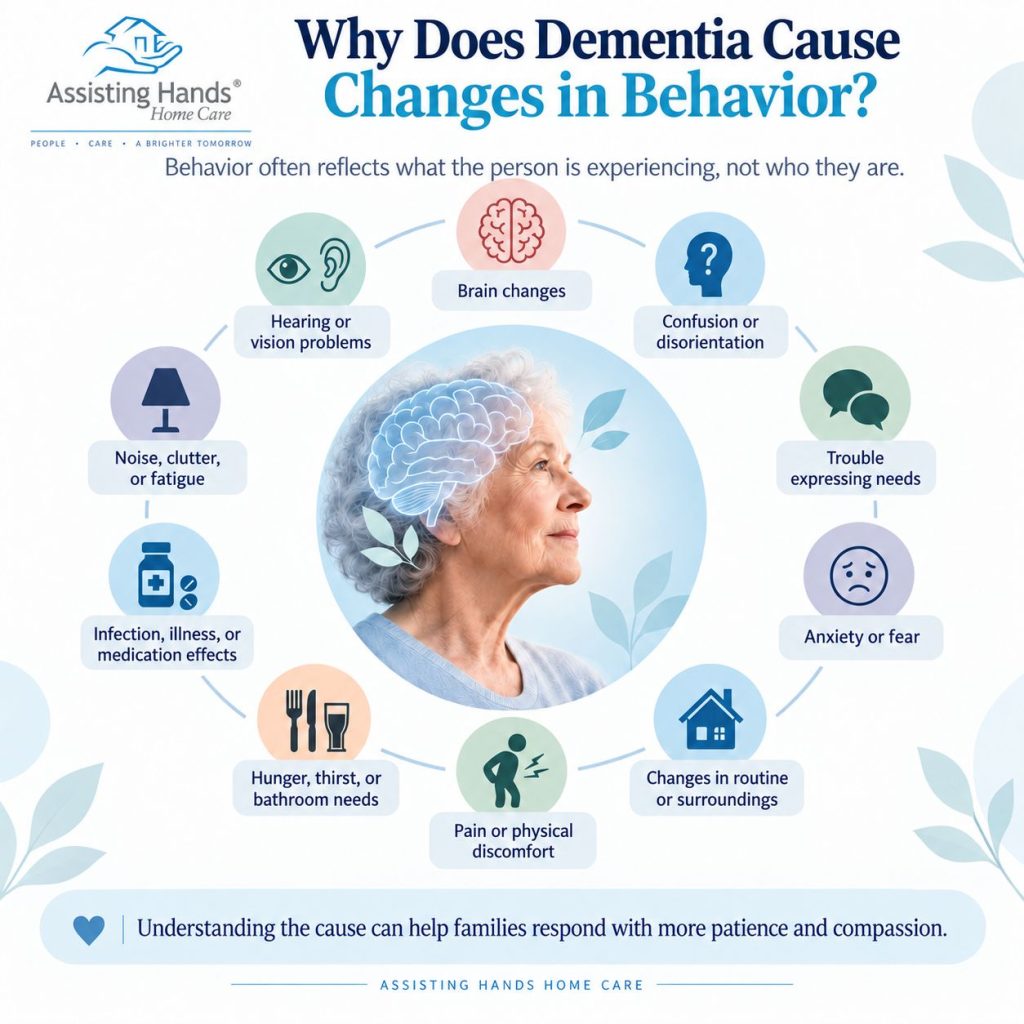
Both the Alzheimer’s Association and NHS guidance emphasize that environmental and medical factors can trigger or worsen behavioral symptoms. That is important for caregivers to understand because a difficult behavior may have a cause that can be addressed. Assuming every new change is simply “the dementia” can mean overlooking pain, illness, medication side effects, or something in the person’s surroundings that is making them confused or distressed.
How Should Caregivers Respond to Dementia-Related Behaviors?
Responding to dementia-related behaviors is often less about finding the perfect words and more about understanding what your loved one may be trying to communicate. Staying calm, reducing potential triggers, and responding to the underlying need can often prevent a difficult moment from escalating. A few practical approaches can make these situations easier for both of you.
- Observe what happened: Not the interpretation, the facts. What did your loved one do, say, and look like?
- Look for the trigger: Think back to what happened in the few minutes before the behavior started. Was the phone ringing? Did someone ask a question? Did your loved one see their reflection in a mirror? Did a visitor arrive, or were they asked to take a shower?
- Check basic needs: Before assuming a behavior is caused by dementia, consider whether your loved one is hungry, thirsty, tired, too hot or cold, needs to use the bathroom, or is experiencing pain or another physical discomfort. People with dementia can often still communicate basic needs, especially when questions are kept simple.
- Consider the environment: Take a look at what is happening around your loved one. Is the television playing loudly in another room? Are several people talking at once? Is the room dim, creating confusing shadows or reflections? Has your loved one been brought somewhere unfamiliar? Reducing noise, improving lighting, and creating a calmer, more familiar setting may ease confusion and help prevent the behavior from escalating.
- Respond calmly: Speak slowly and softly. Do not argue, quiz, or correct. If the behavior is aggressive, back away and give some space, then come back. LBDA suggests five steps for a situation that has escalated: remain calm, respond to feelings, reassure the person, remove yourself, and return later.
- Redirect when appropriate: Validation usually works better than distraction alone. If your mother keeps heading for the door because she wants to “go home,” acknowledge the feeling first: “I know you miss your family.” Then offer a gentle change of focus, such as sitting together with a photo album, taking a short walk, or working on a familiar activity.
- Track patterns: Keep a short behavior diary that records the time of day, what happened immediately before the behavior, and what seemed to help. Tracking these details over time can reveal patterns that are easy to miss in the moment. After a week or two, you might discover that agitation consistently follows the afternoon news, for example, or that a late nap often leads to a difficult night. Once you identify a pattern, you can adjust the routine or environment to reduce the trigger.
When Should a Sudden Change in Behavior Be Evaluated by a Doctor?
A sudden change in behavior deserves more attention than a gradual shift that has developed over months. New confusion, unusual agitation, hallucinations, aggression, or a dramatic change in sleep or personality can sometimes signal a medical problem rather than simply a progression of dementia. Knowing when to call your loved one’s doctor can help identify treatable causes and prevent a small problem from becoming a larger one.
Call your loved one’s healthcare provider if you notice:
- Sudden confusion or a noticeable drop in alertness
- Aggression that appears out of nowhere in someone who was not aggressive before
- New hallucinations or delusions
- Agitation that is new or getting worse quickly
- Signs of pain, fever, or illness
- Changes in urination, or new incontinence
- A behavior change that started within days of a new or adjusted medication
- Any abrupt change in the ability to speak or understand
Urinary tract infections, constipation, dehydration, pain, and medication interactions are common culprits, and older adults may show these problems through confusion or behavior changes rather than typical symptoms. Let a clinician determine the cause rather than trying to diagnose it at home.
When Do Dementia Behaviors Mean a Senior May Need More Support?
Most families reach a point when love and effort are no longer enough on their own. Reaching that point is not a failure. It simply means the level of supervision your loved one needs has grown beyond what one or two people can realistically provide while also working, sleeping, and managing a household.
Signs that more support may be needed:
- No one can be present consistently during the hours when behaviors are worst
- Your loved one has started wandering or has left the house alone
- Daily routines have become difficult to keep on track
- Bathing, dressing, and toileting have become a struggle
- Confusion or distress is happening often
- Medications need reminders or supervision to be taken correctly
- Nights are broken up and no one in the house is sleeping
- Certain daily activities are no longer safe to do alone
- You are running on empty, short-tempered, or dreading the day ahead
Dementia Home Care from Assisting Hands
Dementia-related behaviors can be difficult to understand, especially when they seem sudden or completely out of character. But looking beyond the behavior to the need behind it can change the way you respond. A new routine, a quieter environment, reassurance, or simply more time to complete a task can sometimes make a difficult moment much easier.
You do not have to manage every change on your own. If your loved one needs more supervision, companionship, or help with daily routines than your family can consistently provide, in-home dementia care can provide an extra layer of support while allowing them to remain in familiar surroundings.
Assisting Hands Home Care provides Alzheimer’s and dementia home care designed around your loved one’s needs and daily routine. Our caregivers can assist with personal care, meals, companionship, household tasks, and supervision that can become increasingly important as dementia progresses.

If caring for your loved one is becoming difficult to manage alone, call Assisting Hands Home Care at (630) 407-1932 to schedule a free in-home assessment and discuss how dementia care at home can support both your loved one and your family.
Assisting Hands Home Care serves families in Brookfield, Burr Ridge, Darien, Downers Grove, Hinsdale, La Grange, Oak Brook, Westmont, and the surrounding areas in Cook and DuPage counties.
Dementia Behaviors FAQs
What are the most common behaviors associated with dementia?
The most common are repeating questions or actions, agitation and restlessness, anger or aggression, wandering, anxiety, sleep disturbances and sundowning, suspicion and delusions, hallucinations, withdrawal from activities, and loss of social inhibition. Behaviors differ from person to person and change as dementia progresses.
Why does a person with dementia repeat the same questions?
Because they do not remember asking. Short-term memory loss erases both the question and your answer, while the underlying feeling that something important is coming up remains. Anxiety, a need for reassurance, and boredom all make repetition more likely. A visible calendar or whiteboard often reduces it.
Why does someone with dementia become angry or aggressive?
Aggression usually comes from fear, frustration, confusion, discomfort, or an inability to communicate a need. Common triggers include loud noise, being asked several questions at once, being corrected, tasks that have become too hard, and a tense caregiver. Pain, illness, and depression can also contribute.
Why does a person with dementia wander?
Wandering can come from disorientation, restlessness or boredom, an unmet need such as hunger or needing the bathroom, or an attempt to express fear or loneliness. Unfamiliar surroundings make it more likely. The Alzheimer’s Association reports that six in ten people with dementia wander at least once.
What is sundowning in dementia?
Sundowning refers to increased confusion, agitation, or restlessness that begins in the late afternoon or at dusk and may continue into the night. Morning light exposure, consistent sleep and wake times, limited afternoon caffeine and napping, and a calmer evening routine can all reduce it. For a deeper look at causes and care strategies, see our full guide to sundown syndrome in the elderly.
Why does someone with dementia become suspicious of family members?
Misplaced items and gaps in memory can leave a person searching for an explanation, and the nearest explanation is often that someone took the item. The belief feels real, so arguing does not help. Offering to look for the item together and keeping duplicates of frequently lost things works better.
Can dementia cause hallucinations?
Yes. A person with dementia may see, hear, smell, taste, or feel things that are not present. Reflections, shadows, and background noise from a TV sometimes explain them. New or worsening hallucinations should be evaluated, since medications, vision problems, and hearing loss can all contribute.
How should you respond to someone with dementia who is agitated?
Stay calm, speak slowly and softly, and give the person space if needed. Check for unmet needs like hunger, thirst, pain, or the bathroom, and reduce noise and activity in the room. Then redirect toward something familiar and comforting rather than continuing the task that caused the distress.
Should you argue with someone who has dementia?
No. The ability to follow reasoning and hold onto a correction is affected by dementia, so arguing tends to increase distress for both people without changing the belief. Reassurance, validating the emotion behind the behavior, and gentle redirection are more effective.
When should a sudden behavior change in someone with dementia be evaluated by a doctor?
Contact a healthcare provider for sudden confusion, new aggression, new hallucinations, a drop in alertness, rapidly worsening agitation, signs of pain or illness, or any change that follows a new medication. Infections, constipation, dehydration, and medication effects can all cause abrupt behavior changes.
When do dementia-related behaviors indicate that a senior may need additional care?
When supervision needs exceed what family can provide safely and consistently. Wandering, unsafe daily activities, missed medications, frequent distress, difficulty with personal care, disrupted nights, and caregiver exhaustion are all signals that professional in-home dementia care would help.

