
3 Misconceptions When Planning for Care Costs
EDITOR’S NOTE: This content has been provided to Assisting Hands Home Care by Mass Mutual New Jersey-NYC as part of…

Finding the right home care agency is about more than comparing hourly rates or choosing the closest office. You are trusting an agency with someone’s meals, routines, safety, and personal care, so the quality of the agency behind the caregiver matters just as much as the care itself.
For families in Monmouth and Ocean Counties, there are several agencies to choose from, and their services and standards can vary. The right questions can help you separate a reputable agency from one that simply sounds good on paper.
Start with the basics that protect your family. Confirm that the agency is registered with New Jersey as a Health Care Service Firm, holds current accreditation, and employs Certified Homemaker-Home Health Aides. Then look at how the agency screens and matches caregivers, what happens when an aide calls out, how care is supervised, and how billing works. A good agency should answer these questions clearly and directly from your first phone call.
Here’s what to look for when choosing a home care agency for your loved one.
This is the first thing to check, and it’s easy to verify.
New Jersey requires agencies that place caregivers in private homes to provide personal care or companion services to register with the Division of Consumer Affairs as a Health Care Service Firm (HCSF). Registration must be renewed annually. Within 12 months of registering, an agency must also obtain accreditation from a state-recognized accrediting organization, such as CHAP, ACHC, or The Joint Commission, and maintain that accreditation.
In other words, accreditation isn’t an extra credential to look for, it’s a basic requirement for a New Jersey HCSF. When comparing agencies, ask:
You can also verify an agency’s registration through the New Jersey Division of Consumer Affairs license verification lookup.
In New Jersey, aides who provide hands-on personal care, such as bathing, dressing, and toileting, must be Certified Homemaker-Home Health Aides (CHHAs) registered with the New Jersey Board of Nursing. Ask whether every caregiver who may provide care in your home has an active CHHA certification.
It’s also important to understand how caregivers are employed. Ask whether they are employees of the agency or independent contractors. When caregivers are agency employees, the agency handles background checks, payroll taxes, insurance, and scheduling. If a problem comes up, you have one organization responsible for addressing it.
A few more questions worth asking:
A caregiver can have all the right certifications and still be the wrong person for your loved one.
A good match depends on personality, routines, preferences, and communication style as much as caregiving skills. Someone who loves to talk might be perfect for a mother who feels lonely after losing her husband, but frustrating for a father who prefers quiet company while he watches the Giants. The agency should take the time to understand who your loved one is before making a match.
Ask how the agency gets to know your loved one before the first visit, whether you can meet the caregiver beforehand, and what happens if the relationship isn’t working. A good agency should be willing to make a change when the fit isn’t right. You shouldn’t have to make a case for it.
Caregivers get sick, cars break down, and a winter storm can make the Parkway impossible to navigate. Before choosing an agency, find out what happens when your loved one’s regular caregiver can’t make it.
Ask:
It’s also worth asking about minimum shift lengths and how much notice you need to give to change or cancel a scheduled visit. These policies may seem like minor details during the initial consultation, but they can make a big difference once care becomes part of your family’s routine.

Every client should have a written plan of care, with a qualified person responsible for keeping it current. Ask who develops the plan, how often a supervisor visits the home, how changes in your loved one’s needs are documented, and how the family receives updates.
At Assisting Hands Monmouth, our on-staff director of nursing oversees caregiver training and develops each client’s plan of care. Several members of our team also hold Certified Senior Advisor (CSA) and Certified Dementia Practitioner (CDP) designations. That gives families someone to turn to for more than scheduling questions, including concerns about changing care needs, dementia, and the practical issues that often come with them.
It also helps to choose an agency that knows the local resources available to families. Meal programs, transportation services, adult day programs, and county aging services can provide support in areas where in-home care may not be necessary. A good agency should know when to provide care itself and when to connect your family with another resource.
Cost is a concern for nearly every family, and the answer depends on the level of care needed, the number of hours, and the payment sources available. Common options in New Jersey include:
Rates are based on each person’s care needs, so ask for a quote after an in-home assessment. Then ask how often you’ll be billed, which payment methods the agency accepts, and whether the assessment itself has a cost.
Reviews and testimonials can give you a better sense of what an agency is like once care is underway. Read an agency’s Google reviews and website testimonials but look beyond the star rating. Pay attention to what families say about communication, reliability, caregiver consistency, and how the agency responds when something goes wrong. The way an agency handles a complaint can tell you as much as the complaint itself.
Independent, survey-based recognition can provide another useful perspective. Activated Insights, formerly Home Care Pulse, surveys clients and caregivers of participating agencies and recognizes top performers through its Best of Home Care awards. These include Provider of Choice for client satisfaction, Employer of Choice for caregiver satisfaction, and Leader in Experience for agencies that perform well in both areas.
Caregiver satisfaction is particularly worth considering. When caregivers feel supported and valued, they are more likely to stay with an agency. Lower turnover can mean fewer unfamiliar faces and more consistency for your loved one.
Keep this list handy when you call agencies:
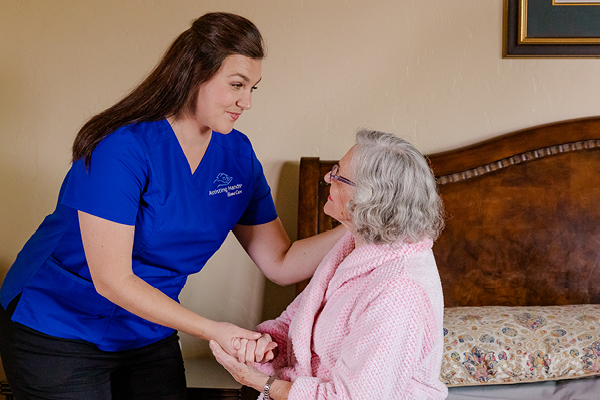
Choosing a home care agency is ultimately about finding a team you can trust to show up, communicate clearly, and treat your loved one with respect. The right agency should be willing to answer your questions before you commit, explain how care is supervised, and have a plan for the unexpected.
Assisting Hands Home Care provides personalized in-home care based on each client’s needs, routines, and preferences, from a few hours of weekly support to overnight and 24-hour care. We serve families in Sea Girt, Manasquan, Belmar, Bradley Beach, Brick Township, and the surrounding communities throughout Monmouth and Ocean Counties.
If you’re ready to talk through your options, call Assisting Hands Home Care at (732) 592-1557 or schedule a free consultation. We’ll answer your questions, explain how our care works, and help you determine what kind of support makes sense for your family.
EDITOR’S NOTE: This content has been provided to Assisting Hands Home Care by Mass Mutual New Jersey-NYC as part of…
“We are what we eat,” is true. Our overall health is impacted by what we eat. Food is how we…
Annual report shows more than 6 million Americans are living with Alzheimer’s Deaths attributable to Alzheimer’s and dementia spike during…
EDITOR’S NOTE: This content has been provided to Assisting Hands Home Care by Mass Mutual New Jersey-NYC as part of…


