
#1 Killer in United States is Heart Disease
February isn’t just a month for love, but also American Heart Month, a time when all people can focus on…
 Each year more than 700,000 people in the U.S. have a stroke; it is the fifth leading cause of death and a leading cause of severe disability.
Every second counts when it comes to a stroke.
A stroke occurs when the brain’s blood supply is interrupted or reduced, preventing oxygen and nutrition from getting to the brain. Nearly 2 million brain cells can die each minute a stroke is left untreated. Rapid access to medical treatment oftentimes makes the difference between a full recovery and permanent damage. On average, one person dies from a stroke every 4 minutes.
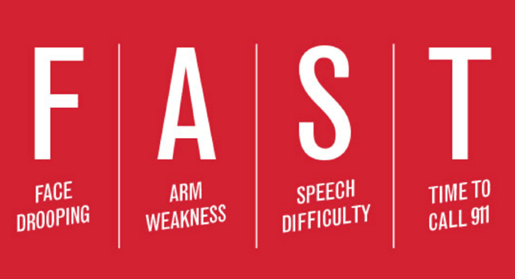
Use the letters in “F.A.S.T.’ to spot stroke signs and know when to call 9-1-1.
Stroke prevention
The good news is there are measures we can take to prevent stroke and up to 80% of all strokes are preventable, and there are simple life tips that the American Stroke Association recommends. Managing your weight with exercise and a well-balanced diet are a core to preventing strokes and various other health issues. These core recommendations contribute directly to their other tips, including managing blood pressure, cholesterol and reducing blood sugar. The American Stroke Association also recommends drinking alcohol in moderation and to stop smoking entirely.
Follow The American Heart Association/American Stroke Association’s Life’s Simple 7 Tips:
After a Stroke
Those who are fortunate enough to receive a fast response following a stroke can make a full recovery. Unfortunately, others may have permanent damage. After a stroke, some of the most common physical conditions include weakness, paralysis, or balance and coordination problems. Issues after a stroke vary, and some will get better with time and rehabilitation. More severe cases may result in lifestyle adjustments or require additional assistance from a caregiver.
Visit stroke.org for more valuable information on stroke risk and prevention.
Home Care Services
At Assisting Hands® we know that the first few months after a stroke are the most important in the recovery process. If you or a loved one require in-home care, we can help you safely remain in your own home as you recover.
February isn’t just a month for love, but also American Heart Month, a time when all people can focus on…
By Jazmyn Ball, Community Engagement Specialist at Fulfill Can you imagine worrying about where your next meal or snack is…
Business Named Leader in Experience, Provider and Employer of Choice Sea Girt, NJ–January 26, 2023–Assisting Hands® Home Care, a Sea…
Award-Winning Home Care Agency Serves Families in Mercer, Monmouth and Ocean Counties SEA GIRT, NJ—January 24, 2023—To enhance care of…


