

The surgery went well, the infection cleared, and the discharge paperwork said your mom was ready to go home. You drove her there feeling relieved that the hardest part was finally behind you.
Then, a few days later, something seems different. She is unsteady getting out of her chair in a way she wasn’t before, loses her train of thought in the middle of a conversation, sleeps poorly, worries about every new ache or twinge, and has little interest in doing the things she normally enjoys.
Nothing on the discharge summary seems to explain these changes, and families may understandably wonder why their loved one seems so different after coming home.
Post-hospital syndrome is a temporary period of increased physical, cognitive, and emotional vulnerability that can occur after someone leaves the hospital. Older adults may experience weakness, fatigue, confusion, poor sleep, reduced appetite, anxiety, or a greater risk of falls and other complications during the weeks after discharge.
Understanding what may be happening can help families recognize changes sooner and provide the right support while their loved one recovers at home.
Key Takeaways
- Post-hospital syndrome can leave older adults temporarily weaker and more vulnerable after discharge.
- Common signs include weakness, fatigue, poor sleep, confusion, reduced appetite, anxiety, and increased fall risk.
- Sleep disruption, inactivity, poor nutrition, medication changes, and the stress of hospitalization can contribute.
- Families should pay close attention to mobility, eating, medications, sleep, mood, and cognitive changes after discharge.
- Sudden or worsening confusion, falls, fever, medication reactions, or signs of infection should be reported to a healthcare professional.
What Is Post-Hospital Syndrome in Older Adults?
Post-hospital syndrome is a period of heightened vulnerability that can occur in the weeks following a hospital stay, when disrupted sleep, limited mobility, poor nutrition, and the physical and emotional stress of hospitalization leave the body depleted. It develops alongside whatever illness or injury originally brought your loved one to the hospital, but its effects can extend well beyond that initial diagnosis, affecting systems that may have had little or nothing to do with the reason for admission.
Dr. Harlan Krumholz, a cardiologist at Yale, gave the condition its name in a 2013 New England Journal of Medicine article. His argument was that the medical system can become so focused on treating the illness that caused the admission that it overlooks another problem developing during the hospital stay: patients may leave with a new, temporary state of generalized vulnerability that increases their risk of complications after they return home.
The numbers behind that concern are significant. Nearly one in five Medicare patients is readmitted to the hospital within 30 days of discharge, and for many of these patients, the reason for the second hospitalization is different from the condition that caused the first. That gap helps explain why the transition from hospital to home can be a vulnerable period, even when the original treatment was successful.
Why Do Seniors Become Weak After a Hospital Stay?
Older adults may become weaker after hospitalization because even a few days of bed rest, poor sleep, reduced nutrition, illness, and limited movement can affect strength and stamina. Several factors may contribute.
Sleep Disruption
Sleep is often one of the first things affected in the hospital. Vital signs may be checked overnight, monitors and alarms can interrupt rest, hallway lights remain on, and tests or treatments may happen at unusual hours. Even when a patient feels exhausted, getting long periods of uninterrupted sleep can be difficult.
After returning home, disrupted sleep patterns may continue for several days while the body readjusts to a normal routine.
Loss of Mobility and Deconditioning
Spending much of the day in bed can contribute to muscle weakness and reduced endurance, particularly in older adults.
Someone who walked independently before hospitalization may return home needing more effort to:
- Get out of a chair
- Walk across a room
- Climb stairs
- Get in and out of bed
- Use the bathroom safely
Families often describe the change simply as:
“She just seems much weaker than before.”
That weakness may reflect deconditioning rather than a worsening of the original condition.
Poor Nutrition and Hydration
Illness can suppress appetite, and meals may be delayed because of tests or procedures. Fatigue, nausea, medications, or unfamiliar food can make eating less appealing as well. By the time an older adult returns home, they may have spent several days eating and drinking less than usual. Reduced nutrition and hydration can make it harder to regain strength.
Medication Changes
A hospital stay may result in:
- New prescriptions
- Dosage changes
- Temporary medications
- Changes in medication timing
Side effects such as dizziness, drowsiness, weakness, or confusion may sometimes be mistaken for normal recovery. Families should carefully review the discharge medication list and contact the prescribing healthcare professional or pharmacist with questions.
Stress and Loss of Normal Routine
Hospitalization can also be emotionally demanding. An older adult may spend days being awakened, examined, moved, and asked to follow unfamiliar routines while depending on other people for tasks they normally manage themselves. Returning to familiar surroundings can help, but it may take time for a normal rhythm to return.
What Are the Signs of Post-Hospital Syndrome?
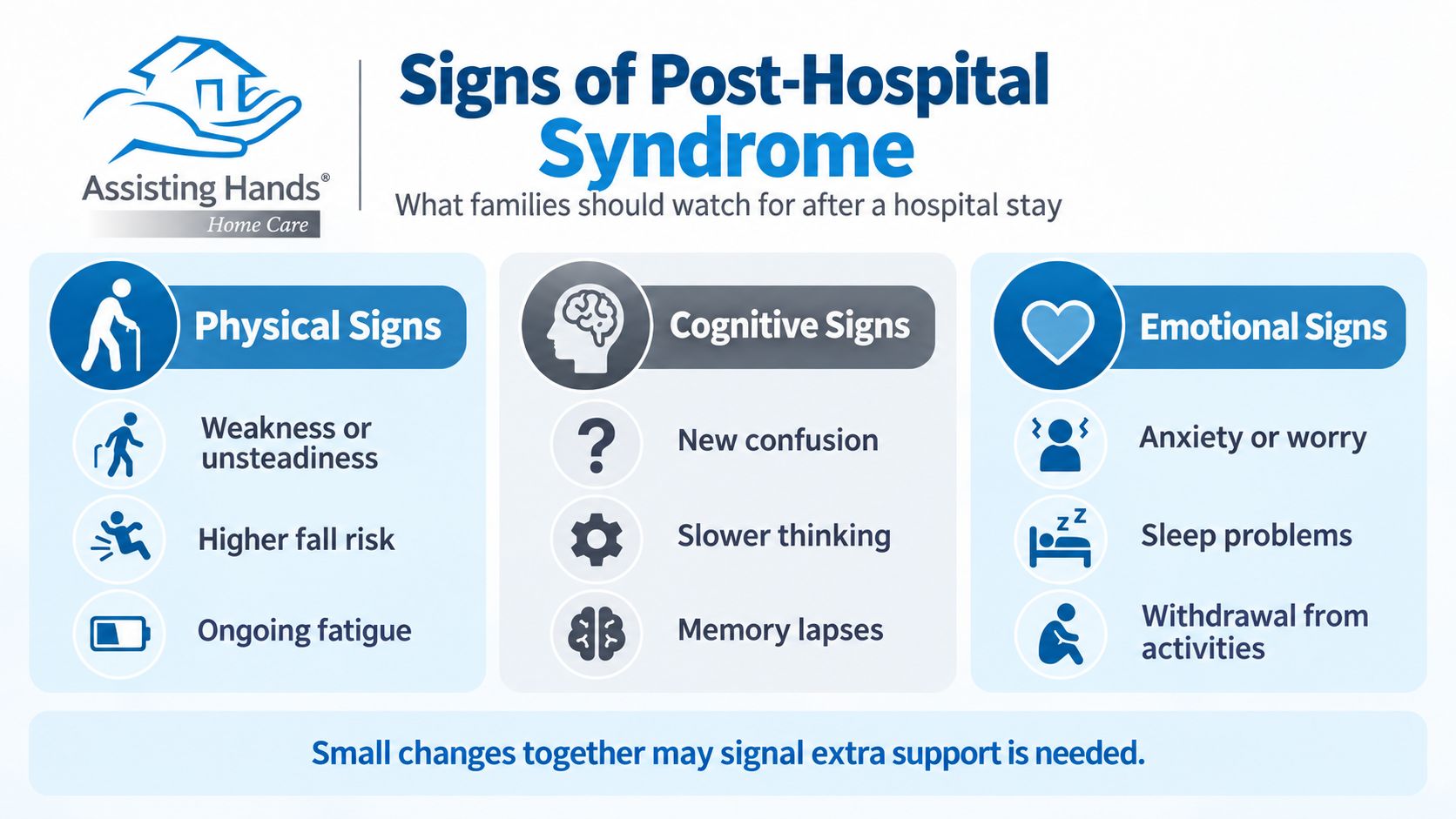
The signs of post-hospital syndrome are not always dramatic, and they can be easy to dismiss as a normal part of recovery. A little more fatigue, a slower walk, or a change in mood may not seem concerning on its own, but several small changes together can signal that your loved one is struggling to regain their baseline. Knowing what to watch for can help families recognize when extra support may be needed.
Physical Signs
Watch for weakness or unsteadiness that seems out of proportion to the original illness. A knee replacement explains a slow gait, but it doesn’t explain needing both hands to get out of a dining chair.
Fall risk climbs during this window, often because strength and balance declined faster than anyone realized. This is also a good time to review the basics of fall prevention at home, especially if your loved one is moving around differently than before.
Fatigue that doesn’t lift after a few good nights of sleep is worth paying attention to as well.
Cognitive Signs
New confusion, slower processing, or a foggy quality that wasn’t there before the hospital stay are common. So are small memory lapses such as forgetting whether she took her morning pills, repeating a question she asked an hour ago, or losing track of what day it is.
This is frightening for families, especially when dementia is already a worry. In many cases, it improves as sleep, nutrition, and routine return to normal. However, it still deserves a conversation with the doctor, particularly if it’s getting worse rather than better.
Emotional Signs
Anxiety often increases after hospitalization, particularly when your loved one has just experienced a serious illness or medical emergency. She may become more alert to every ache, twinge, or change in how she feels and repeatedly worry that it means she is getting sick again. That response is understandable; after seeing how quickly a health problem can escalate, it can be difficult to trust that the danger has truly passed.
Sleep problems can also follow an older adult home, especially after days of nighttime interruptions and an unfamiliar hospital routine. You may notice difficulty falling asleep, frequent waking, or sleeping at unusual times during the day. Some people also become noticeably withdrawn, showing less interest in phone calls, visits from neighbors, favorite activities, or other parts of daily life that normally bring them enjoyment.
Is Confusion After a Hospital Stay Normal?
Temporary confusion can occur after hospitalization, but sudden or worsening confusion should not automatically be considered a normal part of recovery.
Older adults can be particularly sensitive to:
- Sleep deprivation
- Dehydration
- Medication changes
- Infection
- Pain
- Changes in routine
- Unfamiliar environments
These factors can affect thinking and concentration.
Sudden confusion can also occur with delirium, which is different from dementia and may be associated with an acute medical problem.
Contact a healthcare professional if confusion is new, worsening, or accompanied by other concerning symptoms.
How Is Post-Hospital Syndrome Different From Normal Recovery?
Ordinary recovery generally follows the illness or procedure that caused the hospital stay. If your father had hip surgery, for example, he may have pain around the surgical site and limited mobility at first, but over time you would expect those symptoms to improve as he gradually does more. The overall trajectory moves in a recognizable direction: slow, steady progress.
Post-hospital syndrome can look different. New problems may emerge that have little obvious connection to the original diagnosis. Someone hospitalized for heart failure, for example, may return home only to develop a urinary tract infection, experience a fall, or struggle with confusion and weakness. Krumholz’s research highlighted that many 30-day readmissions among older adults were caused by conditions other than the one that led to the original hospitalization.
That distinction matters because of how families respond. Assuming, “He’ll bounce back,” can lead to giving someone too much time alone to rest when what they really need is closer observation and practical support. Recognizing that the weeks after hospitalization can be a period of genuine vulnerability encourages families to pay closer attention to changes in mobility, appetite, sleep, mood, and overall functioning while recovery gets back on track.
How Can Families Help an Older Adult Recover After a Hospital Stay?
The weeks after a hospital stay are a time for steady, practical support rather than simply waiting for your loved one to “get back to normal.” A few consistent habits can make recovery easier while helping families catch problems before they become emergencies.
- Prioritize sleep: A consistent bedtime, a dark and quiet room, and natural daylight in the morning can help reset the sleep-wake rhythm that hospitalization often disrupts. Rest gives the body and brain time to recover.
- Encourage gentle movement: Too much time in bed or on the couch can deepen weakness after a hospital stay. Short, supported walks around the house, following the discharge instructions, can gradually rebuild strength and confidence.
- Keep nutrition and hydration simple: If appetite is still low, small meals with protein may be easier to manage than three large plates. Keep fluids within easy reach and encourage regular drinking throughout the day.
- Restore familiar routines: Glasses, hearing aids, familiar furniture, family photos, and a predictable daily schedule can help an older adult feel more oriented and comfortable at home.
- Pay attention to small changes: A new difficulty walking, an untouched meal, unusual sleepiness, increasing confusion, or a medication dose taken twice can all deserve attention. Our guide to practical steps for a safer transition home covers the discharge-planning side in more detail.
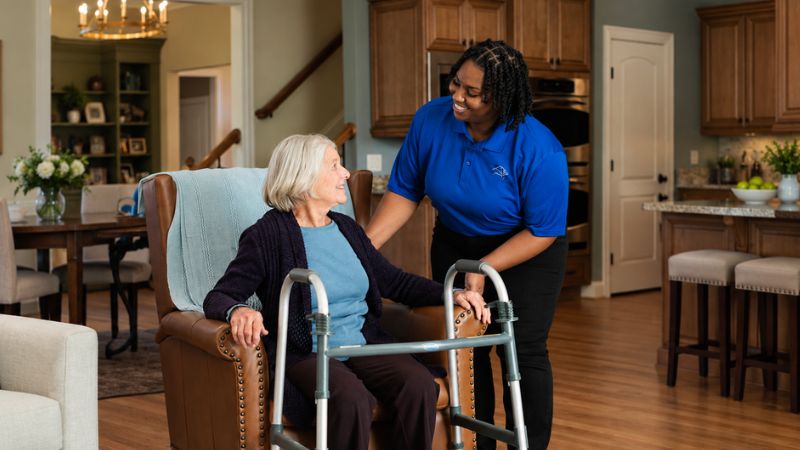
For families who work, live out of town, or are simply exhausted after a hospital stay, in-home care can provide valuable support during this vulnerable period. A caregiver can help with meals, medication reminders, light activity, and companionship while providing the consistent presence that makes it easier to notice when something changes.
Post-Hospital and Post-Surgical Care in Naperville, IL
Families in Naperville, Wheaton, Lisle, Glen Ellyn, and surrounding DuPage County communities often need extra help during the first few weeks after an older adult returns home from the hospital.
Assisting Hands Home Care provides post-surgical care and non-medical support to help older adults transition home safely.
Caregivers can assist with meals, medication reminders, mobility, personal care, companionship, and daily routines while your loved one rebuilds strength and confidence at home.
Home care can also give family caregivers reassurance that someone is present to notice changes that may otherwise be missed.
Call (630) 634-9316 to schedule a free in-home assessment and learn how Assisting Hands Home Care can support your loved one’s transition from hospital to home.
Post-Hospital Syndrome FAQs
How long does post-hospital syndrome last?
For most older adults, the vulnerable period lasts about 30 days after discharge, with the first two to three weeks carrying the highest risk. Full return to baseline strength can take longer, particularly after a lengthy stay or for someone who was frail beforehand.
Is post-hospital syndrome the same as normal recovery?
No. Normal recovery tracks the original illness and improves steadily. Post-hospital syndrome involves new vulnerability across the body, which is why a second hospitalization is often for something unrelated to the first.
Why does my parent seem more confused after a hospital stay?
Disrupted sleep, new medications, dehydration, and days without normal routines all affect thinking, and older adults are especially sensitive to those changes. Confusion that improves at home is a good sign, but any new or worsening confusion should be reported to the doctor.
Can post-hospital syndrome happen after a short hospital stay?
Yes. Even two or three days of interrupted sleep, bed rest, and poor eating can leave an older adult noticeably weaker. The length of the stay matters less than what happened during it.
What can families do to reduce the risk of readmission?
Protect sleep, encourage gentle movement, keep food and fluids going, stay on top of the new medication list, attend follow-up appointments, and make sure someone is present enough to notice changes early. Many families arrange in-home care for the first few weeks for exactly that reason.

