
How Do I Choose a Home Care Agency?
Finding the right home care agency is about more than comparing hourly rates or choosing the closest office. You are...
A live-in caregiver is a professional who moves into the home for several days at a time to help an older adult with daily life, from the morning routine through the overnight hours. Instead of coming and going in short visits, the caregiver stays close by, learns the household’s rhythm, and becomes a steady, familiar presence.For many families across Monmouth and Ocean Counties, that steadiness is the whole point. A parent wants to stay in the house where they raised their children. The adult children want to know someone reliable is there when they can’t be. Live-in care is one way to make both of those things possible.
Here’s a closer look at what the role involves day to day.
A live-in caregiver lives in the client’s home for several consecutive days, providing hands-on help and companionship during the day and remaining available overnight. The caregiver has a place to sleep and scheduled rest periods but stays accessible if the client needs something after hours.
This is different from a caregiver who works a set shift and then leaves because the same person is present around the clock. They come to know the small things that matter, like how the client takes their coffee, which chair is easiest to get out of, and what time of day usually gets harder. That familiarity tends to build trust, and trust makes care easier to accept.
At Assisting Hands Jersey Shore, live-in caregivers are screened, trained, and insured employees, never independent contractors. We also match each client with a caregiver based on their needs and personality, since the relationship is a big part of what makes live-in care work.
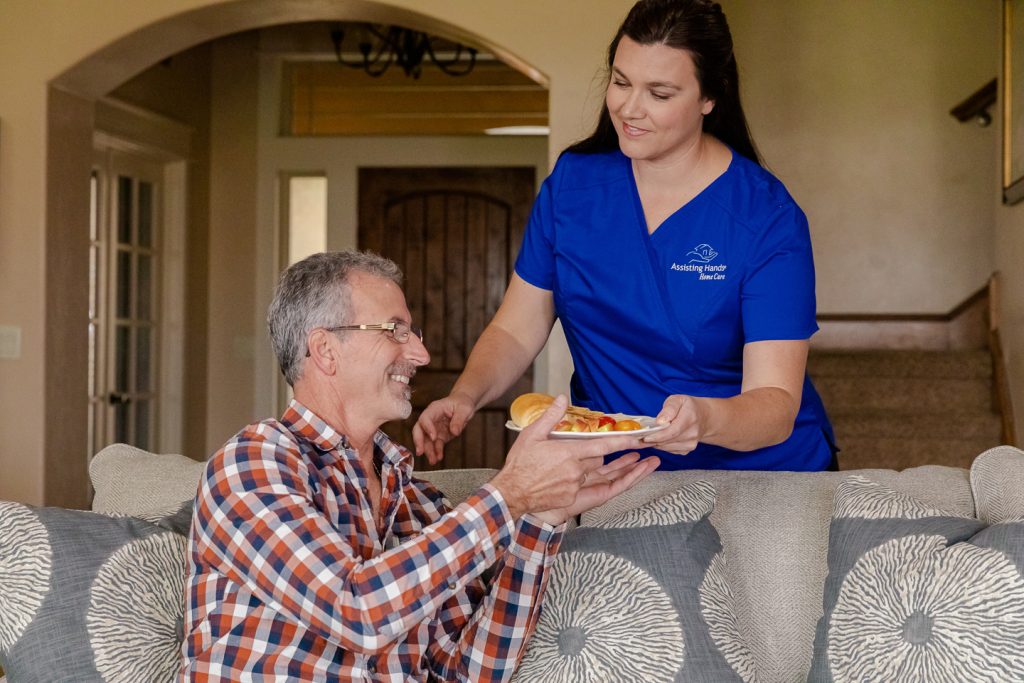
A live-in caregiver helps with the everyday tasks that keep someone safe, clean, fed, and comfortable at home. The exact routine depends on the client, but the support usually includes:
Some of this is practical. Some of it is simply being there, sharing a meal, watching a show together, or taking a short walk around the block. Both matter. Isolation is hard on older adults, and a caregiver who is around all day gives structure to the day and someone to talk to.
Care plans aren’t set in stone, either. If a client’s needs change after a fall or a hospital stay, the plan changes with them.
Live-in care and 24-hour care both keep a caregiver in the home around the clock, but they work differently.
With live-in care, one caregiver stays in the home for several days at a time. They sleep overnight in the home and take scheduled rest periods during the day, and they remain available if the client needs help after hours. It works well for someone who benefits from a steady, familiar presence but doesn’t need active, hands-on help through the entire night.
With 24-hour care, a team of caregivers works in rotating shifts, so a fully alert professional is always awake and on duty. This tends to be the better fit when someone needs attention at any hour of the night, such as a client with advanced dementia who is up and moving after dark, or someone who needs frequent repositioning.
If you aren’t sure which one fits your situation, our team can walk you through the daily routine of each and help you figure out which option makes sense for your family.
Live-in care tends to help older adults who want to stay home but shouldn’t be alone for long stretches. That often includes seniors who:
It also helps the family. When a reliable caregiver is in the home, the spouses and adult children who have been carrying the load get to rest. They can go back to being family instead of full-time caregivers, and they stop bracing every time the phone rings.
It helps to be clear about the limits, too. Assisting Hands provides non-medical home care. Live-in caregivers help with activities of daily living (ADLs), safety, and companionship, but they don’t perform clinical or skilled nursing tasks. If a client needs medical care, we’re glad to work alongside the nurses, therapists, and doctors already involved so everyone stays on the same page.
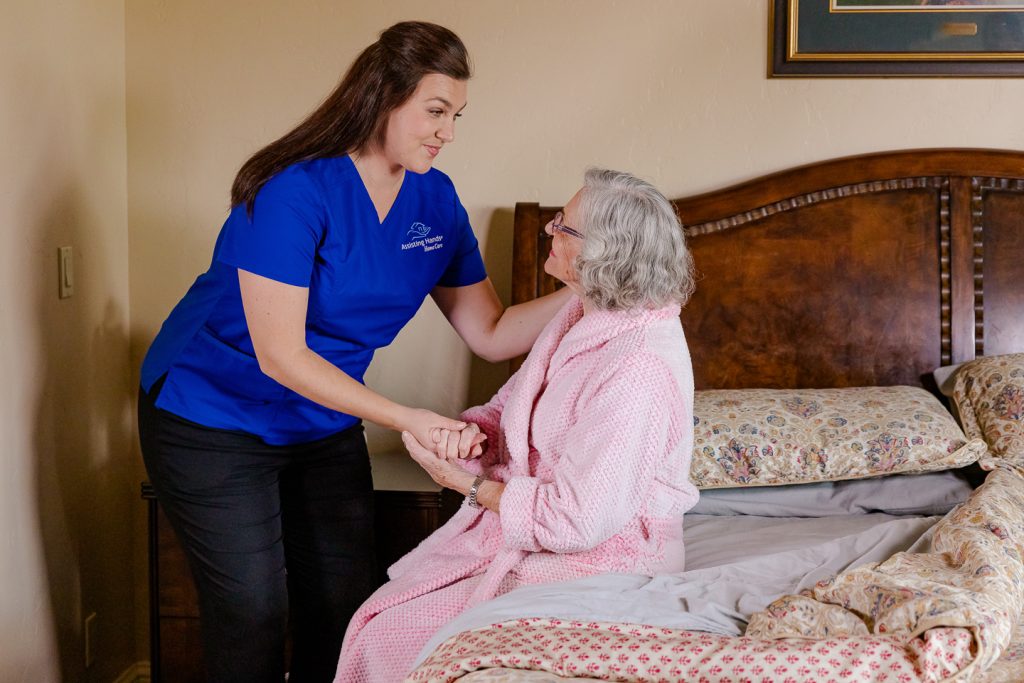
Home is where people feel most like themselves. Live-in care lets an older adult keep their own bed, their own kitchen, and their own routine, with someone nearby to help when the day gets difficult. For families, it’s the reassurance of knowing a loved one is safe and not alone, without moving them into a facility before it’s necessary. That combination of comfort for the client and peace of mind for the family is why so many households choose this level of care.
If you’re considering live-in care for an aging loved one, Assisting Hands Jersey Shore is here to help. Our live-in caregivers provide dependable, around-the-clock support that keeps seniors safe, comfortable, and independent at home.
Call us at (732) 592-1557 to learn more or to schedule a free in-home assessment. You can also read more about our live-in and 24-hour home care services and how they work.
We proudly serve Sea Girt, Manasquan, Belmar, Bradley Beach, Rumson, Little Silver, Point Pleasant, Brick, Toms River, Manchester, and the surrounding areas of Monmouth and Ocean Counties, NJ.
By: Charles C. Bratton, II, Esq., LL.M., founder of Bratton Law, LLC and practices life care planning, elder law, estate planning and administration, tax planning…
Seniors make up the second largest portion of the current United States population. Many seniors are known as Baby Boomers….


