

Aggression in dementia patients is often caused by confusion, fear, pain, overstimulation, or changes in the brain rather than intentional hostility. The best way to handle aggressive behavior is to remain calm, avoid arguing, validate the person’s emotions, identify possible triggers, and redirect their attention to a calming activity. According to the 2025 Alzheimer’s Disease Facts and Figures report, an estimated more than 7 million Americans age 65 and older are living with Alzheimer’s disease, highlighting the growing need for caregivers to understand behavioral symptoms such as aggression.
As dementia progresses, some seniors may begin to display aggressive behaviors that were not present earlier in the disease. Activities, routines, or interactions that once brought them comfort and happiness may no longer have the same effect, and new behaviors and emotional responses can emerge.
In this article, we’ll discuss what aggression can look like in people with dementia, why dementia may lead to aggressive behavior, common triggers, warning signs that aggression may be building, strategies to calm an aggressive dementia patient, what to avoid during an episode, how professional caregivers manage these situations with in-home care, and whether aggressive behaviors can be prevented.
Key Takeaways for Managing Aggression in Dementia Patients
- Aggression in dementia is often triggered by fear, confusion, pain, or other unmet needs rather than intentional hostility.
- Staying calm, validating emotions, and identifying underlying triggers can help de-escalate aggressive behavior.
- Avoid arguing, correcting memories, raising your voice, or physically restraining the person whenever possible.
- Consistent routines, a calm environment, and early recognition of warning signs may help reduce aggressive episodes.
- A healthcare professional should evaluate sudden or severe aggression to rule out medical issues such as infections or medication side effects.
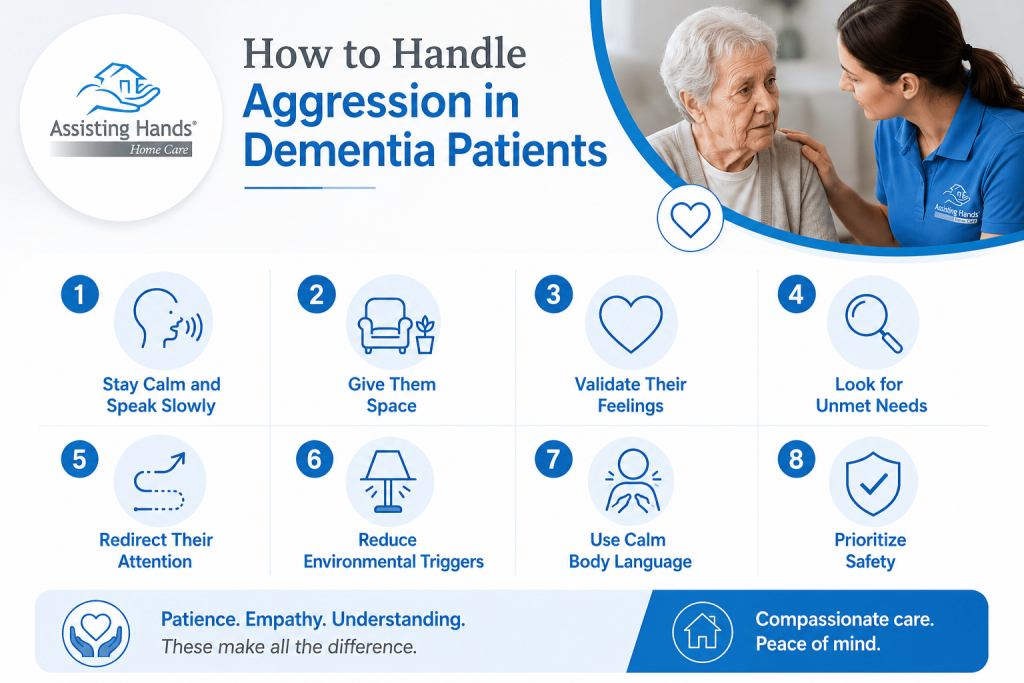
How to Handle Aggression in Dementia Patients: 8 Proven Strategies
When a person with dementia becomes agitated or aggressive, responding calmly and thoughtfully is essential. The goal is not to “win” the interaction, but to reduce distress, ensure safety, and help de-escalate the situation before it worsens. The National Institute on Aging recommends remaining calm, avoiding arguments, and looking for underlying causes of distress when responding to agitation or aggression in people with dementia. The following strategies can help caregivers respond effectively in the moment.
1. Stay Calm and Speak Slowly
Maintaining a calm demeanor is one of the most important steps. Even if the situation feels stressful, speaking in a slow, gentle tone can help prevent further escalation. A calm presence can often help ground and reassure the individual.
2. Give Them Space
Allowing personal space can help reduce feelings of pressure or threat. Stepping back slightly, avoiding crowding, and giving the person time to process what is happening can make it easier for them to settle.
3. Validate Their Feelings
Acknowledging emotions can help the person feel heard and understood, even if the situation does not fully make sense. Simple statements such as “I can see you’re upset” or “It looks like you’re frustrated” can be very effective in reducing agitation. Validation helps build trust and can prevent further escalation by showing empathy rather than correction.
4. Look for Unmet Needs
Aggressive behavior often has an underlying cause. Before reacting, consider whether your loved one may be experiencing:
- Pain or illness
- Hunger or dehydration
- Fatigue
- Needing the bathroom
- Anxiety or fear
- Loneliness
- Overstimulation
- Confusion about their surroundings
Addressing these needs may resolve the behavior without further intervention.
5. Redirect Their Attention
Shifting focus to a calming or familiar activity can help interrupt the cycle of agitation. Activities such as folding towels, working on a simple puzzle, looking through magazines, or engaging in a favorite hobby may help redirect their attention in a positive way.
6. Reduce Environmental Triggers
A calm environment can make a significant difference. Lowering the volume of the television or music, dimming bright lights, and reducing background noise or clutter can help ease overstimulation and create a more soothing atmosphere.
7. Use Calm Body Language
Your body language can influence how safe a person with dementia feels. Approach slowly from the front, avoid sudden movements, maintain a relaxed posture, respect personal space, and keep facial expressions calm and reassuring.
8. Prioritize Safety
Ensuring physical comfort and a sense of security is key. Offering a favorite blanket, a warm drink, or sitting together in a quiet space can help the person feel more at ease. Small gestures of comfort can go a long way in reducing anxiety and restoring calm.
What Not to Do When a Dementia Patient Becomes Aggressive
Knowing how to respond during an episode of aggression is just as important as knowing what to do. Certain reactions can unintentionally increase confusion, fear, or agitation. Keeping the following in mind can help prevent the situation from escalating and support a calmer outcome.
Don’t Argue
Avoid arguing or trying to “win” the conversation. A person with dementia is often responding from confusion or distress, and reasoning with them in the moment is unlikely to be effective. Arguing can increase frustration and escalate the situation further.
Don’t Correct Their Memory
Correcting or challenging their recollection of events may cause embarrassment, confusion, or agitation. Instead of focusing on what is “right” or “wrong,” it is often more helpful to acknowledge their feelings and gently redirect the conversation.
Don’t Raise Your Voice
Speaking loudly or harshly can increase fear and intensify agitation. A calm, steady tone is more likely to help the person feel safe and reduce emotional escalation.
Don’t Physically Restrict or Restrain Them
Physical restraint should be avoided whenever possible, as it can increase fear, confusion, and resistance. Instead, prioritize verbal reassurance, creating space, and using calming techniques to de-escalate the situation safely.
Don’t Take It Personally
Aggressive behavior in dementia is a symptom of the disease, not a reflection of the caregiver or loved one. These episodes are typically caused by changes in the brain, environment, or unmet needs. Remembering this can help caregivers respond with patience and avoid emotional strain.
What Should You Do if a Dementia Patient Becomes Violent?
Although severe physical aggression is less common, it can occur. If a person with dementia becomes violent:
- Stay calm and avoid escalating the situation.
- Put distance between yourself and the individual if needed.
- Remove nearby objects that could cause injury.
- Do not attempt to physically restrain them unless absolutely necessary for immediate safety.
- Allow time for emotions to settle before trying to communicate again.
- Call emergency services if someone is in immediate danger.
Protecting everyone’s safety should always be the highest priority.
Why Do Dementia Patients Become Aggressive? Common Causes Explained
According to the Alzheimer’s Association, behavioral and personality changes, including agitation and aggression, are common symptoms of dementia and often stem from changes in the brain, unmet needs, or environmental stressors. Understanding the underlying cause can help family members and caregivers respond with greater patience and reduce situations that may escalate.
Changes in the Brain
Dementia causes physical changes in the brain that affect memory, reasoning, emotions, and behavior. As these changes progress, seniors may react differently than they once did. A person who was previously calm and patient may begin showing signs of irritability, anger, or aggression because their ability to process situations and regulate emotions has changed.
Fear and Confusion
Daily activities can become confusing or overwhelming for someone living with dementia. They may not understand what is happening around them or recognize the people assisting them. When seniors feel frightened, uncertain, or unable to make sense of a situation, aggression may become a way to express those emotions.
Difficulty Communicating Needs
People with dementia often struggle to find the right words to communicate discomfort, hunger, pain, fatigue, or emotional distress. When they cannot express what they need, frustration can build and appear as yelling, resistance, or aggressive behavior.
Aggression Is Often a Form of Communication
Seniors living with dementia often lose the ability to clearly express physical discomfort or emotional distress. Instead of saying they are in pain, frightened, overwhelmed, or confused, they may communicate those feelings through yelling, resisting care, or physical aggression. Viewing aggressive behavior as a form of communication rather than intentional hostility can help caregivers respond with empathy and identify the underlying cause.
Loss of Independence
Many seniors experience sadness, frustration, or anger as they become less able to complete tasks independently. Needing help with activities they once managed on their own can lead to feelings of embarrassment, helplessness, or loss of control that may trigger aggressive responses.
Feeling Threatened During Personal Care
Personal care activities such as bathing, dressing, grooming, or toileting can feel uncomfortable or invasive for someone with dementia. If they do not understand what is happening or feel rushed, they may react defensively through verbal or physical aggression. Recognizing these causes can help caregivers identify triggers and respond in ways that promote comfort, reassurance, and a greater sense of security.
Common Triggers of Aggression in Seniors with Dementia
Aggressive behavior in people living with dementia is often triggered by an underlying issue rather than intentional anger or hostility. Identifying what may be causing the reaction can help caregivers respond more effectively and reduce future episodes.
Pain or Physical Discomfort
Pain is one of the most common causes of aggression in seniors with dementia. Because they may have difficulty explaining what hurts, discomfort can appear as irritability, yelling, resistance to care, or physical aggression. Conditions such as arthritis, headaches, digestive issues, or discomfort from sitting or lying in one position for too long may contribute.
Urinary Tract Infections (UTIs)
Infections such as UTIs can trigger sudden confusion or changes in behavior in older adults, making prompt medical evaluation important when aggression appears unexpectedly.
Medication Side Effects
Certain medications or changes in medication can affect mood, behavior, and cognitive function. Side effects may lead to increased confusion, restlessness, agitation, or aggressive responses. Reviewing medications with a physician can help identify whether they may be contributing to behavioral changes.
Hunger, Thirst, or Fatigue
Basic needs can become difficult for dementia patients to recognize or communicate. A senior who is hungry, dehydrated, tired, or physically exhausted may become frustrated and express those feelings through aggressive behavior.
Loud Noises and Overstimulation
Busy environments, loud conversations, televisions, crowded rooms, or too much activity at once can overwhelm someone with dementia. When overstimulated, they may become anxious, agitated, or react aggressively as a way to cope.
Changes in Routine
People with dementia often rely on familiar routines to feel secure and comfortable. Sudden changes in schedules, daily activities, caregivers, or surroundings may create confusion and distress that can trigger aggressive behavior.
Being Rushed or Corrected
Feeling rushed or repeatedly corrected can be frustrating and upsetting for someone with dementia. They may feel embarrassed, pressured, or unable to keep up, which can lead to agitation or aggression. Slowing down and offering gentle guidance can help reduce stress.
Unfamiliar People or Environments
New surroundings or unfamiliar faces can increase anxiety and confusion. Whether visiting a new place, attending an appointment, or interacting with someone they do not recognize, seniors with dementia may become upset or defensive when they feel unsafe or uncertain.
Loneliness and Boredom
Seniors with dementia who feel isolated or under stimulated may become frustrated or agitated. Meaningful social interaction and engaging activities can help reduce behavioral symptoms.
Temperature and Physical Discomfort
Being too hot, too cold, wearing uncomfortable clothing, or sitting in one position for an extended period may increase irritability and contribute to aggressive behavior.

Early Warning Signs of Aggression
Older adults living with dementia often show subtle signs of agitation before aggression develops. Learning to recognize these early warning signs can help caregivers respond sooner, reduce stress, and prevent situations from escalating. These behaviors are often a form of communication and may signal fear, discomfort, confusion, or unmet needs.
Increased Restlessness
A person with dementia may become noticeably more restless or uneasy before an aggressive episode. They may appear anxious, unable to relax, or uncomfortable without being able to explain why.
Pacing or Repetitive Movement
Some seniors express rising frustration or agitation through pacing, wandering, or repetitive movements around the home. This behavior may indicate nervousness, confusion, overstimulation, or emotional distress.
Clenched Fists or Tense Body Language
Changes in body language can be an early indicator that emotions are escalating. Clenched fists, crossed arms, tense muscles, or rigid posture may suggest the person is becoming upset or overwhelmed even if they are not verbally expressing it.
Raising Their Voice
An increase in volume, a sharper tone, repetitive questioning, or speaking more forcefully may signal growing frustration. In many cases, the individual may feel unheard, confused, or unable to communicate what they need.
Facial Expressions of Fear or Frustration
Facial expressions can reveal emotional distress before words do. Signs such as frowning, tightening facial muscles, appearing fearful, avoiding eye contact, or showing a distressed expression may indicate increasing agitation.
Refusal to Participate in Activities
Someone with dementia may begin refusing activities, personal care, meals, or routines they would normally accept. This resistance can be an early sign that they are feeling overwhelmed, uncomfortable, confused, or emotionally distressed.
Recognizing these warning signs early gives caregivers an opportunity to slow down, provide reassurance, adjust the environment, and address possible triggers before aggression escalates.
Signs and Types of Aggression in Dementia Patients
Aggression in people living with dementia can appear unexpectedly and may look different from one person to another. In many cases, behavioral changes develop gradually over time rather than appearing all at once. A person who was once calm and easygoing may become more easily frustrated, resistant, or emotionally reactive as the disease affects communication, memory, and emotional regulation. Aggression can be verbal, physical, or expressed through refusal and withdrawal.
Verbal Aggression
Verbal aggression is often one of the earliest signs families notice. A senior experiencing confusion, fear, or frustration may express these emotions through words rather than actions.
Common examples include:
- Yelling, shouting, swearing, or emotional outbursts
- Making unreasonable demands or threats
- Accusing family members or caregivers of things that did not happen
- Repeating complaints or becoming argumentative
- Using harsh or hurtful language that is out of character
Physical Aggression
Some older adults with dementia may display physical aggression toward family members or caregivers, especially when they feel overwhelmed, confused, frightened, or pressured.
Examples of physical aggression include:
- Hitting or pushing when they do not want to participate in an activity
- Kicking when feeling frustrated or unable to communicate their needs
- Biting to resist care or express discomfort
- Scratching when upset or overstimulated
- Throwing objects during moments of heightened frustration or agitation
Passive Aggressive Behaviors
Aggression is not always loud or physical. Some seniors may express distress through passive resistance or refusal to cooperate with care.
Examples include:
- Refusing assistance from family members or caregivers
- Declining to take medications
- Ignoring instructions or resisting routines
- Refusing meals or personal care activities
- Withdrawing or becoming intentionally uncooperative
These behaviors are often forms of communication rather than intentional acts of defiance. Understanding what may be causing the behavior can help caregivers respond with greater patience and support.

How Professional Caregivers Manage Aggression in Dementia Patients
Professional caregivers are trained to respond to aggression in dementia patients in a calm, structured, and compassionate way. Their goal is to ensure safety, reduce distress, and address the underlying causes of agitation rather than simply reacting to the behavior itself.
Person-Centered Care Approaches
Person-centered home care focuses on the individual’s unique needs, preferences, values, and dignity. Caregivers tailor their approach to each person, taking time to understand what makes them feel comfortable, secure, and respected. This individualized care helps reduce stress and can minimize situations that may lead to aggression.
Identifying Behavioral Patterns
Caregivers are trained to observe and recognize patterns in behavior. By identifying when and why aggression tends to occur, such as during certain activities, times of day, or interactions, they can anticipate triggers and make adjustments to prevent escalation before it happens.
Maintaining Consistent Routines
A predictable daily routine provides structure and reassurance for individuals living with dementia. Professional caregivers prioritize consistency in meals, activities, and personal care to help reduce confusion and create a sense of stability, which can significantly lower the risk of agitation.
Using De-Escalation Techniques
When aggression does occur, caregivers use proven de-escalation strategies to calm the situation. These may include speaking in a calm and reassuring tone, maintaining a non-threatening presence, validating emotions, and allowing space when needed. The focus is always on reducing stress and restoring a sense of safety.
Monitoring Environmental Triggers
Caregivers providing dementia care pay close attention to environmental factors that may contribute to agitation. Loud noises, bright or harsh lighting, cluttered spaces, or overstimulation can all be potential triggers. By adjusting the environment to be calmer and more familiar, caregivers help create a setting that supports comfort and emotional stability.
Read: How to Care for a Senior Parent Experiencing Memory Loss
Can Aggression in Dementia Be Prevented?
While it may not always be possible to completely prevent aggression in individuals living with dementia, many strategies can significantly reduce the likelihood of episodes. Prevention focuses on creating a calm, predictable, and supportive environment that helps minimize confusion, stress, and frustration.
Establish Consistent Daily Routines
A structured daily routine can provide a sense of stability and security. Completing activities such as meals, personal care, and rest at consistent times each day helps reduce confusion and creates a more predictable environment, which may lessen agitation.
Encourage Regular Physical Activity
Appropriate physical activity, such as walking, light stretching, or other safe movement, can support overall health and well-being. Exercise may also help reduce restlessness, improve mood, and promote better sleep, all of which can contribute to fewer behavioral challenges.
Support Healthy Sleep Patterns
Poor sleep can increase confusion, irritability, and agitation. Establishing a calming bedtime routine and encouraging consistent sleep and wake times can help improve rest quality and reduce the risk of behavioral changes during the day.
Plan Activities Around Their Best Time of Day
Many individuals with dementia function better at certain times of the day. Scheduling meaningful or engaging activities during these periods can help improve participation and reduce frustration. Many individuals with dementia experience increased confusion, anxiety, or aggression during the late afternoon and evening, a phenomenon known as sundowning. Maintaining consistent routines, reducing stimulation later in the day, keeping rooms well-lit, and encouraging restful activities can help minimize sundowning-related behavioral changes.
When Should You Call a Doctor About Aggression?
While behavioral changes are common in dementia, sudden or severe aggression should be evaluated by a healthcare professional.
Consider seeking medical attention if aggression:
- Appears suddenly or is significantly worse than usual
- Occurs alongside fever or signs of infection
- Begins after a medication change
- Is accompanied by hallucinations or severe confusion
- Results in injuries to the person or caregiver
- Seems related to unmanaged pain or another medical condition
Prompt evaluation can identify treatable causes such as urinary tract infections, medication side effects, or delirium.
Key Takeaways for Managing Aggression in Seniors with Dementia
Aggression in dementia can be one of the most challenging aspects for families and caregivers to navigate. It often appears suddenly, can feel emotionally overwhelming, and may leave loved ones unsure of how to respond. However, aggressive behavior is rarely intentional. More often, it is a response to confusion, unmet needs, environmental stress, or changes in the brain caused by the disease.
Learning how to handle aggression in dementia patients starts with recognizing that these behaviors are often symptoms of the disease rather than intentional actions. By staying calm, identifying triggers, validating emotions, and creating a supportive environment, caregivers can reduce distress and respond more effectively during challenging moments. Even with the best prevention strategies in place, caring for someone with dementia can be physically and emotionally demanding. Many families reach a point where additional support is needed to ensure their loved one remains safe, comfortable, and well cared for.
Memory Care Services from Assisting Hands Home Care

At Assisting Hands Home Care, our compassionate caregivers provide Alzheimer’s and dementia care that includes recognizing triggers, managing behavioral changes, and responding calmly to moments of agitation or aggression. We focus on person-centered care that prioritizes dignity, safety, and emotional well-being in the comfort of the home.
If your loved one is showing signs of dementia-related aggression or other behavioral changes, professional in-home support can make a meaningful difference. With the right care and support, individuals living with dementia can continue to experience comfort, familiarity, and improved quality of life while families gain peace of mind knowing their loved one is in capable, compassionate hands. Call Assisting Hands Home Care at (352) 758-4512 for more information about our memory care services in The Villages, FL.
Frequently Asked Questions
Is aggression common in dementia patients?
Yes. Some individuals with dementia develop verbal or physical aggression as the disease affects communication, judgment, and emotional regulation.
How do you calm an aggressive dementia patient?
Stay calm, validate their emotions, identify possible triggers, reduce environmental stress, and redirect them toward a comforting activity instead of arguing or correcting them.
What causes sudden aggression in dementia patients?
Pain, infections, medication changes, overstimulation, hunger, fatigue, or worsening cognitive impairment can all contribute to sudden aggression.
Does aggression mean dementia is getting worse?
Not necessarily. While progression can play a role, aggression may also result from treatable medical conditions or environmental triggers.
Should you argue with someone who has dementia?
No. Arguing or correcting their memory often increases confusion and agitation. A calm and reassuring approach is generally more effective.
Can urinary tract infections cause aggression in dementia patients?
Yes. UTIs and other illnesses can cause sudden confusion, agitation, and behavioral changes in older adults, including those living with dementia.

