

Falls are a leading cause of serious injuries among older adults. According to the CDC, one in four Americans aged 65 and older experiences a fall every year, making slips and falls the most common cause of injuries in seniors.
Preventing falls and understanding how to respond when they occur are vital steps in reducing the risk of serious harm. In this article, we’ll explore why seniors are more prone to falling, the common causes of falls, what to do if an elderly person falls, the implications of frequent falls, when to consider home care, and practical tips to prevent future incidents.
Why Are Seniors More Likely to Fall?
As seniors age, they often require multiple medications and may face health challenges such as incontinence, which can increase their risk of falling. There are many factors that contribute to falls among seniors, ranging from accidents to environmental hazards like slippery floors, both of which can lead to serious injuries. Below, we explore some of the most common causes of falls in seniors:
- Poor eyesight, hearing, and reflexes can lead to falls.
- Diabetes, heart disease, or issues with the thyroid, nerves, or blood vessels can make their balance worse.
- Incontinence can cause them to rush to the bathroom and increase the chance of falling.
- Mild cognitive impairment due to dementia may increase the risk of falling.
- Loss of muscle mass and issues with balance and gait increase the risk of falling.
- Foot issues that cause pain and poor-quality footwear lead to falls.
- Some medications may pose a risk of falling as they may have side effects such as confusion and dizziness.
Read Our Blog: Does Head Trauma Increase the Risk of Dementia?
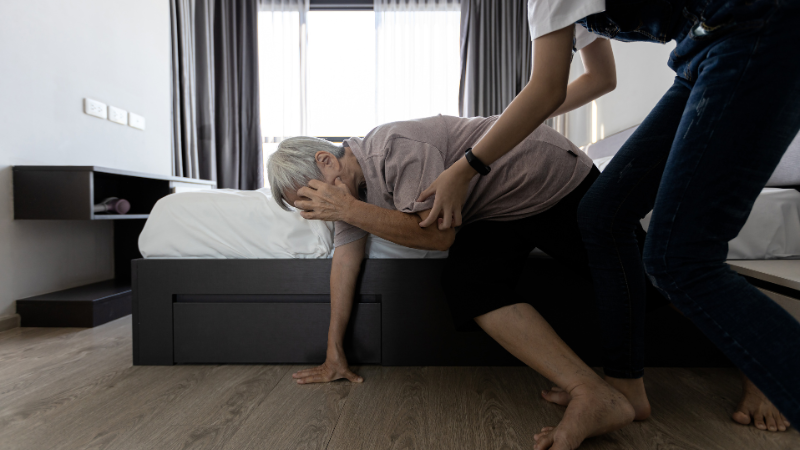
What to Do When an Elderly Person Falls
Taking the proper steps after a fall is crucial to ensuring your loved one receives the care they need. Knowing what to do can make all the difference. Here’s a guide on what to do if you or an elderly loved one experiences a fall:
Stay Calm and Assess the Situation
Stay calm and assess the situation. Check if your loved one is injured and whether they can get up on their own. If they appear hurt or have difficulty responding, encourage them to remain still while you examine them for injuries. Look carefully for signs of broken bones, sprains, or bruises. If they are in pain or if you notice any bleeding, contact 911 immediately for assistance.
If Injured, Call 911 Immediately
If your loved one is injured, make sure to call 911 right away. Stay with your loved one until help arrives and try to keep them calm.
Help Them Stand Up (If There Are No Injuries)
If your senior loved one needs assistance getting up, it’s important to approach the situation carefully. Rather than lifting them entirely on your own, focus on guiding and supporting them as they regain their footing. Attempting to lift them by yourself could put you at risk for injury. To ensure both safety and comfort, here are some effective techniques to help your loved one get up safely:
- Help them roll over to their side and get them to their knees.
- Find a chair or another sturdy object and put it in front of them.
- Have them put their hands on the seat and push themselves up from the kneeling position. If they need help, gently give them a boost.
- Try to get another chair or move the first chair so they can sit down and rest.
Keep Them Hydrated
It is important to keep your loved one hydrated by giving them sips of water in case they have fallen due to dehydration.
Monitor the Senior for Delayed Injuries
After a fall, it’s important to monitor your loved one closely for any potential issues. Even if they seem fine and show no immediate signs of pain or discomfort, continue observing them for at least 24 hours to ensure their well-being. If they experience pain, soreness, or other concerning symptoms, contact their primary doctor or, depending on the severity, consider taking them to the emergency room for further evaluation.
Schedule an Appointment with Their Doctor
Even if your loved one has not had a serious fall, it is important to report the fall to their primary doctor so it can be added to their medical records. If the fall causes a serious injury, they should see a doctor right away.

What Does it Mean When an Elderly Person Keeps Falling?
Frequent falls in an elderly loved one may be a sign that it’s time to consider home care. These falls could indicate declining physical strength, balance issues, or underlying health concerns that should be evaluated by a doctor. Providing the right support can help ensure their safety and well-being.
When to Consider Professional Home Care
If your senior loved one is experiencing frequent falls at home, it may be time to explore in-home care as a solution. Repeated falls often stem from declining physical strength, balance issues, or underlying health conditions. In-home care allows your loved one to remain in the comfort of their home while providing the support they need to stay safe. A dedicated caregiver can assist with daily activities, medical needs, and companionship, significantly reducing the risk of falls. This ensures their safety and well-being while giving you peace of mind.
Tips for Preventing Future Falls
A single fall can be a frightening experience for a senior loved one. That’s why preventing trips and falls is essential to their safety. To minimize the risk, it’s important to take proactive steps both at home and when they’re out and about.
- Remove Tripping Hazards: Eliminate trip hazards in your loved ones’ homes to create a safer environment. Secure any loose rugs with tape, and clear walkways of cords, wires, or clutter on the floor or stairs. Replace any burnt-out light bulbs, especially in key areas like hallways, bathrooms, or other dimly lit spaces where seniors might be at risk of tripping. Taking these simple precautions can significantly reduce the chance of falls and improve overall safety.
- Improve Lighting in High Traffic Areas: Replace any burnt-out bulbs, especially in areas frequently used by seniors, such as walkways, bathrooms, or other dimly lit spaces. Proper lighting is essential to prevent trips and falls and ensure their safety throughout the home.
- Add Handrails or Grab Bars: Install handrails and grab bars in key areas like stairways and bathrooms, as well as any other spots where additional support may be needed to prevent slips and falls or assist with movement.
- Mobility and Strength Training: Ensure your loved one receives physical therapy to strengthen their limbs and reduce the risk of future falls.

Professional Senior Home Care from Assisting Hands Home Care
Falls can have serious consequences for seniors, but with the right precautions and proactive measures, the risk can be significantly reduced. By understanding the causes of falls, knowing how to respond when they happen, and taking steps to create a safer home environment, you can help protect your loved ones from potential injuries. If falls become frequent, professional home care may provide the additional support they need to maintain their safety and independence. Prioritizing fall prevention ensures that seniors can continue to live comfortably and confidently, reducing the likelihood of accidents and enhancing their overall well-being.
If your senior loved ones are prone to falling, they could benefit from professional senior home care from Assisting Hands. Our highly trained caregivers provide the support your loved one needs to live safely and comfortably at home while reducing the risk of falls. Falls can cause serious injuries for seniors, making prevention a top priority. To promote safety, our caregivers ensure your loved one’s home is free of hazards and properly organized, creating a secure environment for their daily activities.
You can call Assisting Hands Home Care – The Villages at (352) 758-4512 for more about our home care services in The Villages, Ocala, Wildwood, Lady Lake, Oxford, and Leesburg, FL.

