

Dizziness in seniors is most often caused by inner ear problems such as BPPV, a drop in blood pressure when standing, medication side effects, dehydration, or heart rhythm problems. In many older adults, more than one of these factors is at play at the same time.
Dizziness is common in older adults. In one study of adults age 72 and older, about 1 in 4 reported episodes of dizziness. Older adults already face a high fall risk, with about 1 in 4 adults age 65 and older falling each year, according to the CDC. Common doesn’t mean harmless. A dizzy spell at the wrong moment, such as when stepping out of the shower or getting up from a chair, can quickly lead to a fall.
This guide covers 10 common causes of dizziness in seniors, how to tell the types apart, when symptoms need emergency care, and how to make the home safer while a doctor finds the cause.
Is It Dizziness, Vertigo, or Something Else? The 4 Types
Dizziness feels different from person to person, and the way your parent describes it is one of the best clues to the cause. Ask them to explain the sensation in their own words rather than simply asking if they’re dizzy. That detail helps the doctor narrow down what to investigate.
Vertigo (Spinning Sensation)
Vertigo is the false sense that you or the room is spinning or tilting. It usually comes from the inner ear and often brings nausea with it.
Lightheadedness or Feeling Faint
This is the woozy, about-to-pass-out feeling. It usually means the brain is briefly getting less blood flow, which ties it to blood pressure, hydration, blood sugar, or the heart.
Unsteadiness or Loss of Balance
The head feels clear, but the legs do not cooperate. Your parent may veer to one side, reach for walls and furniture, or feel like they are about to fall while walking.
Vague or Foggy Dizziness
Some seniors describe a floating, heavy-headed, or disconnected feeling that is hard to pin down. This type is often linked to medications, anxiety, or several small problems adding up.
Which Causes Match Each Type of Dizziness?
| What Your Parent Feels | Most Likely Causes | Who to See First |
|---|---|---|
| Spinning (vertigo) | BPPV, Meniere’s disease, inner ear infection | Primary care doctor, then an ENT or vestibular physical therapist |
| Lightheaded or faint | Low blood pressure when standing, dehydration, heart rhythm problems, low blood sugar, dizziness after meals | Primary care doctor, then a cardiologist |
| Unsteady on their feet | Nerve damage in the feet, Parkinson’s, vision changes | Primary care doctor, then a neurologist or physical therapist |
| Foggy or floating | Medication side effects, anxiety, depression | Primary care doctor for a medication review |
| Sudden dizziness with stroke signs | Stroke or TIA | Call 911 |
10 Common Causes of Dizziness in Seniors
Dizziness in older adults often has more than one cause at the same time, which is why a medical evaluation matters. These are the most common causes.
1. BPPV and Other Inner Ear Problems
BPPV (benign paroxysmal positional vertigo) is the most common cause of vertigo in older adults. Tiny calcium crystals in the inner ear drift out of place and tell the brain you’re moving when you aren’t. The good news is that it’s often fixable right in the office. A doctor or vestibular physical therapist guides the head through a set of positions called the Epley maneuver to move the crystals back.
What you might notice: A few seconds of spinning after rolling over in bed, looking up, or bending down. Ringing, a full feeling, or hearing loss in one ear points to something else, like Meniere’s disease. Even impacted earwax can throw off balance, and that one’s easy to fix.
2. Low Blood Pressure When Standing (Orthostatic Hypotension)
Some older adults lose a lot of blood pressure in the first few minutes after they stand up. For a moment, the brain comes up short. It gets more common with age, and dehydration or blood pressure medication can make it worse.
What you might notice: Lightheadedness, dimmed vision, or feeling faint right after getting up from bed or a chair. It eases once they sit back down.
3. Medication Side Effects
A lot of common prescriptions list dizziness as a side effect, and every added medication raises the odds. Many older adults take five or more (doctors call this polypharmacy), which means more chances for interactions. Seniors also clear medications more slowly, so a side effect a 40-year-old wouldn’t notice can show up as dizziness. Pay close attention after a new prescription or a dose change.
What you might notice: Dizziness that started within days or weeks of a medication change.
Medications That Commonly Cause Dizziness in Older Adults
- Blood pressure medications and diuretics (water pills)
- Sedatives, sleep aids, and anti-anxiety medications
- Antidepressants
- Anti-seizure medications
- Over-the-counter cold, allergy, and sleep products, many of which contain sedating antihistamines
Tip: Bring a complete list to every appointment, including supplements and anything over the counter, and ask for a medication review. Don’t stop or cut back a medication on your own. Stopping suddenly can be more dangerous than the dizziness.

4. Dehydration
Less fluid means less blood volume, and less blood volume means lower blood pressure. Older adults don’t feel thirst the way they used to. Many take water pills, and some drink less on purpose so they don’t have to get up for the bathroom as often.
What you might notice: Dark urine, dry mouth, tiredness, headache, or dizziness after time outside in the Fort Myers heat.
5. Heart Rhythm Problems
If the heart beats too fast, too slow, or out of rhythm, it may not push enough blood to the brain. Atrial fibrillation (AFib) is one of the most common rhythm problems in older adults.
What you might notice: A fluttering in the chest, a pulse that’s racing or unusually slow, shortness of breath, or tiredness with no obvious reason.
6. Low Blood Sugar and Anemia
The brain runs on glucose, so when blood sugar drops, dizziness can come on fast. It happens most in seniors with diabetes who take insulin or certain diabetes pills, especially after a late or skipped meal.
Anemia works in a similar way. The blood carries less oxygen, so the brain gets less of it. Low iron and low vitamin B12 are two common reasons in older adults, and B12 gets harder to absorb with age. One blood test can check both.
What you might notice: Shakiness, sweating, confusion, sudden hunger, or irritability with low blood sugar. Tiredness, weakness, pale skin, or getting winded during light activity with anemia.
7. Dizziness After Eating (Postprandial Hypotension)
After a meal, the body sends extra blood to the stomach and intestines. In some older adults, blood pressure drops as a result. According to Harvard Health, the condition affects up to a third of older adults, and blood pressure usually hits bottom 30 to 60 minutes after a meal.
What you might notice: Lightheadedness or unsteadiness after eating, especially after a big meal or one heavy on carbs.
8. Vision Changes and Hearing Loss
Balance depends on the eyes, the inner ear, and the nerves in the feet all working together. When one of them weakens, the brain gets mixed signals and the person feels off.
What you might notice: Trouble in dim light, misjudging steps and curbs, dizziness with new glasses, cataracts, or hearing that’s gotten worse lately.
9. Anxiety and Depression
Anxiety can cause lightheadedness through fast, shallow breathing. After one fall, plenty of seniors get nervous about every step, and that makes the unsteadiness worse. Depression adds to it in quieter ways: less eating and drinking, poor sleep, and less moving around.
What you might notice: Dizziness in stressful moments, reluctance to walk or leave the house, pulling away from people, or changes in eating and sleeping.
10. Stroke, TIA, and Neurological Conditions
Parkinson’s disease and nerve damage in the feet (neuropathy) usually cause unsteadiness that builds slowly over months. A stroke or TIA (mini-stroke) is the opposite. The dizziness hits suddenly, usually with other symptoms.
What you might notice: Shuffling steps or numb feet with the slow-building conditions. Sudden dizziness with vision changes, a drooping face, arm weakness, or slurred speech is an emergency. Call 911 right away.
What Should You Do When an Elderly Parent Keeps Getting Dizzy?
First, rule out an emergency. After that, your job is keeping your parent safe during spells and giving the doctor enough detail to work with.
When Should You Call 911 for Dizziness?
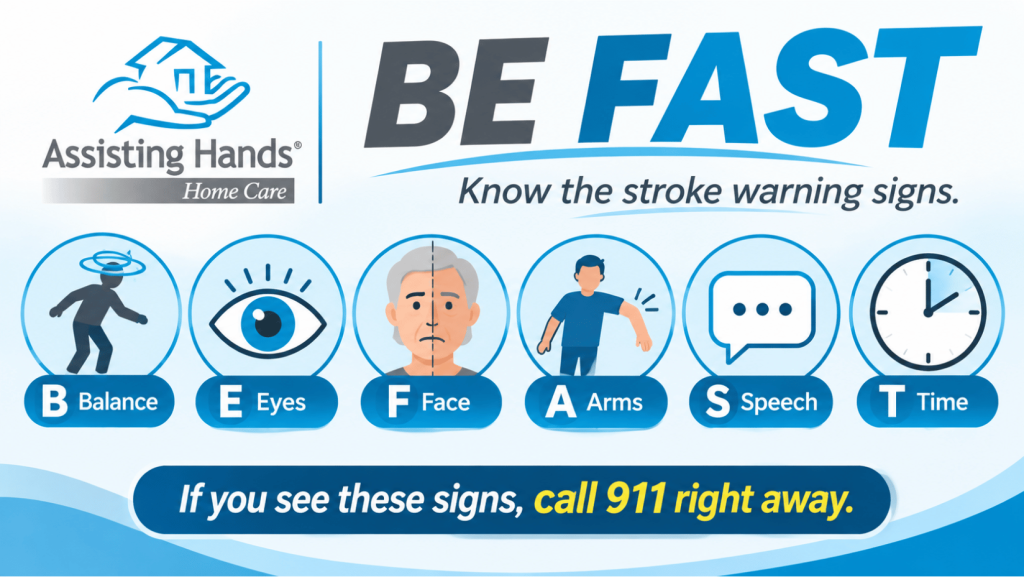
Use the American Stroke Association’s BE FAST technique to check for stroke:
- Balance: sudden loss of balance or coordination
- Eyes: sudden blurred, double, or lost vision
- Face: one side of the face droops
- Arms: one arm or leg is weak or numb
- Speech: slurred speech or trouble finding words
- Time: call 911 and note when symptoms started
Also call 911 if the dizziness comes with:
- Chest pain or pressure
- Fainting or passing out
- A head injury after a fall
- A sudden, severe headache
- New confusion
What to Do During a Dizzy Spell
- Help your parent sit or lie down right away.
- Don’t let them walk until the feeling has completely passed.
- Offer sips of water.
- Turn on the lights.
- When it’s over, have them get up slowly, and stay close for the first few steps.
Keep a Dizziness Log for the Doctor
Patterns are hard to recall in an exam room. A week or two of notes gives the doctor much more to go on. For each episode, jot down:
- Time of day
- What your parent was doing right before
- What it felt like (spinning, faint, unsteady, or foggy)
- How long it lasted
- When they last ate and drank, and what
- Which medications they took that day, and when
Which Doctor Should a Senior See for Dizziness?
Start with their primary care doctor. They can check blood pressure lying down and standing, go through medications, and order blood work. Depending on what turns up, your parent may be referred to:
- An ENT (ear, nose, and throat doctor) for inner ear problems
- A cardiologist for heart rhythm or blood pressure concerns
- A neurologist for balance, nerve, or movement disorders
- A vestibular physical therapist for BPPV and balance retraining
Why Do Seniors Feel Dizzy in the Morning?
Morning dizziness in seniors is usually a mix of overnight dehydration, a blood pressure drop when they first stand up, and medications from the night before. After seven or eight hours without a drink, most people are a little low on fluids. Blood pressure pills and sleep aids taken at bedtime may also still be working.
Two habits help. Have your parent sit on the edge of the bed for a full minute before standing, and keep a glass of water on the nightstand to drink first. If mornings are consistently the worst, tell the doctor. Changing when a medication is taken can help, but that’s the doctor’s call to make.
How to Reduce Fall Risk at Home When a Senior Gets Dizzy
Getting to the bottom of dizziness can take a few appointments. Until then, small changes around the house make a fall a lot less likely:
- Stand up in stages: sit, take a few breaths, then stand
- Install grab bars in the bathroom and use a shower chair
- Put night lights along the path from the bedroom to the bathroom
- Clear walkways and get rid of throw rugs
- Keep everyday items between waist and shoulder height so there’s no reaching or bending
- Arrange supervision or standby help during bathing
- Wear supportive, non-slip shoes indoors instead of socks or loose slippers

How Can In-Home Care Help a Senior Who Gets Dizzy?
Caregivers don’t diagnose or treat dizziness. What they do is help with the parts of the day when a dizzy spell is most likely to turn into a fall, like getting out of bed, showering, and getting dressed. They also catch changes that are easy to miss when you aren’t there every day. At Assisting Hands Home Care in Fort Myers, that support can include:
- Medication reminders, so doses aren’t missed or accidentally doubled
- Encouraging regular meals and water throughout the day
- Standby assistance with bathing, dressing, and getting in and out of bed or a chair
- Fall prevention support and an eye out for home safety hazards
- Transportation to medical appointments
- Watching for changes in balance, behavior, or routine, and letting the family know
Some families need a few hours of senior home care each week. Others want overnight care for help with bathroom trips at night, or 24-hour care after a serious fall. Every care plan starts with a free in-home assessment by a Registered Nurse, who helps figure out how much support makes sense.
Helping Your Parent Stay Safe While Managing Dizziness
Most dizziness in older adults gets better once the cause is found, whether it’s an inner ear problem, dehydration, low blood pressure, or a medication. Until then, listen to how your parent describes it, keep a log, get their medications reviewed, and make the house safer.
If your parent could use a hand with daily routines in the meantime, Assisting Hands Home Care in Fort Myers can help. We serve families in Fort Myers, Cape Coral, Bonita Springs, Estero, and Punta Gorda. Call (239) 510-7761 or schedule a free in-home assessment to talk through what your family needs.
What Causes Dizziness in Seniors FAQs
Is dizziness a normal part of aging?
No. It gets more common with age, but it’s still a symptom with a cause, and most causes are treatable. Inner ear problems, blood pressure changes, medications, and dehydration explain a lot of cases. If your parent has been dizzy more than once, it’s worth a doctor visit rather than chalking it up to getting older.
Why does my elderly parent get dizzy when standing up?
Usually it’s orthostatic hypotension, a drop in blood pressure in the first few minutes after standing. Dehydration, blood pressure medications, and sitting or lying down for a long time make it more likely. Have them sit on the edge of the bed or chair for a minute before getting up, and let the doctor know if it keeps happening.
Why is my elderly parent dizzy and weak?
Dehydration, low blood pressure, low blood sugar, anemia, and medication side effects are the usual causes. A few days of not eating or drinking enough can bring on both. Weakness on just one side of the body is different. Treat it as a possible stroke and call 911.
What should I do if my elderly mother is dizzy?
Get her sitting or lying down right away and stay with her until it passes. Offer water, turn on the lights, and don’t let her walk alone. Afterward, write down what happened and call her doctor. If she shows stroke signs, has chest pain, faints, or hits her head, call 911.
Can dehydration cause dizziness in seniors?
Yes. Less fluid means less blood volume, lower blood pressure, and less blood reaching the brain. Seniors are more at risk because thirst fades with age and many take water pills. In Southwest Florida heat, it can happen fast. Watch for dark urine, dry mouth, and tiredness.
What deficiency causes dizziness in the elderly?
Low vitamin B12 and low iron are the two most common. Either one can cause anemia, where the blood carries less oxygen, which can mean dizziness, weakness, tiredness, and pale skin. B12 gets harder to absorb with age, and one blood test can check both.
Can dizziness in seniors be a sign of a stroke?
It can be, though most dizziness isn’t a stroke. Worry when it comes on suddenly along with loss of balance, vision changes, a drooping face, arm weakness, slurred speech, or a bad headache. Call 911 right away. Don’t wait to see if it passes, because stroke treatment depends on time.

