

Nausea in older adults is a symptom, not a disease. It is most often caused by medications, dehydration, digestive changes that come with age, constipation, or an underlying condition like diabetes or kidney disease. Occasional queasiness happens to everyone, but persistent nausea is never a normal part of aging and always deserves attention.
For families, the practical problem is usually not the nausea itself. It is what follows. A senior who feels queasy stops eating, stops drinking, and within a few days is dehydrated, weak, and at real risk of a fall. That is why the two things that matter most are finding the cause and keeping the person nourished and hydrated while you do.
In this article, we cover the 10 most common causes of nausea in older adults, the medications most likely to trigger it, why morning nausea happens, the warning signs that call for a doctor or a 911 call, practical ways to bring relief at home, and how in-home care can help a senior stay nourished and comfortable while the cause is identified.
Why Are Older Adults More Prone to Nausea?
Nausea is the uneasy, queasy feeling in the stomach that makes a person think they might throw up. Vomiting is the physical act of the body forcing the stomach’s contents back up. The two often occur together, but a person can feel nauseated for hours or days without ever vomiting, and that lingering discomfort is its own problem in older adults because it kills the appetite and keeps people from drinking enough.
Several things about an aging body make nausea more likely:
- The stomach empties more slowly, so food sits longer and causes fullness or queasiness after meals.
- Stomach acid production drops, which changes how food is broken down.
- The sense of thirst fades, so older adults drink less and edge toward dehydration without noticing.
- Most older adults take several medications at once, each with its own stomach-related side effects.
The scale of that last point is worth sitting with. According to the National Institute on Aging, citing CDC data, roughly a third of adults in their 60s and 70s take five or more prescription drugs. A published review of nausea and vomiting in older adults found that somewhere between one in two and one in three older people are affected, and noted something families often get backwards: aging of the digestive tract by itself does not cause nausea. There is almost always a specific, findable reason.
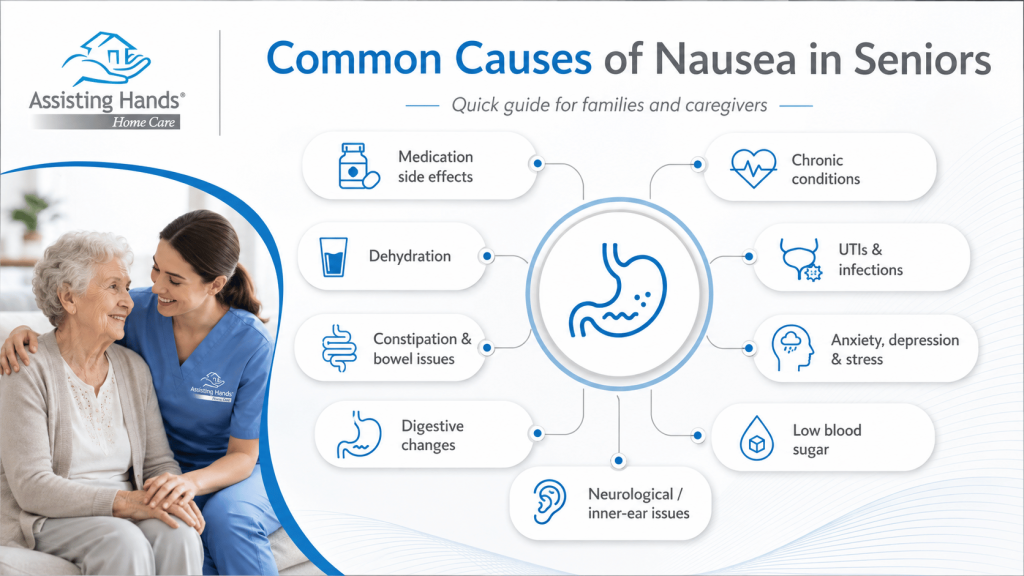
10 Common Causes of Nausea in Seniors
Nausea rarely has a single obvious cause in seniors. It usually comes down to one of the following, and often a combination.
1. Medication Side Effects and Polypharmacy
Medications are the most frequent trigger our caregivers encounter. NSAIDs like ibuprofen wear on the stomach lining. Antibiotics upset the balance of gut bacteria. Opioid pain relievers and antidepressants slow digestion and act directly on the brain’s nausea center.
The bigger risk is stacking. When someone takes five, seven, or ten medications, the drugs interact in ways no single prescription would on its own, and an aging body clears them more slowly, so they build up. Cleveland Clinic notes that reviewing medications with a provider is often the fastest way to find the culprit. If the nausea started within days of a new prescription or a dose change, start there.
2. Dehydration
The thirst signal weakens with age, so many older adults simply do not feel thirsty until they are already low on fluids. Dehydration itself causes nausea, and it feeds a rough cycle, because feeling queasy makes a person drink even less.
Our caregivers work around the weakened thirst signal by offering fluids on a schedule rather than waiting for a client to ask, and recording intake on the daily care log so families and physicians can see actual numbers instead of guessing. Watch for a dry mouth, dark urine, and new confusion, all of which point to fluid loss.
3. Constipation and Bowel Issues
Constipation is extremely common in older adults, rarely gets blamed for nausea, and should be. When the bowel backs up, the whole digestive tract slows, and the resulting pressure brings on queasiness and loss of appetite. When a client suddenly starts pushing food away, one of the first things our care managers check is the bowel movement log.
4. Digestive Changes With Age
Gastroparesis, or delayed stomach emptying, is more common in older adults and in people with diabetes, and it leaves food sitting in the stomach long enough to cause fullness and nausea. Reduced stomach acid and acid reflux (GERD) add to the problem, often producing a queasy, sour feeling after meals.
5. Chronic Conditions
Diabetes, kidney disease, liver disease, and heart failure all change the body’s chemistry in ways that make a person feel sick to the stomach. When nausea keeps returning and does not tie back to a meal or a medication, an underlying condition is often the reason, and treating that condition is what brings relief.
6. Urinary Tract Infections and Other Infections
In older adults, a urinary tract infection often skips the classic burning and urgency and instead shows up as nausea, loss of appetite, and sudden confusion or agitation. Cleveland Clinic notes that a sudden change in mental state can prompt a doctor to check for a UTI, though confusion alone does not confirm one.
Viral stomach bugs, norovirus, and respiratory infections also present differently in seniors, sometimes with nausea as the leading symptom and little else. If nausea appears alongside a rapid shift in alertness or behavior, ask about an infection.
7. Anxiety, Depression, and Stress
The gut and the brain are closely wired, which is why stress can turn the stomach. Anxiety, depression, and chronic stress are common in later life, especially after a loss or a move, and they produce real, physical nausea. This is not queasiness that is “all in their head.” The gut-brain connection makes it a genuine bodily response.
8. Low Blood Sugar and Metabolic Imbalances
Blood sugar that drops too low causes nausea, shakiness, and sweating. This matters most for seniors on diabetes medication and most often shows up in the morning, after a long overnight stretch without food. Electrolyte imbalances from diuretics or poor intake can do the same thing.
9. Neurological and Inner-Ear Causes
Balance depends on the inner ear, and the inner ear changes with age. That makes some older adults newly prone to motion sickness in the car and to nausea that arrives with vertigo. Inner-ear conditions like labyrinthitis, migraine (which can occur without head pain in older adults), and Parkinson’s disease can all bring nausea with them.
10. Cancer, Treatment, and Post-Surgical Recovery
Nausea can be a symptom of some cancers and a well-known side effect of chemotherapy and radiation. Anesthesia and post-surgical pain medication also cause nausea during recovery, sometimes for days after a procedure. If an older adult has recently had surgery or started treatment, that is almost always the first explanation to consider.
When Nausea Signals Something Serious
Most nausea is uncomfortable rather than dangerous, but a few situations call for immediate help. In older adults, and especially in older women, a heart attack can arrive without the classic chest pain. The American Heart Association points out that women are more likely to have symptoms less often linked to the heart, including nausea and vomiting, shortness of breath, and jaw or back pain. Nausea paired with sudden weakness, drooping on one side of the face, trouble speaking, or a severe headache can also point to a stroke. Nausea with severe abdominal pain, bloating, and no bowel movement may signal a bowel obstruction. Any of these warrant a 911 call, not a wait-and-see.
Why Does an Older Adult Feel Nauseous in the Morning?
Morning nausea in seniors usually comes down to the overnight gap. Twelve or more hours pass between dinner and breakfast, and in that stretch blood sugar can drop, the stomach sits empty and acidic, and overnight reflux from lying flat can leave a sour, queasy feeling on waking. The most common explanations are low blood sugar, acid reflux made worse by lying flat, medications taken on an empty stomach first thing, and dehydration built up overnight.
Practical steps that help: a small bedtime snack with some protein, raising the head of the bed a few inches, sipping water before getting up, and asking whether any morning medication can be moved to after breakfast. If morning nausea is new and persistent, it is worth a call to the doctor rather than a workaround.
Nausea With Dizziness, Weakness, or No Appetite
These combinations come up constantly in home care, and each points in a different direction.
- Nausea with dizziness most often means dehydration, a blood pressure medication, or an inner-ear problem. If the room spins, the inner ear is the likelier culprit. If the person feels faint when standing, suspect fluids or blood pressure. Either way, fall risk goes up sharply, so do not leave the person to walk unassisted.
- Nausea with weakness is a red flag when it comes on quickly. Sudden weakness with nausea, especially on one side of the body, needs emergency care. Gradual weakness with ongoing nausea usually reflects poor intake, and the person is likely running low on both calories and fluids.
- Nausea with no appetite for more than a couple of days is the combination that does the most damage. Weight loss, muscle loss, and dehydration follow quickly in older adults. Do not wait it out for a week. Call the physician.

What Are the Symptoms of Nausea in the Elderly?
Nausea shows up in more than one way, and in seniors the signs can be easy to miss. The most obvious is a steady, uneasy sensation of needing to vomit, with or without actual vomiting. Beyond that, families often notice the person losing interest in food and turning away drinks, which quickly leads to poor nutrition, dehydration, and unintended weight loss.
Other signs travel with nausea too. Many seniors feel tired or weak, break into a sweat, or complain of abdominal pain. Blood pressure can rise or drop alongside the queasiness. In someone who cannot easily describe how they feel, the clues may be behavioral, such as refusing meals, pushing a plate away, unusual restlessness, or simply “not being themselves.” Paying attention to those quieter signals matters, because untreated nausea can spiral into dehydration, malnutrition, and a higher risk of falls.
When Nausea Is a Medical Emergency
Most nausea is uncomfortable rather than dangerous. A few situations call for 911 immediately. In older adults, and especially in older women, a heart attack can arrive without the classic chest pain. The American Heart Association points out that women are more likely to have symptoms less often linked to the heart, including nausea and vomiting, shortness of breath, and jaw or back pain.
Call 911 if nausea appears with any of the following:
- Chest, jaw, back, or arm pain, or shortness of breath
- Sudden weakness or drooping on one side of the face, trouble speaking, or a severe headache
- Severe abdominal pain with bloating and no bowel movement
- Vomiting blood, or vomit that looks like coffee grounds
- Confusion or unresponsiveness that comes on quickly
How to Relieve Nausea in Seniors at Home
Relief starts with easing the symptoms and, when possible, addressing the cause. These steps help at home, though anything persistent should be reviewed by a doctor.
Hydration and Small Bland Meals
Large meals overwhelm a slow stomach, so serve several small portions throughout the day instead of three big ones. Bland, easy-to-digest foods sit best: rice, toast, bananas, applesauce, and clear broths.
For hydration, small and steady beats large amounts at once. Offer sips of water, broth, or an electrolyte drink between meals rather than only at mealtime, and try cold drinks or ice chips for someone who resists fluids. Sitting upright for at least half an hour after eating cuts down on reflux-related nausea.
Ginger and Peppermint
Ginger has a long track record for settling the stomach, whether as tea, chews, or a supplement. Peppermint helps some people too, either as tea or through aromatherapy, and a cool compress on the back of the neck can take the edge off. One caution: ginger and peppermint interact with certain medications, including blood thinners and reflux drugs, so check with a pharmacist before making them a daily habit.
Acupressure and Sea-Bands
The P6 point, on the inner wrist a few finger-widths below the palm, is a classic pressure point for nausea. Inexpensive sea-bands, the elastic wristbands sold for motion sickness, apply steady pressure to that spot and are easy for seniors to wear. They will not fix an underlying illness, but for mild or motion-related queasiness they genuinely help.
Foods and Triggers to Avoid
Greasy and fried foods are hard on a slow-moving stomach. Strong-smelling dishes can turn the stomach before the first bite, so cooler foods with less aroma often go down easier. Overly sweet foods and drinks can worsen nausea as well. Keeping the kitchen well ventilated makes a real difference for a queasy senior.
Over-the-Counter Options
Over-the-counter antiemetics can help with short-term nausea, and antacids may ease the reflux kind. That said, older adults process drugs differently, and some over-the-counter remedies interact with prescriptions or are a poor fit for people with certain conditions. Ask a pharmacist or doctor before adding anything new.
Nausea, Heat, and Hydration in Southwest Florida
Dehydration-driven nausea is a year-round issue here in a way it is not in most of the country. Summer heat and humidity in Lee and Charlotte Counties pull fluids out of an older adult faster than the fading thirst signal can keep up with, and the seniors most at risk are often the ones who stay indoors and assume heat is not their problem.
Two local factors we watch for specifically:
- Air conditioning and appetite: Clients who keep the house cool and stay sedentary often eat and drink noticeably less, which sets up both low blood sugar and dehydration.
- Storm season disruption: Power outages disrupt medication storage, meal routines, and refrigeration. After a storm, we see appetite and hydration problems for days, not hours, and nausea frequently follows.
Lee County has one of the largest senior populations in Florida, which means a lot of local families are managing exactly this. If you are one of them, you are not overreacting by taking persistent nausea seriously.

How In-Home Care Can Help With Nausea
Finding the cause of nausea takes time, and often several doctor visits. In-home care fills the gap in between, keeping a senior safe and nourished while the medical side gets sorted out. It also gives the physician something most appointments lack: an accurate day-to-day record instead of a family member’s best guess.
Here is what that looks like in practice:
- Meals built around a queasy stomach. Caregivers prepare small, bland, frequent portions rather than three large meals, keep strong cooking smells down, and follow any dietary restrictions on file. They also make sure the client stays upright for at least half an hour after eating to cut down on reflux.
- Fluids offered on a schedule. Because the thirst signal fades with age, caregivers offer water, broth, or an electrolyte drink at set intervals rather than waiting for a client to ask. Cold drinks and ice chips work for clients who resist fluids entirely.
- Written intake and symptom tracking. Caregivers log what was eaten and drunk, when nausea occurred, bowel movements, and any refusals. That record turns a vague “she has not been eating much” into specific information a doctor can act on, and it is often what identifies constipation or a medication pattern as the culprit.
- Medication reminders. Caregivers prompt clients to take medications at the right time and with food when directed. They cannot administer or adjust medication, but consistent timing alone resolves a surprising number of nausea complaints.
- Transportation and appointment support. Caregivers drive clients to physician visits, lab work, and pharmacy runs, and can bring the symptom log along so nothing gets forgotten in the exam room.
- Early detection of changes. A caregiver who sees a client several times a week notices the second or third refused meal, the new confusion, or the change in behavior long before it becomes a hospital visit. Our team documents changes and notifies the family the same day.
- Support for clients with dementia. When a client cannot describe how they feel, caregivers trained in dementia and Alzheimer’s care read the nonverbal cues instead, keep mealtimes calm and predictable, and flag new patterns quickly.
Care can be as light as a few hours a week or as involved as 24-hour care, and plans adjust as the situation changes.
Compassionate In-Home Care for Seniors in Fort Myers
Most causes of nausea can be managed once they are identified, and steady day-to-day support goes a long way while you sort it out. Assisting Hands Home Care offers everything from a few hours a week of personal care to 24-hour and overnight care across Fort Myers, Cape Coral, Bonita Springs, Estero, Punta Gorda, Port Charlotte, and the surrounding communities in Lee and Charlotte Counties.
Call Assisting Hands Home Care today at (239) 510-7761 to schedule a free in-home consultation and learn how our personalized care can help your loved one age safely and comfortably at home.
Nausea in the Elderly FAQs
Is nausea a normal part of aging?
No. While older adults are more prone to nausea because of slower digestion, reduced thirst, and multiple medications, persistent nausea is never a normal part of aging. It is a symptom of something else, whether a medication, dehydration, or an underlying condition, and it deserves attention.
When should I take my elderly parent to the doctor for nausea?
See a provider if nausea lasts more than a couple of days or comes with a high fever, severe pain, vomiting blood, signs of dehydration such as dark urine or confusion, or unexplained weight loss. Seek emergency care right away if nausea appears with chest or jaw pain, one-sided weakness, trouble speaking, or severe abdominal pain, since these can signal a heart attack, stroke, or bowel obstruction.
Can medications cause nausea in seniors?
Yes. Medications are one of the most common causes of nausea in older adults. Antibiotics, NSAIDs, antidepressants, and opioid pain relievers are frequent offenders, and taking several drugs at once raises the risk of interactions. If nausea began after a new prescription or dose change, ask the prescriber for a medication review.
Can a UTI cause nausea in the elderly?
Yes. In older adults, a urinary tract infection often skips the usual urinary symptoms and instead shows up as nausea, loss of appetite, and sudden confusion. If nausea appears alongside a quick change in alertness or behavior, ask a doctor to check for a UTI.
What can I give an elderly person to settle their stomach?
Small sips of water or an electrolyte drink, bland foods like toast, rice, and bananas, and ginger tea or ginger chews often help mild nausea. Sea-bands and acupressure are drug-free options too. Check with a pharmacist before adding supplements or over-the-counter remedies, since these can interact with a senior’s prescriptions.
How can a caregiver help a senior with chronic nausea?
A caregiver can serve small, frequent, bland meals, keep fluids coming throughout the day, give medication reminders, reduce strong cooking smells, and provide transportation to medical appointments. Caregivers also watch for early warning signs and keep families informed so the underlying cause can be treated.

