
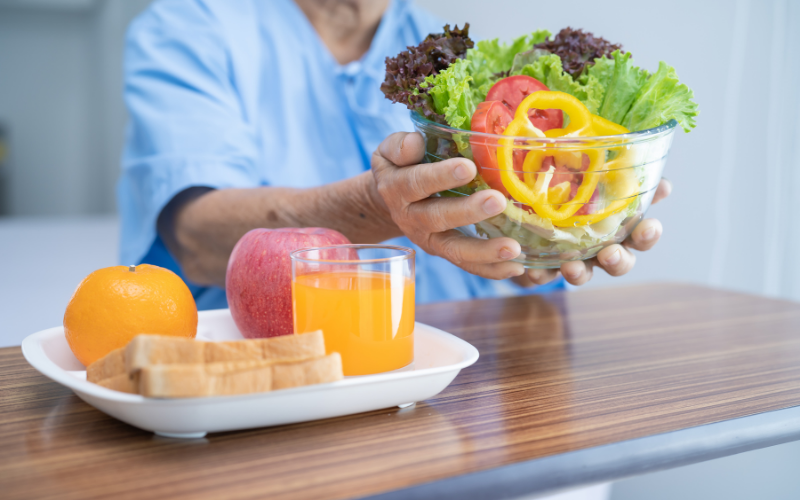
Food safety is something most of us take for granted until someone gets sick. For older adults, a mistake in the kitchen carries higher stakes. Adults age 65 and older are more likely to develop serious symptoms, end up in the hospital, or even die from a foodborne illness than younger people. That makes safe food handling one of the simplest and most overlooked ways to protect an aging loved one’s health. This guide explains why seniors are more vulnerable to foodborne illness, the four core rules of safe food handling, extra precautions worth building into a routine, and how an in-home caregiver can help keep the kitchen safe.
Why Is Food Safety More Important for Older Adults?
A stomach bug that gives a younger adult a rough day or two can send an older adult to the emergency room. For example, a family shares a summer dinner, everyone enjoys the meal, and by the next morning the oldest members feel nauseated and start vomiting while everyone under 65 feels fine. The cause often turns out to be something small, like groceries left in a warm car long enough for bacteria to multiply on the meat.
Three age-related changes explain the difference.
1. A Weakened Immune System
The immune system is the body’s defense against the bacteria, viruses, and parasites that can hide in food. It naturally weakens with age, a decline that often begins around age 50 to 60 and becomes more pronounced by 75. A less responsive immune system has a harder time fighting off an infection once harmful bacteria get in, so the same exposure that barely registers for a younger person can turn into a serious illness for an older one.
2. A Slower Digestive System
Digestion slows down as people age, which means food stays in the system longer. At the same time, the stomach produces less acid, one of the body’s natural barriers against bacteria. Together, these changes give harmful microbes more time and opportunity to grow and cause illness.
3. Reduced Liver and Kidney Function
The liver and kidneys filter toxins and harmful bacteria out of the body. As these organs age, they tend to work less efficiently. That makes it harder for an older adult’s body to clear foodborne pathogens before they cause problems.
There’s a knock-on risk, too. The vomiting and diarrhea that come with a foodborne illness can dehydrate an older adult quickly, and dehydration on its own can lead to dizziness, falls, and hospital stays. A case that would be a minor inconvenience at 30 can start a chain of complications at 80.
None of this means a senior should feel anxious about every meal. It simply means the margin for error is smaller, and a few consistent habits go a long way toward keeping mealtimes safe.
What Are the Four Core Rules of Food Safety?
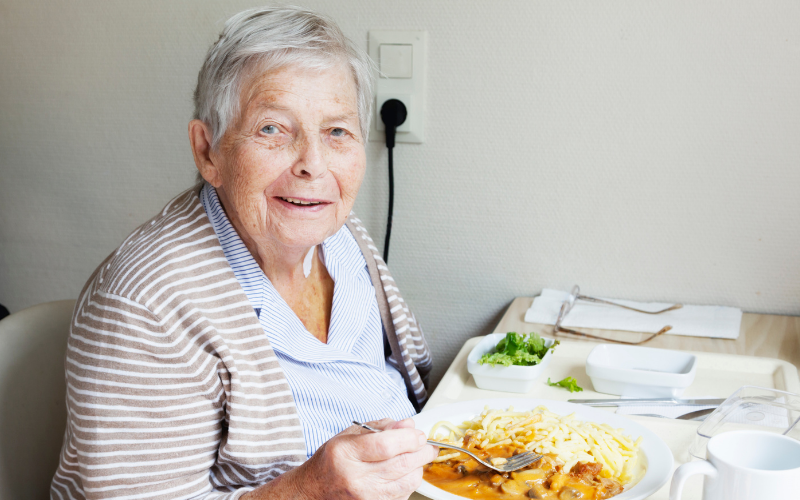
Food safety specialists boil safe food handling down to four core rules: clean, separate, cook, and chill. Practiced consistently, these four habits prevent most cases of foodborne illness at home.
1. Clean
Wash your hands with warm, soapy water for 20 seconds before and after handling food. Clean countertops, cutting boards, and utensils before and after preparing a meal. Rinse fruits and vegetables under running water, even ones with a peel you don’t plan to eat, since bacteria on the outside can transfer to the inside when you slice through.
2. Separate
Keep raw meat, poultry, seafood, and eggs away from foods that are ready to eat. Use one cutting board and set of utensils for raw meat and a separate set for produce and cooked items. In the refrigerator, store raw foods in sealed containers on a lower shelf so their juices can’t drip onto anything below.
3. Cook
Color and texture are not reliable ways to tell whether food is done. Use a food thermometer to confirm that dishes reach a safe internal temperature. Pay attention to the “temperature danger zone” between 40°F and 140°F, where bacteria multiply quickly, and move food through that range as fast as you can.
4. Chill
Keep the refrigerator at or below 40°F and refrigerate perishable foods promptly. Freeze any leftovers you won’t eat within three to four days. When it’s time to thaw something, do it in the refrigerator, in cold water, or in the microwave, never on the counter, where the outside of the food warms into the danger zone while the inside is still frozen.
What Extra Food Safety Precautions Should Seniors Take?
Beyond the four basics, a few habits are especially worth building into an older adult’s routine.
- Shop with temperature in mind: Pick up cold and frozen items last so they stay chilled on the way home and get them into the refrigerator or freezer as soon as you walk in the door. On a warm day, this one change prevents the exact “groceries in the hot car” problem described earlier.
- Handle leftovers carefully: Refrigerate leftovers within two hours of cooking, then eat them within three to four days or freeze them for later. When you reheat, bring the food all the way up to 165°F and check it with a thermometer rather than guessing.
- Stay informed about recalls: Foodborne illness sometimes traces back to a contaminated product rather than a kitchen slip. Checking a trusted source such as foodsafety.gov for recalls and safety alerts helps catch a problem before it reaches the plate.
- Keep track of what’s in the fridge: Failing eyesight or memory changes can make it hard to remember how long something has been open. Dating leftovers with a marker and clearing out the refrigerator on a regular schedule keeps questionable food from lingering past its prime.
- Be cautious with higher-risk foods: Because seniors are more vulnerable, it’s worth being extra careful with foods that are more likely to carry harmful bacteria, such as undercooked eggs, raw or rare meat and seafood, unpasteurized milk and soft cheeses, raw sprouts, and deli meats or hot dogs served without reheating. Cooking these foods thoroughly, or reheating deli meats until steaming, lowers the risk considerably.
How Can a Caregiver Help Keep the Kitchen Safe?

For many older adults, the challenge isn’t knowing the rules but keeping up with them day after day. Arthritis makes scrubbing a cutting board harder. Low vision makes label dates and thermometer readings tough to see. Memory changes make it easy to lose track of what’s in the fridge and for how long. In-home care can greatly benefit seniors who struggle with these issues.
At Assisting Hands Home Care, caregivers support safe eating in practical, everyday ways. Meal preparation means an older adult gets freshly cooked food, handled and stored at the right temperatures, instead of relying on items that may have sat out too long. Grocery shopping and errands keep the kitchen stocked with fresh ingredients and get cold foods home and refrigerated quickly. Light housekeeping covers the cleaning that keeps counters, cutting boards, and the refrigerator sanitary. And as part of elder care and companion care, caregivers keep an eye on expiration dates, clear out old leftovers, and notice when something in the kitchen needs attention.
The result is a kitchen where safe habits happen consistently, even when a senior can no longer manage every step alone.
Senior Home Care in Lombard, IL
Safe food handling is one small piece of the daily support that helps an older adult stay healthy and independent at home. When shopping, cooking, and cleaning become harder to manage alone, the professional caregivers at Assisting Hands Home Care are here to help. We provide meal preparation, grocery shopping, light housekeeping, and companionship to keep seniors nourished, comfortable, and safe in their own kitchens.
Call Assisting Hands Home Care at (630) 526-6522 to schedule a complimentary in-home consultation for senior home care in Lombard, Elmhurst, Villa Park, Medinah, Itasca, Bensenville, Glendale Heights, Wood Dale, Addison, IL and the surrounding areas in DuPage County.

