

Vision loss in elderly adults is one of the most common challenges of aging. Conditions such as cataracts, glaucoma, and age-related macular degeneration contribute to low vision, and families are often unsure how to help. This guide covers the eye conditions that most often affect seniors, the warning signs of vision loss, and practical ways caregivers can support an older adult at home.
What Eye Conditions Commonly Affect Seniors?
The four most common eye diseases affecting Americans age 40 and over are age-related macular degeneration, glaucoma, cataracts and diabetic retinopathy, according to a study sponsored by the National Eye Institute. The same research found that low vision and blindness increase significantly with age, especially in people over 65. Adults 80 and older made up just 8 percent of the population at the time of the study yet accounted for 69 percent of blindness. The longer an older adult lives, the more eye disease becomes a mounting concern.
Vision issues can lead to an older person’s gradual loss of independence and reduction in overall quality of life. Understanding each condition helps families know what to watch for.
1. Age-Related Macular Degeneration
Age-related macular degeneration (AMD) is the leading cause of severe loss of eyesight in people 50 and over but rarely causes total blindness. Affected people lose their central vision, which limits their ability to drive, see faces, and read small print. Symptoms may not appear in the early stages, so many seniors don’t know they have it until the disease has progressed. Regular dilated eye exams can catch AMD early.
2. Cataracts
Cataracts are a common and normal age-related eye problem. The lens changes that lead to cataracts most often begin when a person is between 40 and 50 years old, though the cloudiness typically progresses slowly, and most people don’t need treatment until their late 60s or 70s. Age-related cataracts cause cloudiness in the eye lens and worsen over time. Certain medications and uncontrolled diabetes can also cause cataracts to develop.
3. Diabetic Retinopathy
Diabetic retinopathy is the leading cause of blindness in working-age adults, and it can affect anyone with type 1 or type 2 diabetes. High blood sugar damages blood vessels in the retina. Blurry vision results when the damaged blood vessels swell and leak. This condition usually affects both eyes, and the risk grows the longer a person has diabetes. High blood pressure, high cholesterol, and smoking increase the risk further.
4. Glaucoma
Glaucoma is a group of eye diseases that damage the optic nerve, usually because fluid builds up in the eye and creates intraocular pressure. Seniors are at a higher risk for developing any of several types of glaucoma, the two main types being open-angle glaucoma and angle-closure glaucoma. Open-angle glaucoma, the most common form, is known as the silent thief of sight because it often has no early signs or symptoms, vision loss happens slowly and painlessly.
What Are the Warning Signs of Vision Loss in Elderly Adults?
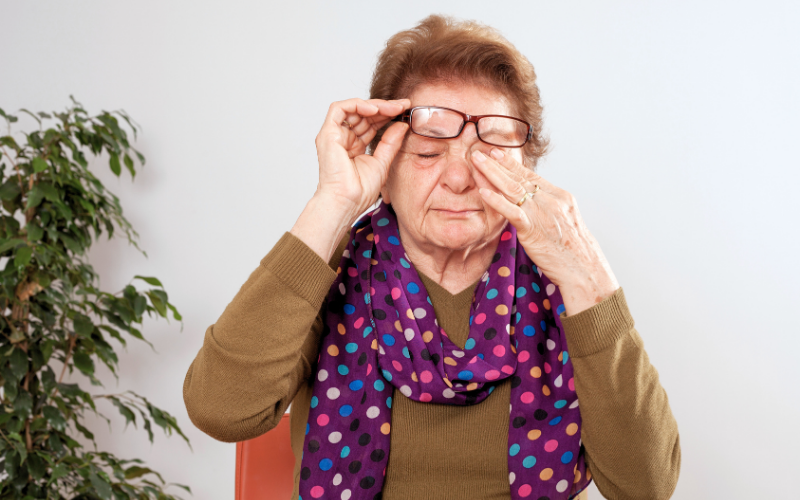
Many seniors don’t report vision changes, either because the decline is gradual or because they fear losing their independence. Family members are often the first to notice. Watch for these signs:
- Squinting or tilting the head to see.
- Sitting closer to the television.
- Giving up reading, sewing, or other close-up hobbies.
- Bumping into furniture or door frames.
- Unexplained bruises.
- Missing spots while cleaning or leaving food on dishes.
- Difficulty recognizing familiar faces.
- Hesitation on stairs or curbs.
- Spills at mealtimes or trouble pouring drinks.
If you notice any of these changes, schedule a comprehensive dilated eye exam. Many age-related eye diseases can be slowed or treated when caught early.
How Do Caregivers Support an Older Adult with Vision Loss?

When a senior develops an eye disease, caregivers should step in and provide support at home. Adapting the home environment, providing mobility support and setting up assistive technology are among the many ways caregivers provide necessary care.
1. Modify the Home
Caregivers should remove clutter and other trip hazards to reduce fall risks. Replace loose rugs and move electrical cords away from walking paths. Apply bright tape to the edges of stairs and use other color-contrast methods, like dark placemats under light dishes, to help the senior differentiate objects.
Install motion-sensor lighting in rooms such as the bathroom and bedroom, as well as the halls, to prevent the senior from fumbling with light switches. Add extra lighting to the top and bottom of stairs and outdoor paved paths around the home.
Medication errors increase when seniors with poor vision are unable to read pill bottle labels. Caregivers are advised to label medication bottles with large print or tactile dots. Some pharmacies provide talking prescription labels, whereby a smart label on the bottle is scanned with a phone app and the drug name, dosage, and instructions are read aloud.
2. Offer Mobility Assistance
Caregivers serve as a senior’s second pair of eyes by physically holding onto their arm as they walk and alerting them to obstacles, ensuring the older adult navigates safely. A white cane can also help, it is not only for total blindness but also for seniors with low vision.
3. Provide Assistive Technology
Assistive technology supports vision challenges in a variety of ways. Caregivers can set up accessibility features, such as enlarged text, on smart devices. Instead of struggling to read print books, older adults can listen to audiobooks through a subscription the caregiver sets up.
Low-vision headsets and smart glasses are a newer option that lets seniors with low vision magnify their surroundings. Wearable devices such as Vision Buddy and IrisVision use camera and display technology to zoom in on faces, screens, and printed text, and some can read text aloud.
4. Deliver Emotional Support
Vision loss creates feelings of anger, anxiety, and grief. Caregivers can help seniors cope by providing emotional support. Offer a listening ear and a space to vent their frustrations as the activities of daily living (ADLs) become harder to complete independently.
Foster confidence by helping the senior maintain routines. Serve as a companion to reduce social isolation and advocate for them by scheduling eye health appointments. Connect the senior with peer groups where they can share their experiences with other older adults living with similar vision challenges.
Senior Home Care for Vision Loss in Villa Park, IL
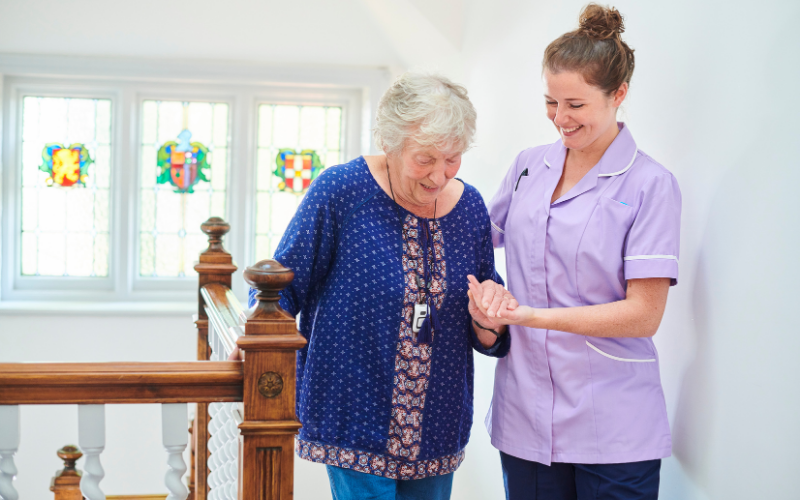
When an aging loved one in your life is coping with vision loss, the professional caregivers at Assisting Hands Home Care are a source of vital support. We provide hands-on elder care services designed to promote the safety, health and comfort of older adults in Villa Park, IL and the surrounding DuPage County communities.
Our responsibilities include mobility and transfer assistance. Caregivers are trained to safely help seniors transition from a bed to a chair and back, and we lend physical support so the older person navigates the home environment with ease and confidence.
Grocery shopping and meal preparation ensure care recipients continue to consume the nutrients their bodies need. We provide transportation and companionship to the doctor’s office, pharmacy, and other nearby destinations to keep the elderly connected with their community.
Caregiver companionship is highly valued by our elderly care recipients, who feel uplifted by light conversation, stimulated by games, puzzles and outings and supported by our advocacy. Companion care provides a listening ear, validating their struggles and helping them cope with life challenges.
Seek compassionate support from Assisting Hands Home Care as soon as vision changes occur. Give us a call at (630) 526-6522 to schedule a complimentary in-home consultation for senior home care in Lombard, Elmhurst, Villa Park, Medinah, Itasca, Bensenville, Glendale Heights, Wood Dale, Addison, IL and the surrounding areas in DuPage county.

