
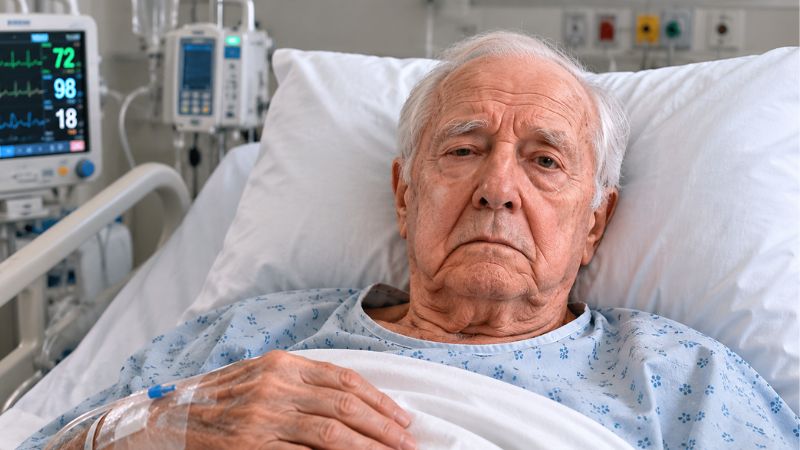
When a parent, grandparent, or spouse suffers a stroke at 80 or older, the questions come immediately and they are not easy ones. Will they recover? How long can they live at home? What does the next year actually look like? Families deserve direct, honest answers grounded in real medical research, not vague reassurances. This guide covers what stroke recovery genuinely looks like for patients in their eighties, what Texas stroke specialists and national medical data tell us about survival and healing, and how families in Frisco, Little Elm, Carrollton, and Plano can find reliable support for their loved one’s return home.
Why Stroke Hits Harder After 80
Stroke does not discriminate by age, but age shapes outcomes in ways that are important to understand. According to the American Heart Association’s 2025 statistics update, stroke prevalence reaches approximately 14 percent in adults aged 80 and older, nearly double the rate seen in adults in their early sixties. Every 40 seconds, someone in the United States has a stroke, and every 3 minutes and 14 seconds, someone dies from one.
What makes stroke particularly dangerous in patients over 80 is not just the stroke itself but the compounding factors that accompany advanced age. Older patients typically arrive with a history of hypertension, atrial fibrillation, or diabetes, all of which affect both survival in the acute phase and recovery over the months that follow. They also tend to have less physiological reserve, meaning the brain and body have less capacity to bounce back from a sudden injury of this magnitude.
A Canadian study examining elderly stroke survivors found that patients over 80 had the highest in-hospital mortality rate at 24.2 percent, compared to 8.6 percent for patients in their sixties and 13.4 percent for those in their seventies. Among patients over 85 specifically, 30-day mortality rates in 2025 research reach as high as 55 percent when multiple comorbidities are present. These are not numbers meant to discourage families. They are numbers that help families understand why the weeks and months after discharge are so medically significant, and why professional support at home is not optional for many survivors in this age group.
What Stroke Recovery Actually Looks Like Month by Month
| Phase | Timeframe | What to Expect |
|---|---|---|
| Acute | Days 1 to 7 | Doctors focus on stabilizing the stroke, determining the type and location through imaging, and beginning emergency treatment if eligible. Brain swelling is most common during this stage. |
| Early Recovery | Weeks 2 to 4 | The brain begins adapting and rebuilding connections. Physical, occupational, and speech therapy usually begin during inpatient or rehabilitation care. |
| Active Rehab | Months 1 to 3 | This is often the strongest period for recovery progress. The brain is actively rewiring, and many stroke survivors regain movement, speech, and daily living abilities through intensive therapy. |
| Continued Recovery | Months 3 to 6 | Progress continues more gradually. Speech, coordination, balance, and fine motor skills may continue improving with outpatient therapy and home support. |
| Long Term Recovery | 6 Months Onward | Long term recovery focuses on maintaining independence, strengthening routines, preventing complications, and lowering the risk of another stroke. |
The Physical and Cognitive Changes Families Should Prepare For
Understanding what post-stroke challenges look like in daily life helps families prepare the home environment and identify when professional support is needed. Weakness or paralysis on one side of the body, called hemiplegia or hemiparesis, is one of the most common physical effects. Physical therapy can rebuild strength and help survivors relearn how to walk, transfer safely from bed to chair, and manage stairs. Occupational therapy focuses on the practical tasks of daily living, including dressing, bathing, cooking, and managing medications.
Speech and language difficulties affect a significant portion of stroke survivors. Aphasia, which is difficulty finding or producing words, and dysarthria, which causes slurred or difficult-to-understand speech, both respond to speech therapy when it is started early and continued consistently. Families should understand that these communication challenges do not reflect a person’s intelligence or awareness. A stroke survivor who cannot find the word they want to say may still be fully understanding everything said to them.
Cognitive effects deserve particular attention in patients over 80. Post-stroke cognitive impairment can range from mild memory lapses to more significant changes in judgment, attention, and executive function. Post-stroke depression is also extremely common and frequently underdiagnosed in older adults. Research estimates that 30 to 40 percent of stroke survivors experience clinical depression in the first year. When depression goes untreated, it directly undermines motivation for therapy and slows physical recovery.
Fall risk is one of the most serious practical concerns in the home. Stroke reduces mobility in more than half of stroke survivors aged 65 and older, and a fall in an 80-year-old stroke survivor can lead to serious injury and hospitalization. A safe home environment, caregiver supervision during mobility, and appropriate assistive devices are not luxuries. They are medical necessities.
Medication management is another area where post-discharge breakdowns are common. Most stroke survivors are discharged on complex regimens that may include anticoagulants, antihypertensives, cholesterol medications, and diabetes management. Missing doses or taking incorrect amounts is one of the leading causes of preventable readmission. A Medicare study of over 91,000 stroke survivors found that nearly two-thirds were either readmitted within a year or died after discharge. A professional caregiver who provides daily medication reminders and observes for side effects or changes in condition can significantly reduce this risk.
FAQs: The Questions Every Family Asks After a Stroke at 80
What Is the Life Expectancy of a Stroke Victim at 83?
The median survival after an acute ischemic stroke for patients aged 80 to 84 is approximately 24 months, based on published clinical research tracking elderly stroke patients over a five-year period.
However, functional recovery strongly influences how long a person actually lives. Patients discharged with minimal or no disability show a significantly extended median survival of approximately 47 months or more, nearly double the overall average for this age group.
The one-year survival rate for patients aged 80 to 85 after an ischemic stroke is approximately 78.8 percent, compared to 47 percent after a hemorrhagic stroke.
Age alone does not determine the outcome. How well blood pressure and other vascular risk factors are controlled after the stroke, the quality of rehabilitation received, and the level of consistent in-home support all directly influence how long and how well a stroke survivor at 83 lives. Learning how to manage hypertension at home is one of the most impactful steps a family can take to extend survival and reduce the risk of a second event.
What Are the Warning Signs 7 Days Before a Stroke?
The most critical warning sign in the seven days before a stroke is a Transient Ischemic Attack, or TIA. Research found that nearly one in eight ischemic stroke patients had a TIA in the previous seven days, with 43 percent of those TIAs occurring within 24 hours before the stroke. A TIA produces the same symptoms as a stroke but resolves within minutes. Never wait to see if symptoms pass. Call 911 immediately.
The seven warning signs to watch for are sudden facial drooping on one side, arm weakness or numbness on one side of the body, slurred or confused speech, sudden vision changes in one or both eyes, loss of balance or coordination, a severe unexplained headache, and sudden confusion or inability to follow a conversation. One study found that 15 percent of ischemic stroke patients had an unusual headache starting within seven days of their stroke.
Use the BE-FAST acronym: Balance, Eyes, Face, Arms, Speech, Time to call 911. The BE-FAST acronym is accurate and widely used by neurologists and the American Stroke Association.
Can an 80-Year-Old Fully Recover From a Stroke?
Yes, an 80-year-old can make meaningful and sometimes remarkable recovery from a stroke. Age alone should never determine rehabilitation potential.
Full recovery is most likely when the stroke is mild to moderate, treatment is received within three hours of onset, rehabilitation is intensive and started early, and consistent professional support is in place at home.
Data from the VA’s Stroke Optimization Active Rehabilitation program shows that 100 percent of participants were discharged to community settings rather than nursing facilities, and 93 percent remained living at home at their three-month follow-up.
The patients who recover the most at 80 are not always those with the mildest strokes. They are consistently the ones with the strongest rehabilitation, the most attentive medical follow-up, and the most reliable caregiver support at home.
Stroke Home Care in Frisco, Little Elm, Carrollton, and Plano, Texas
Returning home after a stroke is not the end of recovery. For most elderly stroke survivors, it is where the most critical phase of recovery happens. The home environment, the consistency of daily care, and the level of professional support available all shape whether a survivor progresses, plateaus, or declines in the months after discharge.
Assisting Hands Home Care in Frisco serves stroke survivors and their families throughout Frisco, Little Elm, Carrollton, and Plano, Texas. Our caregivers are trained specifically to support post-stroke recovery at home, not just to provide companionship but to address the real medical and daily living challenges that stroke survivors face.
For families in Collin County and North Dallas managing the transition from hospital to home, professional in-home stroke care is one of the highest-impact decisions you can make. The goal is not just safety. It is giving your loved one every realistic chance at recovery in the place where they most want to be.
Take the Next Step for Your Loved One
If your family member has recently had a stroke or is preparing for discharge from a rehabilitation facility, now is the time to put professional support in place. Do not wait for a fall, a missed dose, or a 2 a.m. crisis to make this decision.
Contact Assisting Hands Home Care in Frisco today to speak directly with a care coordinator about what post-stroke home care looks like, how to get started, and what level of care is appropriate for your loved one’s specific situation. We serve stroke survivors and their families in Frisco, Little Elm, Carrollton, and Plano, Texas.
Call us today at (214) 609-1340 and request a free in-home care consultation. Recovery happens at home, and we are here to make sure it happens well.
This content is provided for educational purposes only and does not constitute medical advice. Please consult a qualified neurologist or physician for guidance specific to your loved one’s medical situation.

