

Most people have never heard the word “intertrigo” until a doctor says it out loud in an exam room. But for families caring for an elderly parent or loved one, this condition is something worth knowing about well before that moment arrives.
Intertrigo is a skin inflammation that develops in folds of skin where heat, moisture, and friction combine over time. It sounds minor, and in its early stages it can look like ordinary redness. Left unaddressed, though, it can become raw, painful, and prone to bacterial or fungal infection. For seniors with reduced mobility, diabetes, or obesity, the risk is meaningfully higher, and healing takes longer than it would in a younger person.
The encouraging part is that intertrigo is almost entirely preventable with consistent, thoughtful care. Here is what families and caregivers need to know.
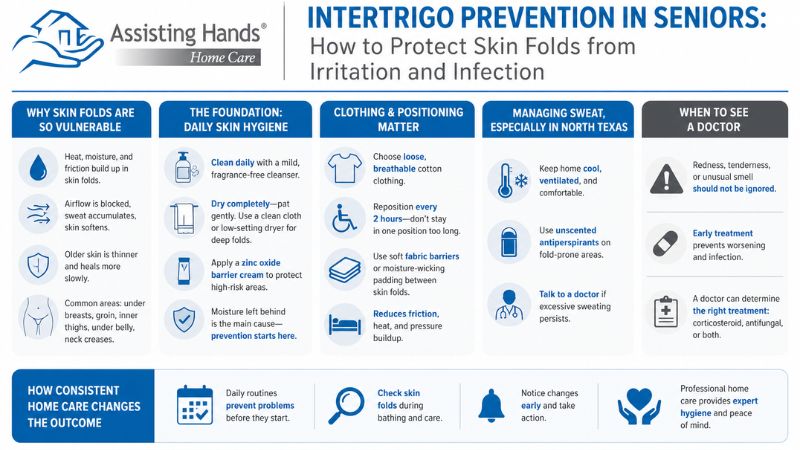
Why Skin Folds Are So Vulnerable
Skin folding creates a microenvironment that the body struggles to manage on its own. When two surfaces of skin press together continuously, airflow is eliminated. Sweat accumulates. The skin softens and weakens. Friction from even small movements begins to cause damage at the surface level.
This is why common problem areas include underneath the breasts, in the groin, between the inner thighs, under the belly, and in the creases of the neck. These are the zones where skin meets skin and stays that way for hours at a time.
In older adults, the skin barrier is already thinner than it was in younger years. It produces less of the natural oils that help resist moisture, and it repairs itself more slowly after damage. That combination makes seniors genuinely more susceptible, not just as a matter of circumstance, but as a physiological reality.
The Foundation of Prevention: Daily Skin Hygiene
If there is one habit that does more to prevent intertrigo than anything else, it is daily, thorough cleansing of the skin folds. This does not mean a quick rinse in the shower. It means intentionally washing those fold areas with a mild, fragrance-free cleanser and, just as importantly, drying them completely afterward.
Moisture left behind is the problem. Patting with a soft towel is the minimum. For seniors who are bedridden or have deep folds, it may help to use a clean cloth to gently separate the skin and allow air circulation, or to use a low-setting handheld dryer held at a safe distance to ensure the area is genuinely dry before it becomes covered again.
Barrier creams containing zinc oxide can be applied to high-risk areas after drying. These create a thin, protective layer that reduces the friction and moisture exposure that cause intertrigo to develop.
Clothing and Positioning Matter More Than Most People Realize
What a person wears and how long they stay in one position both contribute significantly to intertrigo risk. Tight-fitting clothes made from synthetic materials trap heat and increase skin-on-skin rubbing. Loose cotton clothing, by contrast, allows the skin to breathe and stays cooler throughout the day.
For seniors in wheelchairs or those who spend extended periods in bed, repositioning is not optional. Staying in one position for hours concentrates friction and heat in the same spots continuously. A repositioning schedule every two hours is a standard recommendation in senior care, and for good reason. Soft fabric barriers or moisture-wicking padding placed between skin folds can also provide meaningful relief during those intervals.
Managing Sweat, Especially in North Texas Heat
Excessive sweating accelerates intertrigo development significantly, and in areas like Frisco, Plano, and Allen where summers are long and genuinely hot, this is not a hypothetical concern. Keeping the home cool and well-ventilated is a practical necessity for seniors at risk, not just a comfort preference.
Unscented antiperspirants applied to fold-prone areas can reduce moisture accumulation. If a senior seems to sweat more than the environment would explain, it is worth raising with a physician, since some medications and underlying conditions can contribute to increased perspiration.
When to See a Doctor
If redness, tenderness, or an unusual smell develops in a skin fold, it should not be monitored and hoped away. Early intertrigo responds well to treatment, but the right approach depends on what is driving it. A bacterial infection calls for something different than a fungal one, and both look similar to the untrained eye.
A physician can evaluate the area quickly and recommend the appropriate topical treatment, whether that is a corticosteroid cream to reduce inflammation, an antifungal medication, or a combination of both. The key is acting early rather than waiting to see if it worsens.
How Consistent Home Care Changes the Outcome
Preventing intertrigo is less about any single intervention and more about reliable daily attention. The caregivers who do this well are the ones who establish routines and stick to them, who check skin folds during bathing rather than assuming things are fine, and who notice changes early enough to respond before a problem develops.
For families who cannot provide hands-on care every day, or for seniors who live alone, professional home care fills that gap meaningfully. Trained caregivers know what to look for, how to properly assist with hygiene without causing discomfort, and when to flag something for medical follow-up.
At Assisting Hands Home Care, our caregivers provide daily personal care and hygiene assistance to seniors across Frisco, Plano, Allen, Little Elm, Prosper, and surrounding communities. We work with families to build care routines that keep aging loved ones comfortable, healthy, and safe at home.
Call us at (214) 609-1340 to schedule a free in-home assessment and learn how we can help.
FAQs
Does Vaseline Stop Intertrigo?
Vaseline can help manage intertrigo symptoms, but it works more as a protective barrier than a cure. When applied to clean, dry skin folds, petroleum jelly creates a layer that reduces friction between skin surfaces and helps lock out excess moisture from the surrounding environment. Many dermatologists and wound care nurses recommend it as a basic maintenance product for people who are prone to skin fold irritation.
That said, Vaseline alone will not resolve intertrigo that has already developed into a fungal or bacterial infection. If there is redness, an odor, or broken skin involved, a doctor needs to evaluate it and prescribe the appropriate treatment. Think of Vaseline as a prevention and comfort tool, not a treatment for an active flare.
What Is the Best Powder to Prevent Intertrigo?
Cornstarch-based powders and medicated antifungal powders are the two most commonly recommended options for intertrigo prevention. Plain cornstarch absorbs moisture and reduces friction effectively, which makes it a practical daily option for people with skin folds who sweat easily.
Antifungal powders containing miconazole or clotrimazole go a step further by actively discouraging the fungal overgrowth that commonly develops in warm, moist skin folds. For people who get intertrigo frequently, particularly in areas like the groin or under the breasts, a medicated powder is often the more reliable choice.
One important note: classic talcum powder has fallen out of favor due to safety concerns associated with long-term use, and most physicians now steer patients toward cornstarch or antifungal alternatives instead.
What Does Intertrigo Usually Smell Like?
Intertrigo that has developed a noticeable odor has typically progressed beyond simple irritation and into secondary infection territory. A sour or yeast-like smell generally indicates a fungal infection, most often Candida, which thrives in warm, moist environments and is one of the most common complications of untreated intertrigo. A more unpleasant or foul smell, similar to what you might associate with a wound, often points toward a bacterial infection.
The presence of any odor coming from a skin fold area is a sign that medical attention is warranted. Odor means the skin is no longer just irritated but is actively harboring an infection that needs proper diagnosis and treatment.
What Vitamin Deficiency Causes Intertrigo in Seniors?
Several deficiencies make seniors more prone to intertrigo and slower to heal.
- Vitamin D weakens the skin barrier when low, which is common in older adults who get limited sun exposure.
- Vitamin B2 (Riboflavin) affects the skin’s ability to repair itself, making inflammation more likely in fold areas.
- Vitamin C is essential for collagen production. Without enough, skin breaks down faster under friction.
- Zinc is extremely common deficiency in seniors and directly slows wound healing and skin recovery.
If intertrigo keeps coming back, ask the physician to check these levels alongside a broader nutrition review.

