

If getting your mother to finish a meal has turned into the hardest part of your day, you are not alone. Eating problems are one of the most common and most worrying changes families experience with their senior loved ones. A parent who once cooked Sunday dinner for the whole family may now push food around the plate, forget they have eaten, or refuse a favorite dish for no reason anyone can see.
Most mealtime struggles can be improved. Once you understand why eating gets harder with dementia, and you adjust the food, the setting, and your own approach, meals usually get calmer for everyone. This guide covers what to feed someone with dementia, which foods to serve and which to limit, easy meal and finger-food ideas, hydration, swallowing safety, and when a change in eating means it is time to call the doctor.
Key Takeaways:
To feed a loved one with dementia, keep mealtimes calm and unhurried, serve smaller meals more often, offer one simple food at a time, use high-contrast plates and easy-to-hold utensils, and watch closely for chewing or swallowing trouble. The best foods are soft, nutrient-dense, and easy to manage, such as eggs, fish, yogurt, oatmeal, cooked vegetables, and soft fruit. No diet can cure or reverse dementia, but good nutrition and hydration help protect strength, mood, and quality of life, according to guidance from the National Institute on Aging and the Alzheimer’s Association.
Why Do Dementia Patients Stop Eating or Struggle at Mealtimes?
Dementia affects far more than memory. As the disease progresses, it changes appetite, coordination, the senses, and the ability to recognize food at all. The National Institute on Aging notes that a person can be hungry and still not eat, simply because the brain is no longer connecting the dots. Common reasons include:
- Forgetting to eat, or forgetting they just ate and asking for another meal
- Loss of appetite, which can come from the disease itself, from depression, or from being less active
- Trouble recognizing food, or not understanding that the plate in front of them is a meal
- Difficulty using a fork, spoon, or knife
- Trouble chewing, often related to sore gums, poor-fitting dentures, or dental pain they cannot describe
- Difficulty swallowing, known as dysphagia, becomes more common in the middle and later stages
- Changes in taste and smell, which can make food seem bland or unappealing
- Agitation or restlessness at the table that makes it hard to sit and eat
- Medication side effects that dull appetite, cause dry mouth, or upset the stomach
Knowing which of these is at play helps you respond the right way. A person who cannot manage a fork needs finger foods, not more encouragement. A person who is agitated needs a calmer room, not a fuller plate.
What Are the Warning Signs of Eating Problems in Dementia?
Eating problems often creep in slowly, so it helps to know what to watch for. Talk to their doctor if you notice:
- Unplanned weight loss or clothes that suddenly fit loosely
- Food left untouched, or meals that end with most of the plate full
- Pocketing food, meaning holding chewed food in the cheeks instead of swallowing
- Choking, coughing, or a wet, gurgly voice during or after eating
- Meals that stretch past an hour without much progress
- Signs of dehydration such as dark urine, dry mouth, confusion, or dizziness
- Refusing meals they used to enjoy, or turning away when food is offered
Any one of these is worth mentioning at the next appointment. Several of them together, or a sudden change, deserves a call sooner.
How to Feed a Loved One with Dementia
There is no single trick that works for everyone, but the strategies below solve most of the day-to-day problems families run into. Try a few, keep what works, and expect to adjust as the disease changes.
- Create a calm eating environment. Turn off the television, put phones away, and clear clutter from the table. Too much noise or activity makes it hard for a person with dementia to focus on eating. Sit face to face so they can follow your lead, and make sure the room is well lit so the food is easy to see.
- Keep a consistent meal schedule. Serving meals and snacks at the same time each day reduces confusion and helps the body expect food. Routine is reassuring, and it is one of the simplest things you can control.
- Serve smaller meals more often. Instead of three large meals, offer five or six small ones spread through the day, with healthy snacks in between. Smaller portions feel less overwhelming, and a person who cannot manage a full plate may happily finish a small bowl.
- Offer one food at a time. A plate crowded with choices can be paralyzing. Serve one item, let them finish, then bring the next. This keeps meals simple and cuts down on frustration.
- Make the food easy to see and easy to hold. Use solid-colored, high-contrast plates so the food stands out. A white plate on a white tablecloth can disappear for someone with dementia. Skip busy patterned dishes, which can be mistaken for food or distract from the meal. Choose weighted or built-up utensils and cups that are simple to grip.
- Encourage independence. Let your loved one do as much as they can on their own, even if it is slower or messier. Adaptive utensils and finger foods help people who struggle with a fork keep feeding themselves, which protects their dignity and appetite. Do not rush them.
- Allow plenty of time. A meal may take 30 to 45 minutes, and that is fine. Rushing leads to stress, refusal, and a higher choking risk. Patience at the table pays off.
- Watch for swallowing problems. If you see coughing, throat clearing, or a wet-sounding voice after swallowing, switch to softer foods and mention it to the doctor. A speech-language pathologist can evaluate swallowing and recommend the right food textures. Thickened liquids help some people, but only use them if a professional recommends it for your loved one.
- Encourage hydration all day. Dehydration is common in dementia and can worsen confusion, constipation, and fatigue. Offer water, milk, smoothies, soup, and water-rich fruit throughout the day rather than pushing large amounts at once.
For families dealing with restlessness or refusal at the table, gentle, non-drug approaches often work better than pressure. Our guide to calming dementia agitation before turning to medication covers techniques that carry over well to mealtimes.

Best Foods for Dementia Patients to Eat
There is no magic dementia food, but some choices deliver more nutrition per bite and are easier to eat, which matters when appetite is small. Aim for a mix of the categories below and always favor textures your loved one can chew and swallow safely.
| Category | Best Choices |
|---|---|
| Brain-healthy foods | Fatty fish (salmon, sardines, tuna); walnuts, almonds, chia seeds, and flaxseed (ground or blended if chewing is a concern) |
| Fruits | Blueberries, strawberries, bananas, ripe apples, and peeled or sliced oranges |
| Vegetables | Cooked leafy greens, steamed broccoli, sweet potatoes, and carrots |
| Whole grains | Oatmeal, brown rice, and whole wheat bread |
| Lean protein | Eggs, chicken, turkey, beans, and Greek yogurt |
| Healthy fats | Olive oil, avocado, and natural nut butters |
| Easy-to-eat options for small appetites | Yogurt, cottage cheese, applesauce, mashed potatoes, and scrambled eggs |
When appetite drops, calories and protein matter more than variety. A smoothie with yogurt, banana, nut butter, and ground flaxseed can pack a lot of nutrition into a cup that is easy to drink.
Worst Foods for Dementia Patients to Eat
It is better to think in terms of “limit” rather than “never,” because the right balance depends on the person, their other health conditions, and what stage they are in. That said, these foods tend to work against good nutrition or raise safety risks:
- Sugary desserts, soda, and highly processed snacks, which crowd out more nourishing food
- Processed and cured meats, and heavily salted foods, especially with high blood pressure or heart concerns
- Fried and greasy foods, which are harder to digest and low in real nutrition
- Alcohol, which interacts with many medications and worsens confusion
- Choking hazards, including very tough or chewy meats, sticky foods, hard candies, and anything difficult to break down
A person in the later stages may eventually eat mostly soft, calorie-dense foods, and that is appropriate. The goal is keeping them nourished and safe, not enforcing a perfect diet.
Easy Meals and Food Ideas for Dementia Patients
Simple, familiar meals tend to go over best. Here are dependable options by time of day:
- Breakfast: Oatmeal topped with soft berries; scrambled eggs; a yogurt parfait with mashed fruit.
- Lunch: Chicken salad, chopped small; a bowl of soup; a grilled cheese cut into strips.
- Dinner: Baked salmon; mashed sweet potatoes; steamed, tender vegetables.
- Snacks: Cheese cubes; soft fruit; smoothies; peanut butter on soft toast (only if swallowing is not a concern — see the note below).
Keep favorite dishes in the rotation. Familiar flavors are comforting, and a person is far more likely to eat food they recognize and love.
Best Finger Foods for Dementia Patients
Finger foods are one of the most useful tools you have, because they let someone keep feeding themselves after using utensils becomes too hard. They also invite grazing throughout the day, which suits small appetites. Good options include:
- Proteins: Chicken strips, turkey slices, small meatballs, boiled eggs
- Vegetables: Steamed carrot sticks, soft-cooked green beans, cucumber sticks
- Fruit: Apple slices, banana pieces, grapes cut in half lengthwise
- Grains: Mini sandwiches, crackers, toast cut into sticks
- Dairy: Cheese cubes, yogurt tubes
- Snacks: Soft muffins, energy bites, boiled eggs
Cut everything into pieces that are easy to pick up and safe to chew, and stay nearby while your loved one eats.
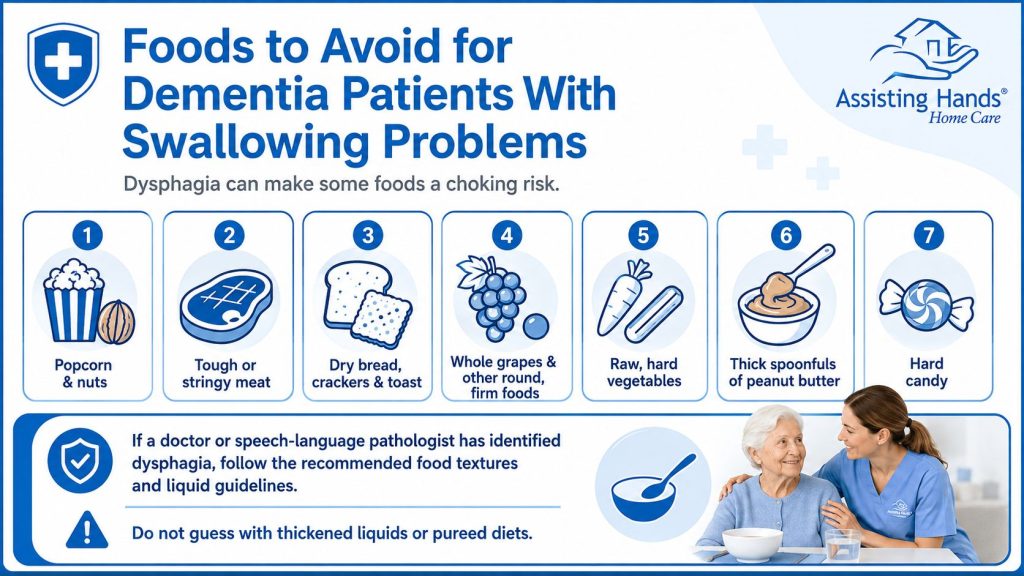
Foods to Avoid for Dementia Patients with Swallowing Problems (Dysphagia)
Once swallowing becomes a problem, some otherwise healthy foods turn into choking risks. If a speech-language pathologist or doctor has flagged dysphagia, be cautious with:
- Popcorn and nuts
- Tough or stringy meat
- Dry bread, crackers, and toast
- Whole grapes and other round, firm items
- Raw, hard vegetables
- Peanut butter eaten on its own or in thick spoonfuls
- Hard candy
A swallowing evaluation gives you a clear, personalized list of safe textures. Do not guess with thickened liquids or pureed diets on your own; follow the plan a professional sets for your loved one.
Can Diet Reverse Dementia?
This is one of the most searched questions from families, and the honest answer matters: no diet has been proven to reverse or cure dementia. Be wary of any product or plan that claims otherwise.
What research does support is gentler. The MIND diet, developed by researchers at Rush University Medical Center, blends the Mediterranean and DASH diets and emphasizes leafy greens, berries, whole grains, beans, nuts, and fish while limiting red meat, sweets, and fried food. Research funded by the National Institutes of Health has linked this eating pattern to a lower risk of cognitive decline, and researchers caution that these findings show a link, not a cure — whether the MIND diet slows cognitive aging over longer periods still needs more research.
A healthy, balanced diet is worth encouraging because it supports overall brain and body health, and because good nutrition helps your loved one feel and function better. It is not a treatment for dementia, and it should never replace medical care.
Meal Planning Tips for Dementia Caregivers
Feeding a loved one with dementia is easier when the work is spread out and the pantry is set up for success. A few habits that help:
- Prepare meals ahead and freeze single-serving portions for busy days
- Keep a running grocery list so healthy staples never run out
- Stock easy, grab-and-go snacks that require no prep
- Set gentle reminders or alarms for meal and snack times
- Track weight every week or two so you catch changes early
- Keep favorite foods on hand for days when nothing else appeals
Small systems reduce the daily decision-making, which is often what wears caregivers down.
When Should You Call the Doctor About Eating Problems?
Call the doctor if you notice any of the following, and treat sudden changes as more urgent:
- Rapid or ongoing weight loss
- Frequent choking or coughing while eating or drinking
- Signs of dehydration
- Persistent refusal to eat or drink
- New or worsening difficulty swallowing
- Concern that food or liquid is going into the airway, known as aspiration
These can point to a treatable problem, from a dental issue or medication side effect to a swallowing disorder that needs a specialist. Getting ahead of it protects your loved one’s health and prevents avoidable hospital stays.
How Professional Dementia Care Helps at Mealtimes
Mealtimes are one of the areas where a trained caregiver makes the biggest difference, and where family caregivers most often feel stretched thin. Our caregivers who provide Alzheimer’s and dementia care support families with the parts of eating that have become hard, including:
- Preparing familiar, nutritious meals and cleaning up afterward
- Providing patient, hands-on help at the table for those who need it
- Grocery shopping and keeping the kitchen stocked
- Offering fluids throughout the day and watching for dehydration
- Monitoring eating habits and weight, and flagging changes for the family
- Giving family caregivers a real break from the daily pressure of mealtimes
Consistent, familiar caregivers matter here. A person with dementia eats better for someone they recognize and trust, which is why we work to keep the same caregivers with your loved one.
If mealtimes have become stressful or you are worried your loved one is not eating enough, we can help. Assisting Hands Home Care serves families throughout Frisco, Plano, Allen, Little Elm, Prosper, and the surrounding North Texas communities. Call us at (214) 609-1340 to request a free in-home consultation and learn more about our Alzheimer’s and dementia care services.
Feeding a Loved One with Dementia: FAQs
How often should dementia patients eat?
Most people with dementia do best with five to six small meals and snacks spread across the day rather than three large meals. Smaller, more frequent portions are less overwhelming and help maintain calorie and fluid intake when appetite is low.
What foods are easiest to swallow?
Soft, moist foods are easiest: scrambled eggs, mashed potatoes, yogurt, oatmeal, cottage cheese, soft-cooked vegetables, and pureed soups. If your loved one has been diagnosed with a swallowing problem, follow the specific texture recommendations from their speech-language pathologist or doctor.
Are bananas good for dementia patients?
Yes. Bananas are soft, easy to chew and swallow, simple to hold as a finger food, and provide potassium and quick energy. They work well on their own or blended into smoothies.
Is peanut butter good for dementia patients?
Peanut butter is nutritious and calorie-dense, which helps with weight maintenance, but it can be a choking risk for someone with swallowing difficulty because it is sticky and thick. If swallowing is a concern, spread it thinly on soft bread or skip it, and check with the doctor.
Can dementia patients eat eggs?
Yes. Eggs are one of the best foods for dementia patients because they are soft, high in protein, easy to prepare, and gentle to chew and swallow. Scrambled eggs are especially easy to manage.
What drinks are best for dementia patients?
Water is best for hydration, along with milk, smoothies, and soup. Water-rich foods like melon and cucumber also help. Limit sugary sodas, and limit or avoid alcohol, which interacts with medications and worsens confusion.
Should dementia patients take supplements?
Sometimes, but only with a doctor’s guidance. Supplements can interact with medications and are not a substitute for food. Ask the doctor before adding any vitamin, mineral, or nutritional supplement to your loved one’s routine.
What if my loved one refuses to eat?
Stay calm and try not to force it. Offer a favorite food, reduce distractions, serve one simple item at a time, and try again a little later. Occasional refusal is common, but ongoing refusal, weight loss, or a sudden change should be reported to the doctor, since it can signal pain, illness, or a medication problem.
Why do dementia patients forget to eat?
Dementia damages the parts of the brain that register hunger and track time, so a person may not feel hungry, may forget they have not eaten, or may not recognize that it is mealtime. A consistent schedule and gentle reminders help.
Does sugar make dementia worse?
Excess sugar does not directly cause or accelerate dementia, but a diet high in sugary, processed foods can crowd out better nutrition and contribute to weight and heart problems. Moderation is sensible, though comfort and adequate calories matter more in the later stages.

