

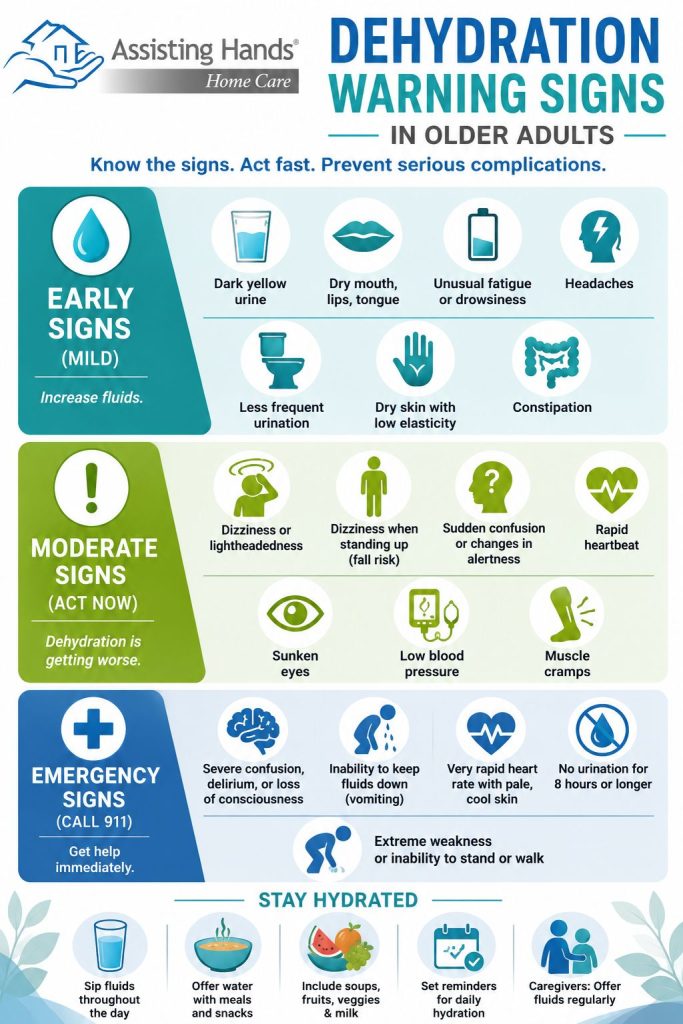
Worry about dehydration in an older adult the moment you notice sudden confusion, dizziness when standing, dark urine that has not cleared after a few hours of increased drinking, a significant drop in bathroom frequency, or an inability to keep fluids down. These are signs that dehydration has already moved past the early stage and needs immediate attention, not a wait-and-see approach. In severe cases, including loss of consciousness, no urination for eight hours, or extreme weakness, call 911.
The reason dehydration escalates so quickly in older adults is that the thirst response weakens significantly with age. Many seniors will not feel thirsty even when they are already clinically dehydrated. That gap between how they feel and what is actually happening inside the body is what makes dehydration in the elderly so easy to miss until it becomes serious.
This guide covers everything caregivers and family members need to know: the early warning signs, the causes, how it affects the body, practical prevention strategies, and how much water seniors should actually be drinking each day.
Why Elderly People Are More Vulnerable to Dehydration
Dehydration in older adults rarely has a single cause. It develops from a combination of aging changes, medications, and daily habits that quietly reduce fluid intake while increasing fluid loss.
The Thirst Response Weakens with Age
As the body ages, the brain becomes less sensitive to early dehydration signals. Research published in the New England Journal of Medicine found that healthy elderly men showed a significantly reduced thirst response after water deprivation compared to younger adults. A senior can be clinically dehydrated and feel no urge to drink at all. This is a physiological change, not a matter of willpower, and it means relying on thirst alone is not a safe strategy for maintaining hydration in older adults.
The Body Holds Less Water
Younger adults are typically made up of about 60% water. Older adults may be closer to 45% to 50%, largely because muscle mass declines with age and muscle tissue holds a large proportion of the body’s water. This means skipping a few glasses of water, or losing extra fluid through illness or medication, can tip the balance much faster than it would in a younger person.
Kidneys Become Less Efficient
Aging kidneys are less effective at conserving water when fluid intake drops, leading to greater fluid loss and a reduced ability to recover quickly from dehydration. Research published via NIH’s StatPearls notes that this reduced renal function, combined with medication use and chronic illness, is one of the primary physiological drivers of dehydration risk in older adults.
Medications That Increase Fluid Loss
Diuretics, prescribed for high blood pressure or heart failure, increase urination and fluid loss. Other medications, including certain laxatives, antihistamines, ACE inhibitors, and angiotensin receptor blockers, can also contribute. Some seniors deliberately limit fluids to avoid frequent bathroom trips, which combined with these medications can rapidly worsen dehydration risk.
Conditions That Create Additional Barriers
Dementia may cause forgetfulness about drinking, or confusion about what a glass of water is for. According to research published in Frontiers in Aging Neuroscience, dehydration is one of the most common medical problems in seniors, diagnosed in approximately 6.7% of hospitalized patients over age 65. Difficulty swallowing, mobility limitations, taste changes from medications, and fear of incontinence can all stack up to make adequate daily hydration genuinely difficult for many older adults.
Warning Signs of Dehydration in the Elderly
Dehydration often develops gradually, and early symptoms are easy to attribute to normal aging or other health issues. Knowing which signs signal mild concern versus immediate action makes a real difference in outcomes.
Early Warning Signs (Do Not Ignore These)
- Dark yellow or amber-colored urine. One of the most reliable early indicators.
- Dry mouth, lips, or tongue
- Unusual fatigue or increased drowsiness not explained by poor sleep (learn more about fatigue causes in seniors)
- Headaches
- Going to the bathroom less often than usual
- Dry skin with reduced elasticity. Pinch the skin on the back of the hand; if it returns slowly, that is a warning sign.
- Constipation, often linked to chronic low fluid intake in seniors
At this stage, consistently increasing fluid intake over a few hours can often reverse dehydration before it progresses to more serious symptoms.
Moderate to Serious Signs (Act Now)
- Dizziness, weakness, or light headednes
- Dizziness when standing up (orthostatic hypotension), which significantly increases fall risk
- Sudden confusion or changes in alertness. This is sometimes mistaken for dementia progression.
- Muscle cramps
- Rapid heartbeat
- Sunken eyes
- Low blood pressure with a weak, rapid pulse
Emergency Signs (Call 911 Immediately)
- Severe confusion, delirium, or loss of consciousness
- Inability to keep fluids down due to vomiting
- Very rapid heart rate combined with pale, cool, or mottled skin
- No urination for 8 hours or longer
- Extreme weakness or inability to stand or walk
How Dehydration Affects the Elderly
Dehydration is not just about feeling thirsty or tired. It affects nearly every major system in the body, and in older adults, even mild or short-term dehydration can lead to serious consequences.
Falls and Injuries
When fluid levels drop, blood pressure can fall with them, causing dizziness and unsteadiness, especially when standing up quickly. For older adults, even a minor fall can mean fractures or head trauma. Hydration is a genuine and often overlooked component of fall prevention. If a fall does occur, read our guide on what to do after a senior loved one falls.
Urinary Tract Infections
Low fluid intake allows urine to become more concentrated, which creates an environment where bacteria grow more easily. In older adults, UTIs can present with atypical symptoms, most notably sudden confusion or delirium, which is sometimes mistaken for dementia progression.
Kidney Strain
Chronic or repeated dehydration forces the kidneys to work harder. NIH’s StatPearls notes that dehydration activates the renin-angiotensin-aldosterone system and increases antidiuretic hormone release as the body attempts to compensate. Over time, this accelerates age-related kidney decline and increases the risk of acute kidney injury.
Cognitive Decline and Confusion
According to NIH-published research in StatPearls, hypertonic dehydration induces an osmotic shift that causes brain cells to shrink, which can directly cause delirium, confusion, and in severe cases, seizures. Research published in Frontiers in Aging Neuroscience also identifies dehydration as a contributing factor for delirium, which has been demonstrated to be a strong risk factor for dementia progression.
Constipation and Digestive Problems
When the body is dehydrated, the colon absorbs more water from stool, making bowel movements harder and more uncomfortable. This is an especially common consequence of chronic low fluid intake in older adults.
Medication Processing
Many medications rely on adequate fluid levels to be absorbed, distributed, and eliminated safely. Dehydration can cause medications to become less effective or accumulate to levels that increase side effects or toxicity, a particular concern for seniors on blood pressure drugs, ACE inhibitors, or NSAIDs like ibuprofen.
How Much Water Should Seniors Drink Each Day?
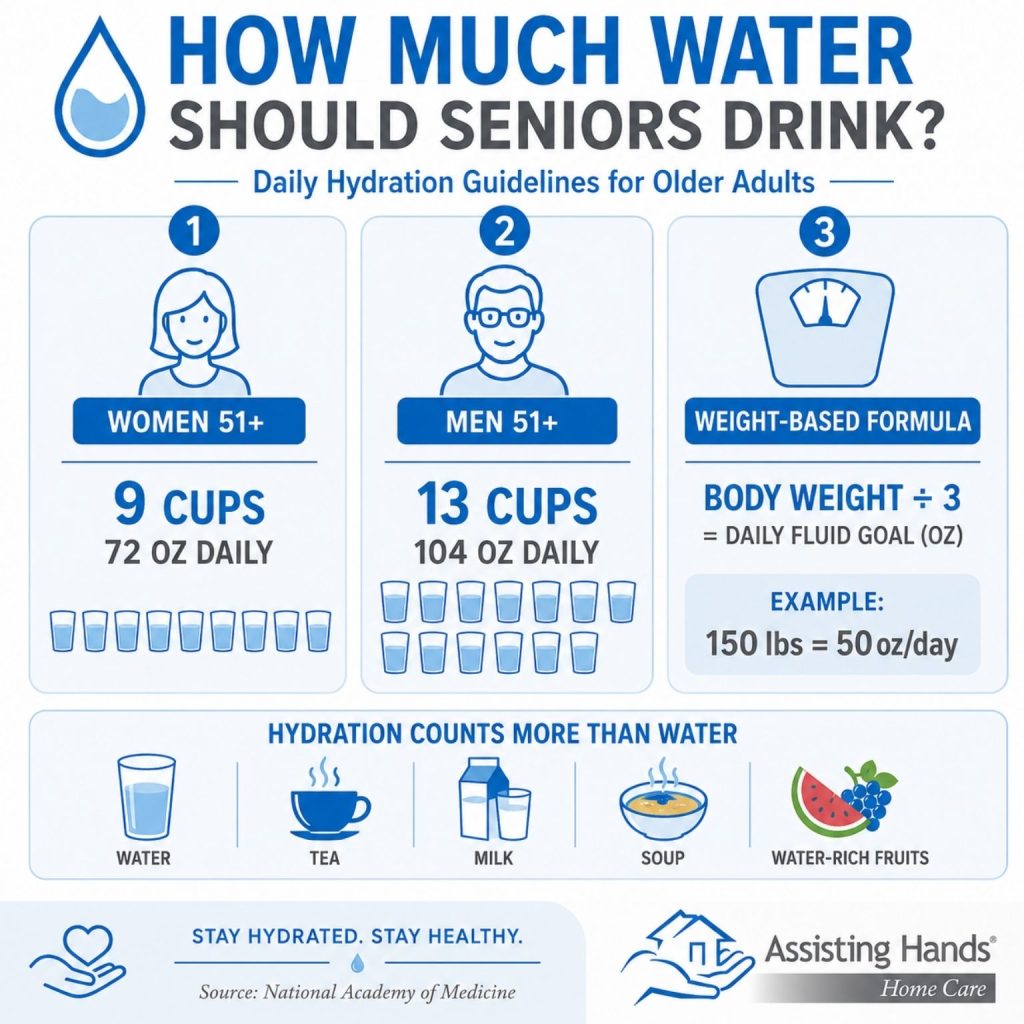
According to the National Academy of Medicine, men aged 51 and older should aim for approximately 13 cups (about 104 oz) of total fluid daily, while women in the same age group should aim for about 9 cups (about 72 oz). These figures include fluids from all sources: water, beverages, and water-rich foods.
As a practical daily baseline for most seniors, most healthcare providers recommend aiming for at least 6 to 8 cups (48 to 64 oz) of fluid. The National Council on Aging also offers a weight-based guideline: drink one-third of your body weight in ounces daily. For example, a senior weighing 150 pounds should aim for at least 50 oz per day.
Fluid needs increase in hot weather, during illness, or when taking diuretics. Always confirm the right target with a healthcare provider for seniors managing kidney disease, heart disease, or diabetes. Hydration does not have to come from water alone. Soups, herbal teas, milk, juice, and water-rich foods all count.
12 Practical Ways to Prevent Dehydration in Older Adults
- Keep water visible and within easy reach at all times. When water is easy to see and easy to grab, it gets consumed more often. Thirst cues are unreliable in older adults, so visibility acts as the reminder.
- Tie drinking to existing daily routines. A glass of water at waking, with each meal, at medication time, and before bed builds consistent hydration without relying on memory or thirst. The National Council on Aging specifically recommends offering a full glass of water when medications are taken as a reliable daily anchor.
- Make water more appealing. Add lemon, cucumber, mint, or berries to plain water. Offer herbal teas or warm broths. Let the senior drink at their preferred temperature.
- Use hydrating foods at every meal. About 20% of daily fluid intake comes from food. Cucumbers, tomatoes, watermelon, oranges, soups, yogurt, and smoothies all contribute to daily fluid intake.
- Set drinking schedules and do not rely on thirst. Gentle reminders every one to two hours can help. A simple checklist or hydration tracker is especially useful for seniors who live alone. For more practical ideas, see our hydration tips for elderly individuals.
- Address bathroom concerns directly. Improving bathroom access, clearing pathways, or adding a bedside commode removes the barrier of incontinence fear without eliminating hydration.
- Use the right cup or vessel. Lightweight cups with handles, spill-resistant lids, or straws make drinking easier for seniors dealing with arthritis, tremors, or weakness.
- Try popsicles or frozen fruit in warm weather. Frozen treats made from juice, fruit, or yogurt are a low-resistance way to increase fluid intake.
- Increase fluids during illness, heat, or activity. Fever, vomiting, diarrhea, hot weather, and physical exertion all raise fluid needs significantly.
- Consider electrolyte drinks when appropriate. Electrolyte drinks can help restore sodium and potassium balance after significant fluid loss, but should be used with guidance from a healthcare provider for seniors with heart or kidney conditions. Choose options without added sugar, hydrogenated oils, or high-fructose corn syrup.
- Monitor urine color daily. Pale yellow means good hydration. Dark yellow or amber signals the need for more fluids. Brown or very dark urine is a reason to call a doctor.
- For seniors with dementia, adapt the approach. Offer frequent small sips throughout the day and use verbal prompts. Drinking together or using a familiar preferred cup often works better than leaving water nearby and hoping it gets noticed.
Caregiver Hydration Checklist
- Keep water and hydrating fluids within easy reach throughout the day
- Encourage 6 to 8 cups of fluid daily as a baseline, per National Academy of Medicine guidance
- Link drinking to medication times to build a reliable daily habit
- Include hydrating foods such as fruits, vegetables, soups, and yogurt at every meal
- Monitor urine color daily as a quick hydration check
- Ensure safe and easy access to the bathroom, or provide assistive options if needed
- Offer beverages at preferred temperatures and flavors
- Increase fluids during heat, illness, or physical activity
- Use reminders or a schedule rather than waiting for thirst
- Review medications with a healthcare provider to identify any that increase dehydration risk
Senior Home Care from Assisting Hands in Frisco Texas
Dehydration in older adults rarely happens all at once. It builds from small, everyday challenges that go unaddressed: a weakened thirst response, mobility limitations, medication effects, memory changes, or a simple lack of someone there to offer a glass of water and notice when something seems off.
The good news is that dehydration is largely preventable when the right support is consistent. Scheduled hydration, accessible fluids, hydrating meals, and attentive daily oversight can make a real difference in a senior’s safety and overall health.
At Assisting Hands Home Care, our caregivers provide compassionate, non-medical home care that includes support with daily hydration routines, meal preparation, medication reminders, and the kind of attentive companionship that catches small changes before they become bigger problems.
If you are concerned about dehydration risk for a loved one, or want to know more about how in-home care can help, our team is here to answer your questions. To learn more about our elder care services in Frisco, TX and the surrounding areas, call us at (214) 609-1340.
Frequently Asked Questions
What is an early sign of dehydration in the elderly?
The most reliable early sign is dark yellow or amber-colored urine. Because the thirst response weakens significantly after age 65, older adults often do not feel thirsty even when their body is already low on fluids. Urine color is a more trustworthy daily indicator than how they feel.
A peer-reviewed diagnostic study published via PubMed identified dry mouth, poor skin turgor, orthostatic blood pressure drop, and postural dizziness as key early clinical markers of dehydration in geriatric patients. Other common early signs include unusual fatigue, headaches, and going to the bathroom less frequently than usual.
At this early stage, consistently increasing fluid intake over a few hours can often reverse dehydration before it progresses further.
What are the signs of dehydration in elderly skin?
The most recognized skin sign is reduced skin turgor, or poor skin elasticity. To test this, gently pinch the skin on the back of the hand and release it. In a well-hydrated person, the skin snaps back immediately. In someone who is dehydrated, it may tent or return slowly.
A peer-reviewed study on low-intake dehydration in older patients published via PMC (NIH) found that tongue furrows and poor skin turgor were present in patients with elevated serum osmolality, a clinical marker of confirmed dehydration. Other skin-related signs include dry or cracked lips, dry and flaky skin, and a sunken or dull appearance around the eyes.
Keep in mind that older adults naturally have less elastic skin due to aging, so the skin turgor test should be used alongside other signs rather than on its own.
What should an elderly person drink when dehydrated?
Water is the safest and most effective starting point for mild dehydration. Herbal teas, broths, diluted fruit juices, milk, and oral rehydration solutions such as Pedialyte also help restore fluid balance. Most beverages, including moderate amounts of coffee, contribute to overall daily hydration.
According to Healthline, when vomiting or diarrhea has caused significant loss of electrolytes alongside fluid, beverages containing electrolytes such as diluted sports drinks or oral rehydration solutions are more effective than water alone. Choose options without added sugar, hydrogenated oils, or high-fructose corn syrup.
The priority is consistent fluid intake throughout the day. In more serious cases, or when a senior cannot drink enough orally, medical evaluation and IV fluids may be needed.
Can dehydration cause confusion in elderly people?
Yes, and this is one of the most important things for families and caregivers to know. Dehydration is a common and often overlooked cause of sudden confusion in older adults.
According to NIH-published research in StatPearls, hypertonic dehydration induces an osmotic shift that causes brain cells to shrink, which can directly cause delirium, confusion, and disorientation. Research published in Frontiers in Aging Neuroscience further identifies dehydration as a contributing factor for delirium, which has itself been demonstrated to be a strong risk factor for dementia progression.
Any sudden change in mental status in an older adult should prompt an immediate evaluation of hydration levels. It is frequently mistaken for disease progression in seniors with dementia.
Is tea or coffee dehydrating for seniors?
Moderate amounts of tea and coffee do not cause dehydration in most older adults. While caffeine has a mild diuretic effect, the fluid in these beverages still contributes positively to overall hydration. Coffee can count toward a senior’s daily fluid intake.
WebMD notes that most beverages, including coffee and tea, count toward daily hydration. The National Council on Aging recommends building hydration primarily from water, milk, flavored sparkling water, and low-sugar fruit juices, with coffee and tea as acceptable but not primary sources.

