

Paranoia in seniors is most often caused by an underlying medical condition rather than a psychiatric illness. The most common triggers are dementia, urinary tract infections and other acute illnesses, medication side effects, sensory loss such as untreated hearing or vision problems, social isolation, and delirium. Because each of these causes is treated differently, sudden or worsening paranoia in an older adult should always prompt a medical evaluation.
If your mother insists a neighbor is stealing her mail, or your father accuses his longtime caregiver of taking money from his wallet, you are not alone. Paranoia in older adults is one of the most common and most distressing behavioral changes families report to us at Assisting Hands Home Care in Frisco. Once the cause is identified, paranoia can often be reduced or managed, and families can learn responses that calm the situation instead of escalating it.
What does paranoia look like in older adults?
Paranoia is a pattern of suspicious beliefs that do not match reality. In seniors, it usually shows up in a handful of recognizable ways:
- Accusations of theft: “Someone took my purse” or “the cleaning lady stole my rings,” when the item has been misplaced
- Fear of being watched, followed, or spied on by neighbors, strangers, or even family members
- Belief that a spouse or adult child is plotting against them, poisoning their food, or trying to “put them in a home”
- Refusing to eat, take medications, or let caregivers into the house because they no longer trust anyone
- Hiding money, mail, or valuables and then forgetting where they were hidden, which reinforces the theft belief
Paranoia in an elderly woman or man is frequently accompanied by agitation, pacing, repeated phone calls to family, or angry outbursts. Agitation and paranoia in the elderly tend to feed each other. The frightening belief drives the agitation, and the agitation makes the person less able to reason through the belief. For gentle, non-drug ways to calm agitation before turning to medication, see Dementia Agitation? Try This Before Medication.
What causes sudden paranoia in the elderly?
Sudden paranoia, meaning suspicion that appears over hours or days in a person who was previously clear headed, is a medical warning sign. The most common culprits are:
- Urinary tract infections: UTIs are notorious for causing sudden confusion, hallucinations, and paranoid thinking in seniors, often without the burning or urgency younger adults experience. Up to one third of older adults hospitalized with a UTI develop some degree of confusion or delirium, according to Cedars-Sinai. A simple urine test can identify the infection, and paranoia frequently resolves once it is treated.
- Delirium: Delirium is an acute state of confusion triggered by illness, surgery, hospitalization, dehydration, or medication changes. It develops quickly and fluctuates throughout the day. Paranoid delusions are a hallmark symptom. Delirium is a medical emergency and warrants a same day call to the doctor.
- Dehydration and electrolyte imbalances: Even mild dehydration can impair thinking in older adults and tip a vulnerable brain into suspiciousness.
- New medications or dosage changes: If paranoia appeared within days or weeks of a prescription change, the medication is a prime suspect.
- Untreated pain, constipation, or poor sleep: Any physical stressor a senior cannot clearly communicate may surface as a behavioral change instead. Sleep disruption is also closely tied to sundowning; see our guide to sundowning and sleep issues in dementia patients for more.
The rule of thumb we share with Frisco and Plano families is that sudden paranoia means see a doctor first. Do not assume it is just aging or early dementia until an acute medical cause has been ruled out.
What medications cause paranoia in the elderly?
Older adults metabolize drugs more slowly, and many take five or more prescriptions, so medication induced paranoia is more common than most families realize. Drug classes associated with paranoia, confusion, or hallucinations in seniors include:
- Anticholinergic drugs, including some bladder medications such as oxybutynin, older antihistamines such as diphenhydramine found in many over the counter sleep aids, and certain antidepressants
- Benzodiazepines such as lorazepam, alprazolam, and diazepam, which can cause paradoxical agitation and confusion
- Corticosteroids like prednisone, particularly at higher doses
- Parkinson’s disease medications, including levodopa and dopamine agonists, which commonly cause hallucinations and paranoid delusions
- Opioid pain medications, especially after surgery
- Some sleep medications, including zolpide
Never stop a medication on your own. Bring a complete list of prescriptions, over the counter drugs, and supplements to the doctor or pharmacist and ask for a medication review. In many cases, adjusting a dose or switching drugs resolves the paranoia entirely.
Is paranoia a sign of dementia?
It can be. Elderly paranoia and dementia are closely linked because the memory loss itself creates the conditions for suspicion. A person with Alzheimer’s disease misplaces her checkbook, has no memory of moving it, and reaches the only conclusion that makes sense to her: that someone took it. The brain fills the memory gap with a story, and the story is usually about theft, infidelity, or abandonment.
Delusions affect an estimated 30 to 40 percent of people with Alzheimer’s disease at some point in the illness, and paranoia about theft is the single most common type, according to the Alzheimer’s Association. Paranoia is also a prominent early feature of Lewy body dementia, where it often appears alongside visual hallucinations, per the National Institute on Aging.
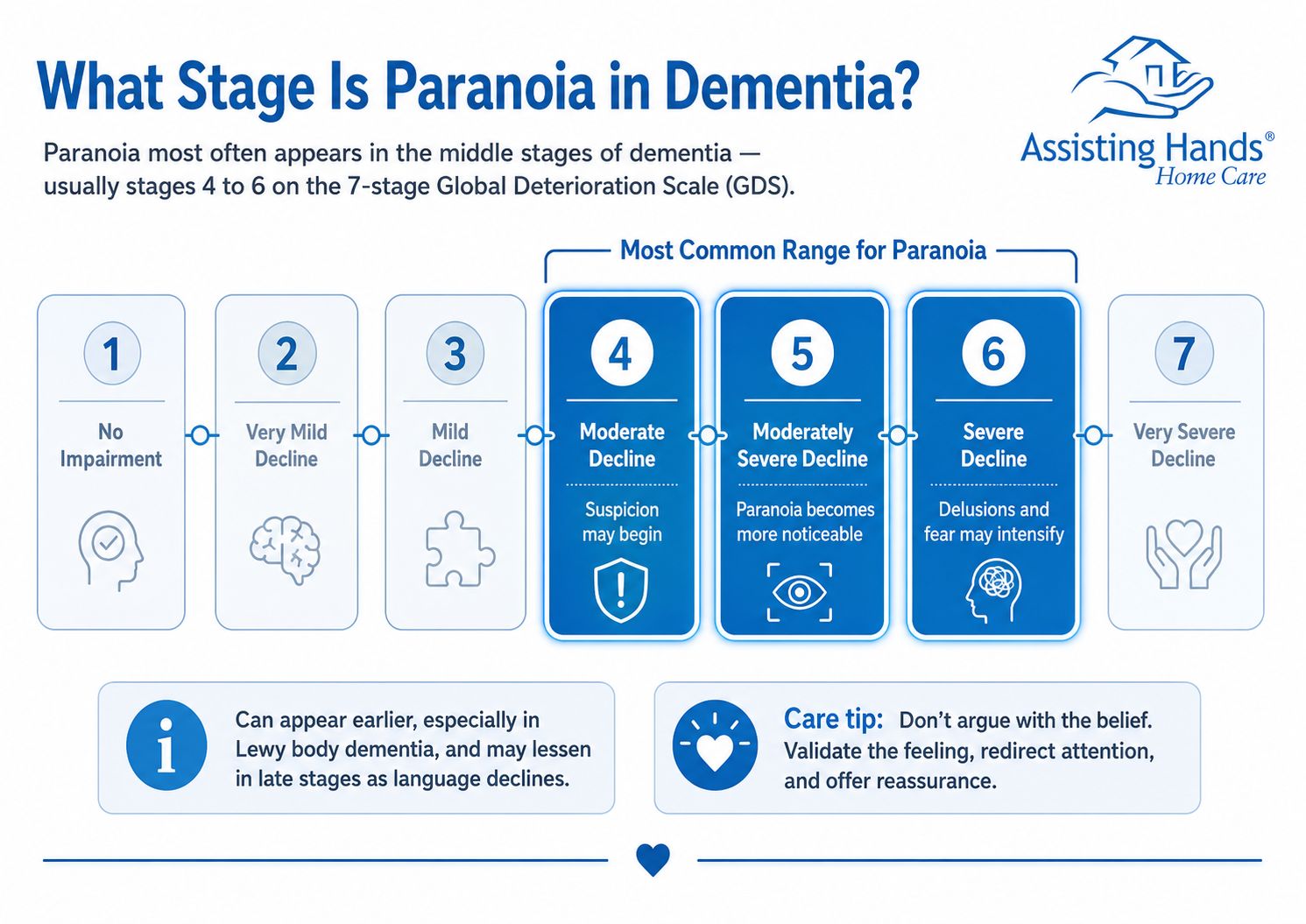
What stage is paranoia in dementia?
Paranoia most often emerges in the middle stages of dementia, typically stages 4 through 6 on the seven stage scale, when memory loss has become significant but the person is still verbal and mobile enough to act on their beliefs. That said, it can appear earlier, particularly in Lewy body dementia, and it sometimes fades in the late stages as language declines. If paranoia is your loved one’s first noticeable symptom, a full cognitive evaluation is worth pursuing, because families often recall in hindsight that suspicious accusations started before the diagnosis.
Caring for someone whose dementia includes paranoia takes specific training. Our caregivers who provide Alzheimer’s and dementia care learn not to argue with a delusion, because you cannot reason a person out of a belief their brain has manufactured. Instead they validate the feeling, redirect attention, and quietly help locate the stolen item.
What other conditions cause paranoia in older adults?
Beyond dementia, delirium, and medications, several other causes deserve attention:
- Hearing and vision loss: A senior who cannot hear conversations may become convinced people are whispering about her. Missing words get filled in with worst case interpretations. Untreated sensory loss is one of the most overlooked and most fixable contributors to paranoia. A hearing aid adjustment or cataract surgery can make a remarkable difference.
- Social isolation: Seniors who live alone with little contact have no one to reality check their worries against. A stray thought about the neighbor hardens into certainty when there is no daily conversation to soften it.
- Depression and late onset psychiatric conditions: Severe depression in older adults can include paranoid features, and a small number of seniors develop late onset psychotic disorders. These are diagnoses of exclusion, made after medical causes are ruled out.
- Alcohol use and vitamin deficiencies: Heavy alcohol use, and deficiencies in B12 in particular, can both impair cognition and produce suspiciousness.
How is paranoia treated in the elderly?
Elderly paranoia treatment starts with finding the cause, because the fix depends entirely on what is driving it:
- Medical workup first: Urinalysis, blood work, medication review, and a cognitive screen. Treating a UTI, correcting a deficiency, or discontinuing an offending drug may resolve the paranoia outright.
- Correct sensory deficits: Updated glasses, hearing aids, adequate lighting.
- Non-drug approaches at home: These are the first line treatment for dementia related paranoia. Keep routines predictable, reduce noise and clutter, do not argue with or mock the belief, respond to the emotion (“That sounds scary, I’m here with you”), redirect to a familiar activity, and keep duplicates of frequently stolen items like keys and wallets.
- Medication as a last resort: Antipsychotics carry serious risks in older adults, including a boxed FDA warning for people with dementia, so doctors reserve them for severe distress or safety concerns after other approaches have been tried.
- Consistent, familiar caregivers: Rotating strangers through the house fuels suspicion. A small, stable care team the senior comes to recognize and trust reduces it.
How can home care help a senior with paranoia?
A trained caregiver does more than help with bathing and meals. Consistent daily companionship gives a suspicious senior a trusted, familiar face. Regular routines reduce the disorientation that fuels paranoid thinking. And an experienced caregiver notices the early signs of a UTI or medication reaction and alerts the family before a small problem becomes a crisis. Our elderly care services pair seniors with consistent caregivers who assist with daily needs, provide companionship, and keep families informed, which matters enormously when trust is fragile.
If paranoia, agitation, or confusion is making it harder to care for your loved one at home, Assisting Hands Home Care serves families throughout Frisco, Plano, Allen, Little Elm, Prosper, and the surrounding North Texas communities. Call us at (214) 609-1340 to request a free care assessment.
Paranoia in Elderly FAQs
What causes sudden paranoia in the elderly?
Sudden paranoia is most often caused by an acute medical problem: a urinary tract infection, delirium from illness or hospitalization, dehydration, or a new medication. It should be treated as a medical warning sign and evaluated by a doctor promptly, not dismissed as normal aging.
What stage of dementia does paranoia occur in?
Paranoia most commonly appears in the middle stages of dementia, roughly stages 4 to 6 of 7, when memory gaps are significant but the person remains verbal and active. It can appear earlier in Lewy body dementia and may fade in late stage disease.
What medications cause paranoia in the elderly?
Common culprits include anticholinergic drugs such as some bladder medications and older antihistamines like diphenhydramine, benzodiazepines, corticosteroids such as prednisone, Parkinson’s medications like levodopa, opioids, and some sleep aids. Ask the prescribing doctor or pharmacist for a medication review before making any changes.
How do you respond to an elderly parent with paranoia?
Do not argue with the belief or try to prove it wrong. Acknowledge the feeling (“That sounds upsetting”), offer reassurance and your presence, redirect to a calming activity, and help search for missing items without assigning blame. Report new or worsening paranoia to their doctor.
Is paranoia in seniors treatable?
Yes, in many cases. Paranoia caused by infections, medications, dehydration, or sensory loss often resolves when the underlying issue is treated. Dementia related paranoia can usually be managed with routines, environmental changes, and caregiver techniques, with medication reserved as a last resort.

