
Key Takeaways
- Adults over 70 who always listened to music had a 39% lower rate of dementia than those who rarely did, according to a 2025 Monash University study. That’s a link, not proof that music was the cause.
- For people already living with dementia, music-based therapy probably eases depressive symptoms. The evidence that it calms agitation is weaker.
- Calm music for 30 to 60 minutes at bedtime improved sleep in adults 60 and older. The gains were biggest after four weeks.
- Start with songs the person already knows and likes and let them pick when they can.
- You don’t need a professional to begin. A playlist and a small speaker are enough.
Music can do more than entertain us as we age. Regular listening has been linked to better memory, improved mood, and better sleep in older adults. It can also provide comfort and connection for people in the later stages of dementia, even when other forms of communication become more difficult. And unlike many activities that support healthy aging, music is accessible, affordable, and easy to make part of everyday life.
Research continues to uncover just how much music can contribute to healthy aging. A 2025 study of nearly 11,000 Australians over age 70 found that people who listened to music most days were significantly less likely to develop dementia. In this post, we’ll explore what the research says about the benefits of music for seniors, what the evidence doesn’t yet tell us, and some simple ways to make music part of your parent’s or spouse’s daily routine at home.
What Music Does for the Aging Brain
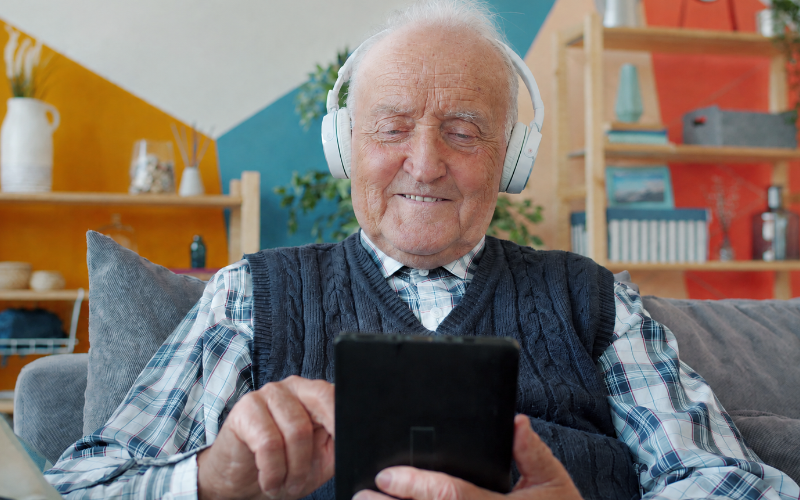
The strongest recent evidence comes from Australia. Researchers at Monash University followed 10,893 adults aged 70 and older who had no dementia when the study began. People who said they always listened to music had a 39% lower rate of dementia and a 17% lower rate of milder cognitive impairment than people who listened never, rarely, or only sometimes. They also scored higher on tests of overall thinking and everyday memory. The findings were published in 2025 in the International Journal of Geriatric Psychiatry (Monash University summary).
An important thing to keep in mind is that this kind of study can’t prove the cause. It’s possible that people with healthier brains simply keep listening to more music.
Playing music seems to count too. In the Monash study, people who often played an instrument had a 35% lower dementia rate. An earlier, much smaller Emory University study of 70 adults aged 60 to 83 found that those with at least ten years of musical experience did better on tests of memory, naming, and mental flexibility than people who had never played.
Northwestern University researchers found that lifelong musicians aged 45 to 65 were better than non-musicians at following speech in a noisy room, which is one of the most common complaints of older adults. That benefit came from decades of playing as nobody has shown that listening alone sharpens hearing.
Music and Dementia
Music can still reach a person with dementia after conversation has become difficult. The Alzheimer’s Association notes that even in the late stages of the disease, someone may tap along to a beat or sing the words to a song from childhood. For a family, that can feel like getting a few minutes of their person back.
The research backs some of that up. A 2025 Cochrane review pooled 30 trials with 1,720 people living with dementia. It found that at least five sessions of music-based therapy probably improves symptoms of depression and may help with behavior problems overall. Compared with other group activities, music may also reduce anxiety and help people engage socially.
The same review found little effect on agitation, aggression, or thinking skills. Music won’t slow the disease. What it can give you is a better hour, and on a hard day a better hour matters.
If your loved one needs more support than the family can provide, our Alzheimer’s and dementia home care caregivers can help.
Better Sleep and a Calmer Mood
Sleep is where the evidence is most practical. A 2021 analysis in the Journal of the American Geriatrics Society combined five randomized trials of adults 60 and older who lived at home and slept poorly. Those who listened to music for 30 minutes to an hour at bedtime slept better than those who didn’t.
Two details from that analysis are worth using:
- Calm music with a slow tempo and soft volume beat rhythmic music.
- People who kept it up for more than four weeks improved the most, so give it a month before you decide it isn’t working.
The trials were small, 288 people in total, and the results may not apply to people with Alzheimer’s or Parkinson’s disease. Still, it’s a low-risk thing to try before reaching for a sleep aid. Talk to the doctor before changing any medication.
Music also sets the tone of a room. The Alzheimer’s Association suggests quiet music when you want someone to relax and something faster and happier when you want to lift their mood. Most of us do this for ourselves without thinking about it. A parent who can no longer work the radio needs someone to do it for them.
Movement, Connection and Comfort
Put on a song with a beat and most people start to move, even if just a little. The Alzheimer’s Association encourages clapping, toe-tapping, and dancing along. For a senior who resists “exercise,” a few songs in the kitchen can be an easier sell than a set of leg lifts.
Music is also something generations can share without needing much conversation. A grandchild who doesn’t know what to say to Grandpa can ask what he listened to at 17 and play it on a phone.
Near the end of life, familiar music played softly, whether hymns, a favorite singer, or the songs from a wedding, can bring comfort when talking is no longer possible.
How to Use Music at Home with a Senior Loved One
You don’t need special equipment, musical training, or a complicated plan to make music part of your loved one’s day. A few simple changes can make listening more enjoyable and meaningful. The following tips draw on guidance from the Alzheimer’s Association and research on music and sleep, and they can be helpful whether or not your loved one is experiencing memory loss.
- Build the playlist with them: Ask what they danced to, what played at their wedding, and what was on the car radio when the kids were small. If they can’t tell you, ask a sibling or an old friend, or look through the records and CDs still in the house.
- Use a source with no commercials: Ads that cut in between songs can confuse someone with dementia. A downloaded playlist or a stack of CDs is safer than the radio or a free streaming account.
- Match the music to the time of day: Something upbeat helps with getting up and dressed. Switch to calm music in the late afternoon, when restlessness often sets in, and to slow, soft music for the 30 to 60 minutes before bed.
- Keep the volume moderate and turn off the TV: Competing noise is tiring and can be disorienting. If they wear hearing aids, check that they’re in.
- Join in: Sing, clap, hold hands, and sway. It works better as something you do together than as background sound.
- Watch their face: If a song brings on distress, skip it and make a note. Some music is tied to painful memories, and you often won’t know which until it plays.
- Make it a routine: The same time each day is easier to keep going, and the sleep studies suggest the benefit builds over weeks.
Some situations call for a professional. A board-certified music therapist (the credential is MT-BC) can set goals and design sessions for someone who is withdrawn, depressed, or in hospice care. The American Music Therapy Association explains how to find a music therapist near you.
How Assisting Hands Caregivers Can Help in Palm Beach County

The benefits of music come from making it part of everyday life, but keeping a routine going can be harder than it sounds. Families get busy, schedules change, and the playlist that brought so much joy during the first week can easily be forgotten by the third.
Having a caregiver visit regularly can help keep music in your loved one’s daily routine. Through our companion care, a caregiver might play a favorite album over breakfast, sing along while folding laundry, or put on a few upbeat songs before lunch. Our overnight caregivers can also help establish a calming bedtime music routine and provide support if your loved one wakes during the night.
When we create a care plan, we want to know what makes your loved one smile, including the music they have always enjoyed. Tell us their favorite artists, songs, or albums, and we’ll find ways to make those familiar sounds part of their care. Contact Assisting Hands Home Care to learn how we can help your loved one enjoy more meaningful moments at home.
Assisting Hands Home Care provides home care services throughout North and Central Palm Beach County, including BallenIsles, Boynton Beach, Jupiter, Lake Worth, North Palm Beach, Palm Beach, Palm Beach Gardens, Royal Palm Beach, Singer Island, Wellington, West Palm Beach, FL and surrounding areas. Call (561) 566-5989 or contact us online to talk about in-home care for your loved one.
Benefits of Music for Seniors FAQs
What kind of music is best for seniors?
Music the person already knows and enjoys. No single genre has been shown to work best. For sleep, slow and soft music worked better than rhythmic music in clinical trials.
Can listening to music prevent dementia?
No one can say that yet. A 2025 study found that adults over 70 who always listened to music had a 39% lower rate of dementia, but the study shows a link and cannot prove that music was the cause.
How long should a senior listen to music each day?
There is no established daily amount. Sleep studies in older adults used 30 to 60 minutes at bedtime, with the best results after four weeks. A daily session of 20 to 30 minutes is a reasonable place to start.
Does music help with sundowning or agitation in dementia?
It may help some people, but the evidence is mixed. A 2025 Cochrane review found music-based therapy probably improves depressive symptoms and may reduce anxiety, with little effect on agitation. Calm, familiar music in the late afternoon is low-risk and worth trying.
What is the difference between music therapy and listening to music at home?
Music therapy is delivered by a board-certified music therapist (MT-BC) who sets goals and designs sessions for one person or a group. Listening at home is informal. Both can help, and families can start at home without a referral.


